

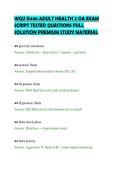
WGU D446 ADULT HEALTH 2 OA EXAM
SCRIPT TESTED QUESTIONS FULL
SOLUTION PREMIUM STUDY MATERIAL
●● gtts/min calculation
Answer: ((Total mL × drop factor) ÷ minutes = gtts/min)
●● Isotonic fluids
Answer: Expand intravascular volume (NS, LR)
●● Hypotonic fluids
Answer: Shift fluid into cells (risk cerebral edema)
●● Hypertonic fluids
Answer: Pull fluid out of cells (monitor for overload)
●● Burn shock phase
Answer: Fluid loss → hypovolemic shock
●● Burn priority
Answer: Aggressive IV fluids (LR) + urine output monitoring
,●● Pre-op priorities
Answer: Consent; NPO; baseline vitals; labs
●● Post-op priorities
Answer: Airway; bleeding; infection; pain control
●● Neutropenic precautions
Answer: Private room; no raw foods; no sick visitors; hand hygiene
●● Radiation care
Answer: Protect skin; no lotions unless ordered; avoid sun
●● Spinal cord injury priority
Answer: Airway + spinal immobilization
●● TBI priority
Answer: Prevent ↑ICP (HOB 30°, avoid hip flexion)
●● Guillain-Barré danger
Answer: Ascending paralysis → respiratory failure
, ●● MS priority
Answer: Energy conservation; prevent fatigue/exacerbation
●● Stroke priority
Answer: CT before tPA
●● Stroke window
Answer: tPA within 3-4.5 hours if eligible
●● Meningitis precautions
Answer: Droplet; start antibiotics promptly
●● Parkinson's signs
Answer: Tremor; rigidity; bradykinesia
●● Alzheimer's priority
Answer: Safety; routine; reorientation
●● Glaucoma
Answer: ↑IOP → vision loss; avoid mydriatics
●● Cataracts
SCRIPT TESTED QUESTIONS FULL
SOLUTION PREMIUM STUDY MATERIAL
●● gtts/min calculation
Answer: ((Total mL × drop factor) ÷ minutes = gtts/min)
●● Isotonic fluids
Answer: Expand intravascular volume (NS, LR)
●● Hypotonic fluids
Answer: Shift fluid into cells (risk cerebral edema)
●● Hypertonic fluids
Answer: Pull fluid out of cells (monitor for overload)
●● Burn shock phase
Answer: Fluid loss → hypovolemic shock
●● Burn priority
Answer: Aggressive IV fluids (LR) + urine output monitoring
,●● Pre-op priorities
Answer: Consent; NPO; baseline vitals; labs
●● Post-op priorities
Answer: Airway; bleeding; infection; pain control
●● Neutropenic precautions
Answer: Private room; no raw foods; no sick visitors; hand hygiene
●● Radiation care
Answer: Protect skin; no lotions unless ordered; avoid sun
●● Spinal cord injury priority
Answer: Airway + spinal immobilization
●● TBI priority
Answer: Prevent ↑ICP (HOB 30°, avoid hip flexion)
●● Guillain-Barré danger
Answer: Ascending paralysis → respiratory failure
, ●● MS priority
Answer: Energy conservation; prevent fatigue/exacerbation
●● Stroke priority
Answer: CT before tPA
●● Stroke window
Answer: tPA within 3-4.5 hours if eligible
●● Meningitis precautions
Answer: Droplet; start antibiotics promptly
●● Parkinson's signs
Answer: Tremor; rigidity; bradykinesia
●● Alzheimer's priority
Answer: Safety; routine; reorientation
●● Glaucoma
Answer: ↑IOP → vision loss; avoid mydriatics
●● Cataracts


