Page 1 of 153
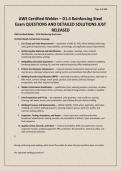
AWS Certified Welder – D1.4 Reinforcing Steel
Exam QUESTIONS AND DETAILED SOLUTIONS JUST
RELEASED
AWS Certified Welder – D1.4 Reinforcing Steel Exam
10-Point Mostly Tested Exam Coverage
1. D1.4 Scope and Code Requirements — application of AWS D1.4/D1.4M to welding reinforcing
steel, general requirements, responsibilities, terminology, and applicable project requirements.
2. Reinforcing Bar Materials and Identification — bar grades, markings, sizes, material
identification, mechanical properties, chemical composition, and verifying the correct
reinforcing steel before welding.
3. Weldability and Carbon Equivalent — carbon content, carbon equivalent, material weldability,
hardening behavior, cracking risk, and how material properties affect welding controls.
4. Preheat and Interpass Temperature — required preheat, temperature measurement, preheat
maintenance, interpass temperature, cooling control, and conditions that affect thermal control.
5. Welding Procedure Specifications (WPS) — approved procedures, welding process, electrode or
filler metal, current, voltage, travel speed, position, joint details, preheat, interpass
temperature, and other required variables.
6. Welder Performance Qualification — qualification tests, welding positions, processes, variables,
test specimens, performance limits, continuity, and determining whether a welder is qualified
for production work.
7. Joint Preparation and Fit-Up — bar alignment, joint geometry, root conditions, spacing,
cleaning, tack welds, access, joint preparation, and checking the joint before welding.
8. Welding Processes and Workmanship — SMAW, GMAW, FCAW where applicable, electrodes,
shielding, arc control, welding sequence, cleaning between passes, weld size, profile, and
common welding defects.
9. Inspection, Testing, Acceptance, and Repair — visual inspection, weld discontinuities,
acceptance requirements, testing concepts, documentation of defects, repair procedures, and
final inspection.
10. Quality Control, Records, and Safety — material traceability, WPS and qualification records,
inspection records, welding equipment, PPE, ventilation, fire prevention, electrical safety, and
safe construction practices.
1.
During reinforcing steel welding, what should the welder do when the joint condition does not match
the approved welding procedure?
, Page 2 of 153
A. Continue welding and change the settings as needed
B. Stop and obtain the required procedure clarification
C. Ignore the difference if the bars look clean
D. Use a different electrode without approval
Answer: B. Stop and obtain the required procedure clarification
Rationale: Welding should remain within the approved procedure. An uncontrolled change can place
the weld outside qualified requirements.
2.
Why is reinforcing bar identification important before a production welding operation begins on a
construction project?
A. It determines the concrete color
B. It identifies the crane capacity
C. It confirms the material and applicable welding requirements
D. It determines the building height
Answer: C. It confirms the material and applicable welding requirements
, Page 3 of 153
Rationale: Reinforcing bars can have different grades and properties, so the material must be identified
before applying welding requirements.
3.
What is the main purpose of preheat when welding reinforcing steel under an approved welding
procedure?
A. To make the weld look brighter
B. To control cooling and reduce cracking risk
C. To eliminate joint preparation
D. To replace welder qualification
Answer: B. To control cooling and reduce cracking risk
Rationale: Proper preheat controls the thermal condition of the steel and can reduce the risk of cracking
caused by rapid cooling.
4.
A welder is preparing two reinforcing bars for a welded connection. What should be checked before
welding starts?
, Page 4 of 153
A. Bar identification and joint fit-up
B. Concrete color only
C. Building lighting only
D. Paint thickness only
Answer: A. Bar identification and joint fit-up
Rationale: The welder should verify the correct material and ensure the joint has the required
preparation and alignment.
5.
Why should the welder maintain the required interpass temperature during multiple-pass reinforcing
steel welding?
A. It controls the welding heat within procedure limits
B. It makes the electrode larger
C. It changes the reinforcing bar grade
D. It removes the need for inspection
Answer: A. It controls the welding heat within procedure limits
AWS Certified Welder – D1.4 Reinforcing Steel
Exam QUESTIONS AND DETAILED SOLUTIONS JUST
RELEASED
AWS Certified Welder – D1.4 Reinforcing Steel Exam
10-Point Mostly Tested Exam Coverage
1. D1.4 Scope and Code Requirements — application of AWS D1.4/D1.4M to welding reinforcing
steel, general requirements, responsibilities, terminology, and applicable project requirements.
2. Reinforcing Bar Materials and Identification — bar grades, markings, sizes, material
identification, mechanical properties, chemical composition, and verifying the correct
reinforcing steel before welding.
3. Weldability and Carbon Equivalent — carbon content, carbon equivalent, material weldability,
hardening behavior, cracking risk, and how material properties affect welding controls.
4. Preheat and Interpass Temperature — required preheat, temperature measurement, preheat
maintenance, interpass temperature, cooling control, and conditions that affect thermal control.
5. Welding Procedure Specifications (WPS) — approved procedures, welding process, electrode or
filler metal, current, voltage, travel speed, position, joint details, preheat, interpass
temperature, and other required variables.
6. Welder Performance Qualification — qualification tests, welding positions, processes, variables,
test specimens, performance limits, continuity, and determining whether a welder is qualified
for production work.
7. Joint Preparation and Fit-Up — bar alignment, joint geometry, root conditions, spacing,
cleaning, tack welds, access, joint preparation, and checking the joint before welding.
8. Welding Processes and Workmanship — SMAW, GMAW, FCAW where applicable, electrodes,
shielding, arc control, welding sequence, cleaning between passes, weld size, profile, and
common welding defects.
9. Inspection, Testing, Acceptance, and Repair — visual inspection, weld discontinuities,
acceptance requirements, testing concepts, documentation of defects, repair procedures, and
final inspection.
10. Quality Control, Records, and Safety — material traceability, WPS and qualification records,
inspection records, welding equipment, PPE, ventilation, fire prevention, electrical safety, and
safe construction practices.
1.
During reinforcing steel welding, what should the welder do when the joint condition does not match
the approved welding procedure?
, Page 2 of 153
A. Continue welding and change the settings as needed
B. Stop and obtain the required procedure clarification
C. Ignore the difference if the bars look clean
D. Use a different electrode without approval
Answer: B. Stop and obtain the required procedure clarification
Rationale: Welding should remain within the approved procedure. An uncontrolled change can place
the weld outside qualified requirements.
2.
Why is reinforcing bar identification important before a production welding operation begins on a
construction project?
A. It determines the concrete color
B. It identifies the crane capacity
C. It confirms the material and applicable welding requirements
D. It determines the building height
Answer: C. It confirms the material and applicable welding requirements
, Page 3 of 153
Rationale: Reinforcing bars can have different grades and properties, so the material must be identified
before applying welding requirements.
3.
What is the main purpose of preheat when welding reinforcing steel under an approved welding
procedure?
A. To make the weld look brighter
B. To control cooling and reduce cracking risk
C. To eliminate joint preparation
D. To replace welder qualification
Answer: B. To control cooling and reduce cracking risk
Rationale: Proper preheat controls the thermal condition of the steel and can reduce the risk of cracking
caused by rapid cooling.
4.
A welder is preparing two reinforcing bars for a welded connection. What should be checked before
welding starts?
, Page 4 of 153
A. Bar identification and joint fit-up
B. Concrete color only
C. Building lighting only
D. Paint thickness only
Answer: A. Bar identification and joint fit-up
Rationale: The welder should verify the correct material and ensure the joint has the required
preparation and alignment.
5.
Why should the welder maintain the required interpass temperature during multiple-pass reinforcing
steel welding?
A. It controls the welding heat within procedure limits
B. It makes the electrode larger
C. It changes the reinforcing bar grade
D. It removes the need for inspection
Answer: A. It controls the welding heat within procedure limits