

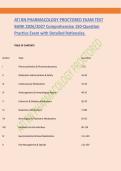
ATI RN PHARMACOLOGY PROCTORED EXAM TEST
BANK 2026/2027 Comprehensive 150-Question
Practice Exam with Detailed Rationales.
TABLE OF CONTENTS
Section Topic Questions
I Pharmacokinetics & Pharmacodynamics 1-15
II Medication Administration & Safety 16-30
III Cardiovascular Medications 31-45
IV Anticoagulants & Hematological Agents 46-55
V Endocrine & Diabetes Medications 56-70
VI Respiratory Medications 71-80
VII Neurological & Psychiatric Medications 81-95
VIII Antibiotics & Anti-Infectives 96-110
IX Gastrointestinal & Renal Medications 111-120
X Pain Management & Opioids 121-130
,Section Topic Questions
XI Chemotherapy & Immunosuppressants 131-140
XII Emergency Medications & Antidotes 141-150
SECTION I: PHARMACOKINETICS & PHARMACODYNAMICS
Q1. A nurse is teaching a client about a newly prescribed medication. Which statement by
the client indicates an understanding of pharmacokinetics?
A) "The medication will start working immediately after I take it."
B) "My body will absorb, distribute, metabolize, and eliminate the medication."
C) "The medication will only affect the area where I apply it."
D) "I will not experience any side effects from this medication."
Correct Answer: B
Rationale: Pharmacokinetics refers to how the body processes a medication through
absorption, distribution, metabolism, and excretion (ADME). Option A describes onset of action,
not pharmacokinetics. Option C describes local effect. Option D is incorrect as all medications
have potential side effects.
Q2. A nurse is reviewing factors that affect drug absorption with a client. Which factor
should the nurse identify as having the most significant impact on oral drug absorption?
A) Liver function
B) Kidney function
C) Gastric pH and presence of food
D) Protein binding
Correct Answer: C
Rationale: Gastric pH and the presence of food in the stomach significantly affect drug
absorption. Liver function affects metabolism, kidney function affects excretion, and protein
binding affects distribution, not absorption.
, Q3. A nurse is caring for a client prescribed a medication with a narrow therapeutic index.
Which action should the nurse prioritize?
A) Monitor serum drug levels closely
B) Administer the medication with food
C) Double the dose if the client misses a dose
D) Discontinue the medication if side effects occur
Correct Answer: A
Rationale: Medications with a narrow therapeutic index (e.g., digoxin, lithium, warfarin,
phenytoin) require close monitoring of serum drug levels because the difference between
therapeutic and toxic doses is small.
Q4. A nurse is preparing to administer a medication that undergoes extensive first-pass
metabolism. Which route of administration would completely bypass first-pass metabolism?
A) Oral
B) Sublingual
C) Rectal
D) Intravenous
Correct Answer: D
Rationale: First-pass metabolism occurs when a medication is absorbed from the GI tract and
metabolized by the liver before reaching systemic circulation. Intravenous administration
bypasses this entirely.
Q5. A client asks the nurse why their prescribed medication needs to be taken with food.
Which response by the nurse is most accurate?
A) "Taking it with food prevents stomach ulcers."
B) "Food enhances the absorption of the medication."
C) "Food decreases gastric irritation and may affect absorption."
D) "The medication will not work without food."
Correct Answer: C
, Rationale: Food can decrease gastric irritation and may affect the rate and extent of drug
absorption. Some medications should be taken with food to minimize GI upset, while others
should be taken on an empty stomach for optimal absorption.
Q6. A nurse is monitoring a client receiving a medication that is highly protein-bound.
Which laboratory value should the nurse monitor closely?
A) Serum creatinine
B) Serum albumin
C) Complete blood count
D) Liver function tests
Correct Answer: B
Rationale: Highly protein-bound medications rely on albumin for transport in the bloodstream.
Low serum albumin levels can lead to increased free drug concentrations, potentially causing
toxicity.
Q7. A nurse is teaching a client about drug metabolism. Which organ is primarily
responsible for drug metabolism?
A) Kidneys
B) Lungs
C) Liver
D) Heart
Correct Answer: C
Rationale: The liver is the primary organ responsible for drug metabolism through the
cytochrome P450 enzyme system. The kidneys are primarily responsible for drug excretion.
Q8. A nurse is reviewing a client's medication regimen and notes that two drugs are
competing for the same protein-binding sites. What effect should the nurse anticipate?
A) Decreased therapeutic effect of both drugs
B) Increased free concentration of one or both drugs
C) Decreased absorption of both drugs
D) Increased excretion of both drugs
BANK 2026/2027 Comprehensive 150-Question
Practice Exam with Detailed Rationales.
TABLE OF CONTENTS
Section Topic Questions
I Pharmacokinetics & Pharmacodynamics 1-15
II Medication Administration & Safety 16-30
III Cardiovascular Medications 31-45
IV Anticoagulants & Hematological Agents 46-55
V Endocrine & Diabetes Medications 56-70
VI Respiratory Medications 71-80
VII Neurological & Psychiatric Medications 81-95
VIII Antibiotics & Anti-Infectives 96-110
IX Gastrointestinal & Renal Medications 111-120
X Pain Management & Opioids 121-130
,Section Topic Questions
XI Chemotherapy & Immunosuppressants 131-140
XII Emergency Medications & Antidotes 141-150
SECTION I: PHARMACOKINETICS & PHARMACODYNAMICS
Q1. A nurse is teaching a client about a newly prescribed medication. Which statement by
the client indicates an understanding of pharmacokinetics?
A) "The medication will start working immediately after I take it."
B) "My body will absorb, distribute, metabolize, and eliminate the medication."
C) "The medication will only affect the area where I apply it."
D) "I will not experience any side effects from this medication."
Correct Answer: B
Rationale: Pharmacokinetics refers to how the body processes a medication through
absorption, distribution, metabolism, and excretion (ADME). Option A describes onset of action,
not pharmacokinetics. Option C describes local effect. Option D is incorrect as all medications
have potential side effects.
Q2. A nurse is reviewing factors that affect drug absorption with a client. Which factor
should the nurse identify as having the most significant impact on oral drug absorption?
A) Liver function
B) Kidney function
C) Gastric pH and presence of food
D) Protein binding
Correct Answer: C
Rationale: Gastric pH and the presence of food in the stomach significantly affect drug
absorption. Liver function affects metabolism, kidney function affects excretion, and protein
binding affects distribution, not absorption.
, Q3. A nurse is caring for a client prescribed a medication with a narrow therapeutic index.
Which action should the nurse prioritize?
A) Monitor serum drug levels closely
B) Administer the medication with food
C) Double the dose if the client misses a dose
D) Discontinue the medication if side effects occur
Correct Answer: A
Rationale: Medications with a narrow therapeutic index (e.g., digoxin, lithium, warfarin,
phenytoin) require close monitoring of serum drug levels because the difference between
therapeutic and toxic doses is small.
Q4. A nurse is preparing to administer a medication that undergoes extensive first-pass
metabolism. Which route of administration would completely bypass first-pass metabolism?
A) Oral
B) Sublingual
C) Rectal
D) Intravenous
Correct Answer: D
Rationale: First-pass metabolism occurs when a medication is absorbed from the GI tract and
metabolized by the liver before reaching systemic circulation. Intravenous administration
bypasses this entirely.
Q5. A client asks the nurse why their prescribed medication needs to be taken with food.
Which response by the nurse is most accurate?
A) "Taking it with food prevents stomach ulcers."
B) "Food enhances the absorption of the medication."
C) "Food decreases gastric irritation and may affect absorption."
D) "The medication will not work without food."
Correct Answer: C
, Rationale: Food can decrease gastric irritation and may affect the rate and extent of drug
absorption. Some medications should be taken with food to minimize GI upset, while others
should be taken on an empty stomach for optimal absorption.
Q6. A nurse is monitoring a client receiving a medication that is highly protein-bound.
Which laboratory value should the nurse monitor closely?
A) Serum creatinine
B) Serum albumin
C) Complete blood count
D) Liver function tests
Correct Answer: B
Rationale: Highly protein-bound medications rely on albumin for transport in the bloodstream.
Low serum albumin levels can lead to increased free drug concentrations, potentially causing
toxicity.
Q7. A nurse is teaching a client about drug metabolism. Which organ is primarily
responsible for drug metabolism?
A) Kidneys
B) Lungs
C) Liver
D) Heart
Correct Answer: C
Rationale: The liver is the primary organ responsible for drug metabolism through the
cytochrome P450 enzyme system. The kidneys are primarily responsible for drug excretion.
Q8. A nurse is reviewing a client's medication regimen and notes that two drugs are
competing for the same protein-binding sites. What effect should the nurse anticipate?
A) Decreased therapeutic effect of both drugs
B) Increased free concentration of one or both drugs
C) Decreased absorption of both drugs
D) Increased excretion of both drugs


