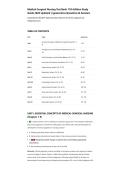
Medical-Surgical Nursing Test Bank 11th Edition Study
Guide 2026 Updated | Ignatavicius Questions & Answers
Comprehensive NCLEX®-Style Examination Resource for Clinical Judgment and
Collaborative Care
TABLE OF CONTENTS
Unit Topic Questions
Essential Concepts of Medical-Surgical Nursing (Ch. 1-
Unit I 1-20
9)
Emergency Care and Disaster Preparedness (Ch. 10-
Unit II 21-30
12)
Unit III Fluid, Electrolyte, and Acid-Base Balance (Ch. 13-15) 31-45
Unit IV Immunity and Infectious Conditions (Ch. 16-19) 46-55
Unit V Integumentary System (Ch. 20-21) 56-65
Unit VI Respiratory System (Ch. 22-26) 66-80
Unit VII Cardiovascular System (Ch. 27-32) 81-95
Unit VIII Hematologic System (Ch. 33-35) 96-105
Unit IX Gastrointestinal System (Ch. 36-41) 106-120
Unit X Renal and Urinary System (Ch. 42-45) 121-130
Unit XI Endocrine System (Ch. 46-49) 131-140
Unit XII Neurologic System (Ch. 50-54) 141-150
UNIT I: ESSENTIAL CONCEPTS OF MEDICAL-SURGICAL NURSING
(Chapters 1-9)
1. 🟢 A newly licensed nurse is orienting to a medical-surgical unit. The preceptor emphasizes
that clinical judgment is essential for safe patient care. Which action best demonstrates the
development of clinical judgment in nursing practice?
A. Following standing orders without modification
B. Implementing interventions based solely on the primary provider's prescriptions
C. 🔴🔴 Recognizing subtle changes in patient status and initiating appropriate
interventions
D. Documenting all assessments at the end of the shift
Rationale: Clinical judgment involves the ability to recognize, analyze, and respond to patient
cues and changes in status. Option C reflects the synthesis of assessment data and timely
action, which is the essence of clinical judgment. Following orders blindly (A, B) does not
demonstrate clinical reasoning, and delaying documentation (D) is not a clinical judgment skill.
,2. 🟢 The nurse is caring for an older adult patient who has multiple chronic conditions. Which
nursing action reflects the concept of "systems thinking" in medical-surgical nursing?
A. Focusing only on the patient's primary admitting diagnosis
B. 🔴🔴 Considering how the patient's comorbidities, medications, and social support
interact to affect health outcomes
C. Delegating all patient education to the unlicensed assistive personnel
D. Administering medications without reviewing the medication reconciliation
Rationale: Systems thinking involves understanding how various elements of a patient's
situation—physiological, psychological, social, and environmental—interconnect and influence
outcomes. Option B demonstrates this holistic perspective. Options A, C, and D represent
fragmented approaches that do not reflect systems thinking.
3. 🟢 The nurse is preparing to discharge a patient who had a myocardial infarction. Which
action best demonstrates the application of the nursing process in discharge planning?
A. Providing a list of medications without explanation
B. 🔴🔴 Assessing the patient's understanding of self-care, planning teaching sessions,
implementing education, and evaluating learning
C. Referring the patient to a cardiologist without further assessment
D. Giving the patient written instructions and asking them to read them at home
Rationale: The nursing process (assessment, diagnosis, planning, implementation, evaluation) is
a systematic approach to patient care. Option B correctly sequences all five steps. Options A, C,
and D omit critical steps such as assessment and evaluation.
4. 🟢 A nurse is caring for a patient who is postoperative day 1 following abdominal surgery.
The patient reports pain at 8 on a 0-10 scale. Which intervention should the nurse implement
first?
A. Notify the primary health care provider
B. 🔴🔴 Perform a comprehensive pain assessment including location, quality, and
characteristics
C. Administer the prescribed PRN opioid analgesic
D. Reposition the patient and apply a warm compress
Rationale: Before implementing any intervention, the nurse must first complete a thorough
assessment. Option B is the priority because it provides essential data to guide appropriate
pain management. Options C and D are interventions that should follow assessment. Option A
is premature without assessment data.
5. 🟢 The nurse is teaching a patient about the importance of patient-centered care. Which
statement by the patient indicates understanding of this concept?
A. "The doctor knows what is best for me, so I will follow all instructions."
B. 🔴🔴 "My preferences, values, and needs should guide the decisions about my care."
C. "I should not ask questions because it might bother the nursing staff."
, D. "The hospital policies determine what care I receive."
Rationale: Patient-centered care recognizes the patient as the central figure in healthcare
decisions, incorporating their preferences, values, and needs. Option B correctly reflects this
philosophy. Options A, C, and D suggest a paternalistic or passive approach that does not align
with patient-centered care.
6. 🟢 A patient with heart failure is admitted with shortness of breath and peripheral edema.
The nurse identifies the priority nursing diagnosis as:
A. Risk for Infection
B. 🔴🔴 Excess Fluid Volume related to compromised regulatory mechanisms
C. Impaired Skin Integrity
D. Activity Intolerance
Rationale: The patient's symptoms of shortness of breath and peripheral edema are consistent
with fluid volume excess, a hallmark of heart failure exacerbation. Option B is the priority
diagnosis because it addresses the underlying pathophysiological issue. While the other
options may be relevant, they are not the priority.
7. 🟢 The nurse is evaluating the effectiveness of a teaching session for a patient with newly
diagnosed diabetes mellitus. Which outcome indicates that learning has occurred?
A. The patient states, "I will try to remember what you said."
B. 🔴🔴 The patient demonstrates correct insulin injection technique
C. The patient nods during the teaching session
D. The patient asks for written materials to take home
Rationale: Demonstration of a skill (Option B) is the most reliable indicator that learning has
occurred because it requires the patient to apply knowledge. Options A, C, and D indicate
passive engagement but do not confirm that the patient has actually learned or retained the
information.
8. 🟢 Which action by the nurse best exemplifies the principle of "collaborative care" in
medical-surgical nursing?
A. Making all decisions independently without consulting other team members
B. 🔴🔴 Communicating with the interprofessional team to develop a comprehensive
care plan
C. Delegating all patient care tasks to nursing assistants
D. Following the primary provider's orders without question
Rationale: Collaborative care involves working with an interprofessional team—including
physicians, pharmacists, physical therapists, social workers, and others—to develop and
implement a comprehensive care plan. Option B reflects this approach. Options A, C, and D do
not demonstrate collaboration.
, 9. 🟢 The nurse is caring for an older adult patient who is at risk for falls. Which intervention is
most appropriate to prevent falls in this population?
A. Apply restraints to prevent the patient from getting out of bed
B. 🔴🔴 Keep the bed in the lowest position and ensure the call light is within reach
C. Ambulate the patient without assistance to promote independence
D. Dim the lights to help the patient sleep better at night
Rationale: Keeping the bed in the lowest position and ensuring the call light is within reach are
evidence-based fall prevention strategies. Option B is correct. Restraints (A) should be avoided
unless absolutely necessary. Ambulating without assistance (C) increases fall risk. Dim lights (D)
can increase fall risk by reducing visibility.
10. 🟢 A nurse is providing education to a patient about the importance of health promotion.
Which statement by the patient indicates a need for further teaching?
A. "I should schedule regular health screenings as recommended for my age."
B. "Eating a balanced diet and exercising regularly can help prevent chronic disease."
C. 🔴🔴 "I only need to see my health care provider when I am sick."
D. "Vaccinations are important for preventing infectious diseases."
Rationale: Health promotion emphasizes preventive care and maintaining wellness, not just
treating illness. Option C reflects a reactive rather than proactive approach to health, indicating
a need for further teaching. Options A, B, and D demonstrate understanding of health
promotion principles.
11. 🟢 The nurse is using the clinical judgment model to care for a patient with pneumonia.
Which step involves interpreting patient data to identify the problem?
A. 🔴🔴 Analysis
B. Implementation
C. Evaluation
D. Planning
Rationale: In the clinical judgment model, analysis is the step where the nurse interprets and
clusters patient data to identify problems or patterns. Implementation involves carrying out
interventions, evaluation involves assessing outcomes, and planning involves developing
strategies. Option A is correct.
12. 🟢 A patient who is postoperative day 2 after hip replacement surgery reports sudden
chest pain and shortness of breath. What is the nurse's priority action?
A. Administer the prescribed PRN pain medication
B. 🔴🔴 Assess the patient's vital signs and oxygen saturation immediately
C. Encourage the patient to take deep breaths
D. Notify the primary health care provider
Rationale: Sudden chest pain and shortness of breath in a postoperative patient are
concerning for possible pulmonary embolism. The nurse must first assess vital signs and
Guide 2026 Updated | Ignatavicius Questions & Answers
Comprehensive NCLEX®-Style Examination Resource for Clinical Judgment and
Collaborative Care
TABLE OF CONTENTS
Unit Topic Questions
Essential Concepts of Medical-Surgical Nursing (Ch. 1-
Unit I 1-20
9)
Emergency Care and Disaster Preparedness (Ch. 10-
Unit II 21-30
12)
Unit III Fluid, Electrolyte, and Acid-Base Balance (Ch. 13-15) 31-45
Unit IV Immunity and Infectious Conditions (Ch. 16-19) 46-55
Unit V Integumentary System (Ch. 20-21) 56-65
Unit VI Respiratory System (Ch. 22-26) 66-80
Unit VII Cardiovascular System (Ch. 27-32) 81-95
Unit VIII Hematologic System (Ch. 33-35) 96-105
Unit IX Gastrointestinal System (Ch. 36-41) 106-120
Unit X Renal and Urinary System (Ch. 42-45) 121-130
Unit XI Endocrine System (Ch. 46-49) 131-140
Unit XII Neurologic System (Ch. 50-54) 141-150
UNIT I: ESSENTIAL CONCEPTS OF MEDICAL-SURGICAL NURSING
(Chapters 1-9)
1. 🟢 A newly licensed nurse is orienting to a medical-surgical unit. The preceptor emphasizes
that clinical judgment is essential for safe patient care. Which action best demonstrates the
development of clinical judgment in nursing practice?
A. Following standing orders without modification
B. Implementing interventions based solely on the primary provider's prescriptions
C. 🔴🔴 Recognizing subtle changes in patient status and initiating appropriate
interventions
D. Documenting all assessments at the end of the shift
Rationale: Clinical judgment involves the ability to recognize, analyze, and respond to patient
cues and changes in status. Option C reflects the synthesis of assessment data and timely
action, which is the essence of clinical judgment. Following orders blindly (A, B) does not
demonstrate clinical reasoning, and delaying documentation (D) is not a clinical judgment skill.
,2. 🟢 The nurse is caring for an older adult patient who has multiple chronic conditions. Which
nursing action reflects the concept of "systems thinking" in medical-surgical nursing?
A. Focusing only on the patient's primary admitting diagnosis
B. 🔴🔴 Considering how the patient's comorbidities, medications, and social support
interact to affect health outcomes
C. Delegating all patient education to the unlicensed assistive personnel
D. Administering medications without reviewing the medication reconciliation
Rationale: Systems thinking involves understanding how various elements of a patient's
situation—physiological, psychological, social, and environmental—interconnect and influence
outcomes. Option B demonstrates this holistic perspective. Options A, C, and D represent
fragmented approaches that do not reflect systems thinking.
3. 🟢 The nurse is preparing to discharge a patient who had a myocardial infarction. Which
action best demonstrates the application of the nursing process in discharge planning?
A. Providing a list of medications without explanation
B. 🔴🔴 Assessing the patient's understanding of self-care, planning teaching sessions,
implementing education, and evaluating learning
C. Referring the patient to a cardiologist without further assessment
D. Giving the patient written instructions and asking them to read them at home
Rationale: The nursing process (assessment, diagnosis, planning, implementation, evaluation) is
a systematic approach to patient care. Option B correctly sequences all five steps. Options A, C,
and D omit critical steps such as assessment and evaluation.
4. 🟢 A nurse is caring for a patient who is postoperative day 1 following abdominal surgery.
The patient reports pain at 8 on a 0-10 scale. Which intervention should the nurse implement
first?
A. Notify the primary health care provider
B. 🔴🔴 Perform a comprehensive pain assessment including location, quality, and
characteristics
C. Administer the prescribed PRN opioid analgesic
D. Reposition the patient and apply a warm compress
Rationale: Before implementing any intervention, the nurse must first complete a thorough
assessment. Option B is the priority because it provides essential data to guide appropriate
pain management. Options C and D are interventions that should follow assessment. Option A
is premature without assessment data.
5. 🟢 The nurse is teaching a patient about the importance of patient-centered care. Which
statement by the patient indicates understanding of this concept?
A. "The doctor knows what is best for me, so I will follow all instructions."
B. 🔴🔴 "My preferences, values, and needs should guide the decisions about my care."
C. "I should not ask questions because it might bother the nursing staff."
, D. "The hospital policies determine what care I receive."
Rationale: Patient-centered care recognizes the patient as the central figure in healthcare
decisions, incorporating their preferences, values, and needs. Option B correctly reflects this
philosophy. Options A, C, and D suggest a paternalistic or passive approach that does not align
with patient-centered care.
6. 🟢 A patient with heart failure is admitted with shortness of breath and peripheral edema.
The nurse identifies the priority nursing diagnosis as:
A. Risk for Infection
B. 🔴🔴 Excess Fluid Volume related to compromised regulatory mechanisms
C. Impaired Skin Integrity
D. Activity Intolerance
Rationale: The patient's symptoms of shortness of breath and peripheral edema are consistent
with fluid volume excess, a hallmark of heart failure exacerbation. Option B is the priority
diagnosis because it addresses the underlying pathophysiological issue. While the other
options may be relevant, they are not the priority.
7. 🟢 The nurse is evaluating the effectiveness of a teaching session for a patient with newly
diagnosed diabetes mellitus. Which outcome indicates that learning has occurred?
A. The patient states, "I will try to remember what you said."
B. 🔴🔴 The patient demonstrates correct insulin injection technique
C. The patient nods during the teaching session
D. The patient asks for written materials to take home
Rationale: Demonstration of a skill (Option B) is the most reliable indicator that learning has
occurred because it requires the patient to apply knowledge. Options A, C, and D indicate
passive engagement but do not confirm that the patient has actually learned or retained the
information.
8. 🟢 Which action by the nurse best exemplifies the principle of "collaborative care" in
medical-surgical nursing?
A. Making all decisions independently without consulting other team members
B. 🔴🔴 Communicating with the interprofessional team to develop a comprehensive
care plan
C. Delegating all patient care tasks to nursing assistants
D. Following the primary provider's orders without question
Rationale: Collaborative care involves working with an interprofessional team—including
physicians, pharmacists, physical therapists, social workers, and others—to develop and
implement a comprehensive care plan. Option B reflects this approach. Options A, C, and D do
not demonstrate collaboration.
, 9. 🟢 The nurse is caring for an older adult patient who is at risk for falls. Which intervention is
most appropriate to prevent falls in this population?
A. Apply restraints to prevent the patient from getting out of bed
B. 🔴🔴 Keep the bed in the lowest position and ensure the call light is within reach
C. Ambulate the patient without assistance to promote independence
D. Dim the lights to help the patient sleep better at night
Rationale: Keeping the bed in the lowest position and ensuring the call light is within reach are
evidence-based fall prevention strategies. Option B is correct. Restraints (A) should be avoided
unless absolutely necessary. Ambulating without assistance (C) increases fall risk. Dim lights (D)
can increase fall risk by reducing visibility.
10. 🟢 A nurse is providing education to a patient about the importance of health promotion.
Which statement by the patient indicates a need for further teaching?
A. "I should schedule regular health screenings as recommended for my age."
B. "Eating a balanced diet and exercising regularly can help prevent chronic disease."
C. 🔴🔴 "I only need to see my health care provider when I am sick."
D. "Vaccinations are important for preventing infectious diseases."
Rationale: Health promotion emphasizes preventive care and maintaining wellness, not just
treating illness. Option C reflects a reactive rather than proactive approach to health, indicating
a need for further teaching. Options A, B, and D demonstrate understanding of health
promotion principles.
11. 🟢 The nurse is using the clinical judgment model to care for a patient with pneumonia.
Which step involves interpreting patient data to identify the problem?
A. 🔴🔴 Analysis
B. Implementation
C. Evaluation
D. Planning
Rationale: In the clinical judgment model, analysis is the step where the nurse interprets and
clusters patient data to identify problems or patterns. Implementation involves carrying out
interventions, evaluation involves assessing outcomes, and planning involves developing
strategies. Option A is correct.
12. 🟢 A patient who is postoperative day 2 after hip replacement surgery reports sudden
chest pain and shortness of breath. What is the nurse's priority action?
A. Administer the prescribed PRN pain medication
B. 🔴🔴 Assess the patient's vital signs and oxygen saturation immediately
C. Encourage the patient to take deep breaths
D. Notify the primary health care provider
Rationale: Sudden chest pain and shortness of breath in a postoperative patient are
concerning for possible pulmonary embolism. The nurse must first assess vital signs and