
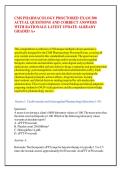
CMS PHARMACOLOGY PROCTORED EXAM 300
ACTUAL QUESTIONS AND CORRECT ANSWERS
WITH RATIONALE LATEST UPDATE ALREADY
GRADED A+
This comprehensive collection of 300 unique multiple-choice questions is
specifically designed for the CMS Pharmacology Proctored Exam, covering all
core content areas tested in this standardized assessment. The questions are
organized into seven sections addressing cardiovascular and anticoagulant
therapies, endocrine and metabolic agents, neurological and psychiatric
medications, antimicrobial and anti-infective drugs, respiratory and gastrointestinal
pharmacology, pain management, and medication administration safety. Each
question includes the correct answer and a detailed rationale explaining the
pharmacological principles, adverse effects, drug interactions, nursing
interventions, and clinical decision-making required for safe medication
administration. This resource emphasizes critical thinking and clinical judgment,
preparing students for NGN-style questions and the comprehensive knowledge
required for pharmacology success .
Section 1: Cardiovascular and Anticoagulant Pharmacology (Questions 1-45)
Question 1
A nurse is reviewing a client's 0800 laboratory values at 1100. The nurse notes that
the client received heparin at 1100. Which of the following laboratory values
warrants an incident report?
A. aPTT 90 seconds
B. Platelet count 250,000/mm³
C. Hemoglobin 14 g/dL
D. aPTT 45 seconds
Answer: A
Rationale: The therapeutic aPTT range for heparin therapy is typically 1.5 to 2.5
times the normal control, approximately 60-80 seconds. An aPTT of 90 seconds
,indicates the client is at increased risk for bleeding. The heparin infusion rate
should be decreased and the provider notified to prevent hemorrhagic
complications .
Question 2
A nurse is caring for a client who reports taking propranolol for several years but
has recently stopped for financial reasons. The nurse should assess the client for
which of the following findings?
A. Bradycardia
B. Tachycardia
C. Hypotension
D. Drowsiness
Answer: B
Rationale: Propranolol is a beta-blocker that decreases heart rate. Abrupt
discontinuation can cause rebound tachycardia, hypertension, and worsening
angina due to beta-receptor upregulation. Beta-blockers must be tapered gradually
under provider supervision to prevent these adverse cardiovascular effects .
Question 3
A nurse is assessing a client who is receiving heparin therapy for deep vein
thrombosis. Which of the following findings should indicate to the nurse that the
therapy is effective?
A. Platelets within the expected reference range
B. aPTT within therapeutic range
C. INR between 2.0 and 3.0
D. Decreased white blood cell count
Answer: B
Rationale: The effectiveness of heparin therapy is monitored by aPTT levels. The
therapeutic range for heparin is typically 1.5 to 2.5 times the normal control.
Platelet counts are monitored to detect heparin-induced thrombocytopenia but do
not indicate therapeutic effectiveness .
Question 4
A nurse is caring for a client who is receiving heparin therapy. If the client requires
a reversal of the effects of heparin, which of the following medications should the
nurse expect the provider to prescribe?
,A. Protamine sulfate
B. Vitamin K
C. Naloxone
D. Flumazenil
Answer: A
Rationale: Protamine sulfate is the specific antidote for heparin. It binds to heparin
to form an inactive complex and rapidly reverses anticoagulant effects. Vitamin K
is the antidote for warfarin. Naloxone reverses opioids, and flumazenil reverses
benzodiazepines .
Question 5
A nurse is providing discharge teaching about warfarin to a client who has deep
vein thrombosis. The nurse should instruct the client to obtain which of the
following laboratory tests monthly?
A. aPTT
B. INR
C. Platelet count
D. Hemoglobin
Answer: B
Rationale: Warfarin therapy is monitored by INR (International Normalized Ratio),
with a therapeutic range typically between 2.0 and 3.0 for most indications. aPTT
is used for heparin monitoring. Monthly INR testing ensures therapeutic levels and
prevents bleeding or clotting complications .
Question 6
A nurse is reviewing the medical history of a client prior to medication
administration and notes a history of anaphylactic reaction to penicillin. The nurse
should identify which of the following medications as a contraindication for this
client?
A. Vancomycin
B. Azithromycin
C. Ceftriaxone
D. Ciprofloxacin
Answer: C
, Rationale: Ceftriaxone is a cephalosporin antibiotic. Patients with a history of
severe penicillin allergy (anaphylaxis) may have cross-sensitivity to
cephalosporins. The nurse should withhold the medication and notify the provider
for alternative antibiotic selection .
Question 7
A nurse is preparing to administer digoxin orally to a client. Identify the sequence
of steps the nurse should take.
A. Obtain the client's apical heart rate
B. Remove the medication from the dispensing system
C. Open the medication package
D. Compare the client's wristband to the medication administration record
E. Document administration of the medication
Answer: A, B, C, D, E
Rationale: The correct sequence follows the Six Rights of Medication
Administration. Apical heart rate must be checked before digoxin administration;
the medication is held if heart rate is below 60 beats per minute. This sequence
ensures patient safety by verifying the correct medication, dose, route, time, and
patient .
Question 8
A nurse is caring for a client who has heart failure and is taking
hydrochlorothiazide. The nurse should monitor the client for which of the
following adverse effects of the medication?
A. Hyperkalemia
B. Hypokalemia
C. Hyponatremia
D. Hypocalcemia
Answer: B
Rationale: Hydrochlorothiazide is a thiazide diuretic that causes potassium
wasting. Hypokalemia is a well-documented adverse effect that can lead to cardiac
arrhythmias. Serum potassium levels should be monitored regularly, and potassium
supplementation may be needed .
Question 9
ACTUAL QUESTIONS AND CORRECT ANSWERS
WITH RATIONALE LATEST UPDATE ALREADY
GRADED A+
This comprehensive collection of 300 unique multiple-choice questions is
specifically designed for the CMS Pharmacology Proctored Exam, covering all
core content areas tested in this standardized assessment. The questions are
organized into seven sections addressing cardiovascular and anticoagulant
therapies, endocrine and metabolic agents, neurological and psychiatric
medications, antimicrobial and anti-infective drugs, respiratory and gastrointestinal
pharmacology, pain management, and medication administration safety. Each
question includes the correct answer and a detailed rationale explaining the
pharmacological principles, adverse effects, drug interactions, nursing
interventions, and clinical decision-making required for safe medication
administration. This resource emphasizes critical thinking and clinical judgment,
preparing students for NGN-style questions and the comprehensive knowledge
required for pharmacology success .
Section 1: Cardiovascular and Anticoagulant Pharmacology (Questions 1-45)
Question 1
A nurse is reviewing a client's 0800 laboratory values at 1100. The nurse notes that
the client received heparin at 1100. Which of the following laboratory values
warrants an incident report?
A. aPTT 90 seconds
B. Platelet count 250,000/mm³
C. Hemoglobin 14 g/dL
D. aPTT 45 seconds
Answer: A
Rationale: The therapeutic aPTT range for heparin therapy is typically 1.5 to 2.5
times the normal control, approximately 60-80 seconds. An aPTT of 90 seconds
,indicates the client is at increased risk for bleeding. The heparin infusion rate
should be decreased and the provider notified to prevent hemorrhagic
complications .
Question 2
A nurse is caring for a client who reports taking propranolol for several years but
has recently stopped for financial reasons. The nurse should assess the client for
which of the following findings?
A. Bradycardia
B. Tachycardia
C. Hypotension
D. Drowsiness
Answer: B
Rationale: Propranolol is a beta-blocker that decreases heart rate. Abrupt
discontinuation can cause rebound tachycardia, hypertension, and worsening
angina due to beta-receptor upregulation. Beta-blockers must be tapered gradually
under provider supervision to prevent these adverse cardiovascular effects .
Question 3
A nurse is assessing a client who is receiving heparin therapy for deep vein
thrombosis. Which of the following findings should indicate to the nurse that the
therapy is effective?
A. Platelets within the expected reference range
B. aPTT within therapeutic range
C. INR between 2.0 and 3.0
D. Decreased white blood cell count
Answer: B
Rationale: The effectiveness of heparin therapy is monitored by aPTT levels. The
therapeutic range for heparin is typically 1.5 to 2.5 times the normal control.
Platelet counts are monitored to detect heparin-induced thrombocytopenia but do
not indicate therapeutic effectiveness .
Question 4
A nurse is caring for a client who is receiving heparin therapy. If the client requires
a reversal of the effects of heparin, which of the following medications should the
nurse expect the provider to prescribe?
,A. Protamine sulfate
B. Vitamin K
C. Naloxone
D. Flumazenil
Answer: A
Rationale: Protamine sulfate is the specific antidote for heparin. It binds to heparin
to form an inactive complex and rapidly reverses anticoagulant effects. Vitamin K
is the antidote for warfarin. Naloxone reverses opioids, and flumazenil reverses
benzodiazepines .
Question 5
A nurse is providing discharge teaching about warfarin to a client who has deep
vein thrombosis. The nurse should instruct the client to obtain which of the
following laboratory tests monthly?
A. aPTT
B. INR
C. Platelet count
D. Hemoglobin
Answer: B
Rationale: Warfarin therapy is monitored by INR (International Normalized Ratio),
with a therapeutic range typically between 2.0 and 3.0 for most indications. aPTT
is used for heparin monitoring. Monthly INR testing ensures therapeutic levels and
prevents bleeding or clotting complications .
Question 6
A nurse is reviewing the medical history of a client prior to medication
administration and notes a history of anaphylactic reaction to penicillin. The nurse
should identify which of the following medications as a contraindication for this
client?
A. Vancomycin
B. Azithromycin
C. Ceftriaxone
D. Ciprofloxacin
Answer: C
, Rationale: Ceftriaxone is a cephalosporin antibiotic. Patients with a history of
severe penicillin allergy (anaphylaxis) may have cross-sensitivity to
cephalosporins. The nurse should withhold the medication and notify the provider
for alternative antibiotic selection .
Question 7
A nurse is preparing to administer digoxin orally to a client. Identify the sequence
of steps the nurse should take.
A. Obtain the client's apical heart rate
B. Remove the medication from the dispensing system
C. Open the medication package
D. Compare the client's wristband to the medication administration record
E. Document administration of the medication
Answer: A, B, C, D, E
Rationale: The correct sequence follows the Six Rights of Medication
Administration. Apical heart rate must be checked before digoxin administration;
the medication is held if heart rate is below 60 beats per minute. This sequence
ensures patient safety by verifying the correct medication, dose, route, time, and
patient .
Question 8
A nurse is caring for a client who has heart failure and is taking
hydrochlorothiazide. The nurse should monitor the client for which of the
following adverse effects of the medication?
A. Hyperkalemia
B. Hypokalemia
C. Hyponatremia
D. Hypocalcemia
Answer: B
Rationale: Hydrochlorothiazide is a thiazide diuretic that causes potassium
wasting. Hypokalemia is a well-documented adverse effect that can lead to cardiac
arrhythmias. Serum potassium levels should be monitored regularly, and potassium
supplementation may be needed .
Question 9


