AMH2020 midterm pt.2 Questions and Answers
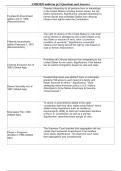
Granted citizenship to all persons born or naturalized
in the United States including former slaves, but not
Native Americans. Significance: granted citizenship to
Fourteenth Amendment former slaves and prohibited States from denying
ratified July 9, 1868 citizens their rights under the Constitution.
(Reconstruction)
The right of citizens of the United States to vote shall
not be denied or abridged by the United States or by
any State on account of race, color, or previous
Fifteenth Amendment condition of servitude." Significance: prevented
ratified February 3, 1870 citizens from being denied the right to vote based on
(Reconstruction) race or former enslavement.
Prohibited all Chinese laborers from emigrating to the
United States for ten years. Significance: First federal
Chinese Exclusion Act of law to restrict immigration based on race and class.
1882 (Gilded Age)
Divided tribal lands and allotted' them to individuals,
granting 160 acres to each head of a family and
lesser amounts to others." Significance: "most
Dawes Severalty Act of sweeping native American policy in U.S. History.
1887 (Gilded Age). Attempted to force Native Americans to become
"Americanized."
"A series of amendments added to the state
constitution that nine other states would follow" which
added voting regulations such as residency
Mississippi Plan 1890 requirements, ability to read and understand sections
(Gilded Age). of the U.S. Constitution as well as a poll tax.
Significance: disenfranchised people of color.
The Supreme Court decided that segregation did not
Plessy v Ferguson violate the Fourteenth Amendment if the facilities
decided in 1896 (Gilded were equal. Significance: The Supreme court ruled
Age). that segregation was constitutional.
Granted citizenship to all persons born or naturalized
in the United States including former slaves, but not
Native Americans. Significance: granted citizenship to
Fourteenth Amendment former slaves and prohibited States from denying
ratified July 9, 1868 citizens their rights under the Constitution.
(Reconstruction)
The right of citizens of the United States to vote shall
not be denied or abridged by the United States or by
any State on account of race, color, or previous
Fifteenth Amendment condition of servitude." Significance: prevented
ratified February 3, 1870 citizens from being denied the right to vote based on
(Reconstruction) race or former enslavement.
Prohibited all Chinese laborers from emigrating to the
United States for ten years. Significance: First federal
Chinese Exclusion Act of law to restrict immigration based on race and class.
1882 (Gilded Age)
Divided tribal lands and allotted' them to individuals,
granting 160 acres to each head of a family and
lesser amounts to others." Significance: "most
Dawes Severalty Act of sweeping native American policy in U.S. History.
1887 (Gilded Age). Attempted to force Native Americans to become
"Americanized."
"A series of amendments added to the state
constitution that nine other states would follow" which
added voting regulations such as residency
Mississippi Plan 1890 requirements, ability to read and understand sections
(Gilded Age). of the U.S. Constitution as well as a poll tax.
Significance: disenfranchised people of color.
The Supreme Court decided that segregation did not
Plessy v Ferguson violate the Fourteenth Amendment if the facilities
decided in 1896 (Gilded were equal. Significance: The Supreme court ruled
Age). that segregation was constitutional.