

[NEW NSG 3850
NSG 3850 examexam 4 Questions
4 Questions & Answers.pdf]& Answers | Latest Already Graded A+ |Ques
//2026!!!!!!!!!
tions with Correct Answers 2026 latest update!!
Study online at https://quizlet.com/_jbbbnx
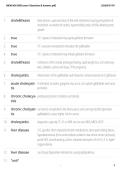
1. cholelithiasis three phases: supersaturation of bile with cholesterol causing precipitation of
cholesterol, nucleation of crystals, hypermobility (stasis of bile) allowing stone
growth
2. true T/F: crystals of cholesterol may ignite gallstone formation
3. true T/F: excessive somatostatin stimulates the gallbladder
4. true T/F: crystals of cholesterol may initiate gallstone formation
5. cholelithiasis risk factors of this include prolonged fasting, rapid weight loss, oral contracep-
tives, diabetes, spinal cord injury, TPN, pregnancy
6. cholecystitis inflammation of the gallbladder wall related to continued presence of gallstones
7. acute cholecysti- if untreated, escalates; gangrene may occur. can rupture gallbladder and cause
tis peritonitis
8. chronic cholecys- predisposing factors: diabetes and obesity
titis
9. chronic cholcysti- can lead to complications like biliary sepsis and scarring/calcified (porcelain
tis gallbladder); causes higher risk for cancer.
10. cholecystitis diagnostics: typically CT, US, or MRI, but can use HIDA, MRCA, ERCP
11. liver disease S/S: jaundice (from impaired bilirubin metabolism), decreased clotting factors,
hypoalbuminemia (from ascites/edema related to low serum oncotic pressure),
portal HTN, muscle wasting, ascites, impaired absorption of vit A, D, E, K, hyper-
triglyceridemia
12. liver disease can disrupt lipoprotein metabolism causing dyslipidemias.
13. "anti"
1
, [NEW NSG 3850
NSG 3850 examexam 4 Questions
4 Questions & Answers.pdf]& Answers | Latest Already Graded A+ |Ques
//2026!!!!!!!!!
tions with Correct Answers 2026 latest update!!
Study online at https://quizlet.com/_jbbbnx
with hepatitis, what term means immunity or forming immunity to the specific hep
virus
14. hep A and E heps that are fecal oral route
15. Hep A 2-7 week incubation
16. hep A treatment is supportive and avoiding hepatoyoxins
17. hep A clinical manifestations: rashes, glomerulonephritis, angioedema, jaundice, abd
pain
18. A and B can get immunized from these heps
19. IgG(previous in- antibodies the body makes against hep A
fection) and IgM
(acute infection)
20. hep A treatment is supportive and avoiding hepatotoxins like ETOH (alcohol)
21. B, C, D heps transmitted through sex, blood, contaminated needles. mother can pass to
baby
22. hep B incubation period 2-6 months
23. hep B hep that can lead to chronic liver infection
24. active hep infec- positive serologic markers HBsAg and HBeAg show what?
tion
25. hep C incubation period 2-26 weeks
26. hep A can be asymptomatic. can cause fatigue, nausea, anorexia, jaundice
2
NSG 3850 examexam 4 Questions
4 Questions & Answers.pdf]& Answers | Latest Already Graded A+ |Ques
//2026!!!!!!!!!
tions with Correct Answers 2026 latest update!!
Study online at https://quizlet.com/_jbbbnx
1. cholelithiasis three phases: supersaturation of bile with cholesterol causing precipitation of
cholesterol, nucleation of crystals, hypermobility (stasis of bile) allowing stone
growth
2. true T/F: crystals of cholesterol may ignite gallstone formation
3. true T/F: excessive somatostatin stimulates the gallbladder
4. true T/F: crystals of cholesterol may initiate gallstone formation
5. cholelithiasis risk factors of this include prolonged fasting, rapid weight loss, oral contracep-
tives, diabetes, spinal cord injury, TPN, pregnancy
6. cholecystitis inflammation of the gallbladder wall related to continued presence of gallstones
7. acute cholecysti- if untreated, escalates; gangrene may occur. can rupture gallbladder and cause
tis peritonitis
8. chronic cholecys- predisposing factors: diabetes and obesity
titis
9. chronic cholcysti- can lead to complications like biliary sepsis and scarring/calcified (porcelain
tis gallbladder); causes higher risk for cancer.
10. cholecystitis diagnostics: typically CT, US, or MRI, but can use HIDA, MRCA, ERCP
11. liver disease S/S: jaundice (from impaired bilirubin metabolism), decreased clotting factors,
hypoalbuminemia (from ascites/edema related to low serum oncotic pressure),
portal HTN, muscle wasting, ascites, impaired absorption of vit A, D, E, K, hyper-
triglyceridemia
12. liver disease can disrupt lipoprotein metabolism causing dyslipidemias.
13. "anti"
1
, [NEW NSG 3850
NSG 3850 examexam 4 Questions
4 Questions & Answers.pdf]& Answers | Latest Already Graded A+ |Ques
//2026!!!!!!!!!
tions with Correct Answers 2026 latest update!!
Study online at https://quizlet.com/_jbbbnx
with hepatitis, what term means immunity or forming immunity to the specific hep
virus
14. hep A and E heps that are fecal oral route
15. Hep A 2-7 week incubation
16. hep A treatment is supportive and avoiding hepatoyoxins
17. hep A clinical manifestations: rashes, glomerulonephritis, angioedema, jaundice, abd
pain
18. A and B can get immunized from these heps
19. IgG(previous in- antibodies the body makes against hep A
fection) and IgM
(acute infection)
20. hep A treatment is supportive and avoiding hepatotoxins like ETOH (alcohol)
21. B, C, D heps transmitted through sex, blood, contaminated needles. mother can pass to
baby
22. hep B incubation period 2-6 months
23. hep B hep that can lead to chronic liver infection
24. active hep infec- positive serologic markers HBsAg and HBeAg show what?
tion
25. hep C incubation period 2-26 weeks
26. hep A can be asymptomatic. can cause fatigue, nausea, anorexia, jaundice
2


