

[NSG 318 Exam 4 Q&A]
NSG 318 Exam 4
Study online at https://quizlet.com/_hjimyn
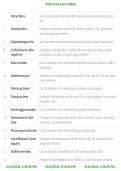
1. Penicillins Broad-spectrum penicillin that inhibits bacterial cell wall synthesis (bacterici-
dal).
2. Amoxicillin Prototype of penicillins used for OM, tonsillitis, sinusitis, UTIs, gastric ulcers,
skin and respiratory infections.
3. Cephalosporins 3rd Generation Cephalosporin that inhibits cell wall synthesis (bactericidal).
4. Ceftriaxone (Ro- Prototype of cephalosporins used for OM, meningitis, gonorrhea, surgical
cephin) prophylaxis, skin, joint, UTI, gynecologic infections.
5. Macrolides Class of antibiotics that inhibits protein synthesis (static at low doses, cidal at
high doses).
6. Azithromycin Prototype of macrolides used for conjunctivitis, OM, sinusitis, STIs, skin/respi-
ratory infections.
7. Tetracyclines Class of antibiotics that inhibits protein synthesis (bacteriostatic).
8. Doxycycline Prototype of tetracyclines used for acne, STIs, rickettsia, plague, cholera, respi-
ratory/skin/UTIs.
9. Aminoglycosides Class of antibiotics that inhibits protein synthesis (bactericidal).
10. Gentamicin Sul- Prototype of aminoglycosides used for serious infections (sepsis, meningitis,
fate respiratory, UTI, intraabdominal).
11. Fluoroquinolones Class of antibiotics that inhibits DNA gyrase (bactericidal).
12. Levofloxacin (Lev- Prototype of fluoroquinolones used for anthrax, skin, UTI, respiratory, bone,
aquin) abdominal infections.
13. Sulfonamides Class of antibiotics that inhibits folic acid synthesis (bactericidal).
14. Prototype of sulfonamides used for MRSA, UTI, OM, respiratory infections.
4/16/2026, 4:58:38 PM 4/16/2026,:58:36 PM 4/16/2026, 4:58:34 PM
, [NSG 318 Exam 4 Q&A]
NSG 318 Exam 4
Study online at https://quizlet.com/_hjimyn
TMP-SMX
(Bactrim)
15. Antituberculars Class of drugs that inhibits mycobacterial cell wall synthesis.
16. Isoniazid (INH) Prototype of antituberculars used for active & latent TB.
17. MOA (Mechanism The method by which a drug produces its effects, such as inhibiting cell wall
of Action) synthesis or protein synthesis.
18. Side Effects Unwanted effects that occur in addition to the desired therapeutic effects of a
drug.
19. Adverse Effects Severe, harmful effects that can occur with drug use, such as superinfection or
hepatotoxicity.
20. Nursing Consider- Important factors for nurses to monitor or educate patients about when admin-
ations istering medications.
21. Interactions How a drug may affect or be affected by other substances, including other
medications or food.
22. Avoid Recommendations on what should not be done or consumed while taking a
specific medication.
23. Uses Conditions or diseases for which a drug is prescribed.
24. Nystatin (Myco- Binds sterols, causing cell leakage; used for candidiasis (oral, vaginal, skin); side
statin) effects include GI upset (oral), skin irritation (topical); adverse effects include
SJS, tachycardia, bronchospasm; nursing considerations include swish/swallow
or apply thin layer.
25. Fluconazole (Diflu- ‘fungal membrane permeability; used for Candida infections, cryptococcal
can) meningitis, BMT prophylaxis; side effects include GI upset, headache, rash,
4/16/2026, 4:58:38 PM 4/16/2026,:58:36 PM 4/16/2026, 4:58:34 PM
NSG 318 Exam 4
Study online at https://quizlet.com/_hjimyn
1. Penicillins Broad-spectrum penicillin that inhibits bacterial cell wall synthesis (bacterici-
dal).
2. Amoxicillin Prototype of penicillins used for OM, tonsillitis, sinusitis, UTIs, gastric ulcers,
skin and respiratory infections.
3. Cephalosporins 3rd Generation Cephalosporin that inhibits cell wall synthesis (bactericidal).
4. Ceftriaxone (Ro- Prototype of cephalosporins used for OM, meningitis, gonorrhea, surgical
cephin) prophylaxis, skin, joint, UTI, gynecologic infections.
5. Macrolides Class of antibiotics that inhibits protein synthesis (static at low doses, cidal at
high doses).
6. Azithromycin Prototype of macrolides used for conjunctivitis, OM, sinusitis, STIs, skin/respi-
ratory infections.
7. Tetracyclines Class of antibiotics that inhibits protein synthesis (bacteriostatic).
8. Doxycycline Prototype of tetracyclines used for acne, STIs, rickettsia, plague, cholera, respi-
ratory/skin/UTIs.
9. Aminoglycosides Class of antibiotics that inhibits protein synthesis (bactericidal).
10. Gentamicin Sul- Prototype of aminoglycosides used for serious infections (sepsis, meningitis,
fate respiratory, UTI, intraabdominal).
11. Fluoroquinolones Class of antibiotics that inhibits DNA gyrase (bactericidal).
12. Levofloxacin (Lev- Prototype of fluoroquinolones used for anthrax, skin, UTI, respiratory, bone,
aquin) abdominal infections.
13. Sulfonamides Class of antibiotics that inhibits folic acid synthesis (bactericidal).
14. Prototype of sulfonamides used for MRSA, UTI, OM, respiratory infections.
4/16/2026, 4:58:38 PM 4/16/2026,:58:36 PM 4/16/2026, 4:58:34 PM
, [NSG 318 Exam 4 Q&A]
NSG 318 Exam 4
Study online at https://quizlet.com/_hjimyn
TMP-SMX
(Bactrim)
15. Antituberculars Class of drugs that inhibits mycobacterial cell wall synthesis.
16. Isoniazid (INH) Prototype of antituberculars used for active & latent TB.
17. MOA (Mechanism The method by which a drug produces its effects, such as inhibiting cell wall
of Action) synthesis or protein synthesis.
18. Side Effects Unwanted effects that occur in addition to the desired therapeutic effects of a
drug.
19. Adverse Effects Severe, harmful effects that can occur with drug use, such as superinfection or
hepatotoxicity.
20. Nursing Consider- Important factors for nurses to monitor or educate patients about when admin-
ations istering medications.
21. Interactions How a drug may affect or be affected by other substances, including other
medications or food.
22. Avoid Recommendations on what should not be done or consumed while taking a
specific medication.
23. Uses Conditions or diseases for which a drug is prescribed.
24. Nystatin (Myco- Binds sterols, causing cell leakage; used for candidiasis (oral, vaginal, skin); side
statin) effects include GI upset (oral), skin irritation (topical); adverse effects include
SJS, tachycardia, bronchospasm; nursing considerations include swish/swallow
or apply thin layer.
25. Fluconazole (Diflu- ‘fungal membrane permeability; used for Candida infections, cryptococcal
can) meningitis, BMT prophylaxis; side effects include GI upset, headache, rash,
4/16/2026, 4:58:38 PM 4/16/2026,:58:36 PM 4/16/2026, 4:58:34 PM


