

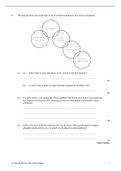
1. The diagram shows the main steps in the biochemical pathways involved in respiration.
G ly c o ly s is
A n a e ro b ic L in k
r e s p ir a tio n r e a c tio n
K re b s c y c le
O x id a tiv e
p h o s p h o ry la tio n
(a) (i) Which step or steps take place on the cristae of the mitochondria?
.........................................................................................................................
(1)
(ii) In which step or steps is carbon dioxide produced in an animal cell?
..........................................................................................................................
(1)
(b) If a pond freezes over during the winter, goldfish can remain alive in the water under the
ice. Explain why they use the carbohydrate stores in their bodies much faster in these
conditions.
...................................................................................................................................
...................................................................................................................................
...................................................................................................................................
(2)
(c) What is the main difference between the way in which ATP is produced by oxidative
phosphorylation and the way in which it is produced in photosynthesis?
...................................................................................................................................
...................................................................................................................................
(1)
(Total 5 marks)
Sir George Monoux Sixth Form College 1
,2. Complete the table with a tick if the statement is true about the particular stage of respiration.
S ta te m e n t
S ta g e o f r e s p ir a t io n C arb on R ed uced N A D
AT P produ ced d io x id e c o n v e r te d to
p rod u ced NA D
G lu c o s e p y ru v a te
P y ru v a te a c e ty lc o e n z y m e A
K re b s c y c le
E le c tr o n c a rrie r c h a in
(Total 4 marks)
3. In an investigation, ultracentrifugation was used to separate the components of liver cells. The
flow chart summarises the steps in the process.
L iv e r tis s u e c h o p p e d u p in a n ic e -c o ld
is o to n ic b u ffe r s o lu tio n
M ix tu re p u t in b le n d e r a n d h o m o g e n is e d .
F ilte re d to r e m o v e d e b r is
C e n tr if u g e d a t 8 0 0 0 g fo r 1 0 m in u te s
P e lle t A S u p e rn a ta n t c e n trifu g e d a t
N u c le i 1 0 0 0 0 g fo r 2 0 m in u te s
P e lle t B S u p e rn a ta n t c e n tr if u g e d a t
M ito c h o n d r ia 8 0 0 0 0 g fo r 3 0 m in u te s
P e lle t C
S u p e rn a ta n t D
R o u g h e n d o p la s m ic re tic u lu m
(a) Explain why it was necessary to chop up the liver in a buffer solution.
.....................................................................................................................................
.....................................................................................................................................
.....................................................................................................................................
.....................................................................................................................................
(2)
Sir George Monoux Sixth Form College 2
, (b) Explaining your answer in each case, which of pellets A, B or C would be associated
with:
(i) the highest concentration of DNA;
...........................................................................................................................
...........................................................................................................................
...........................................................................................................................
(ii) polymerisation of amino acids?
...........................................................................................................................
...........................................................................................................................
...........................................................................................................................
(4)
(c) Describe a biochemical test that would enable you to demonstrate that supernatant D
contained protein.
.....................................................................................................................................
.....................................................................................................................................
.....................................................................................................................................
(2)
(Total 8 marks)
Sir George Monoux Sixth Form College 3
, 4. The diagram shows anaerobic respiration in yeast.
G lu c o s e [6 C ]
2ATP
2A D P
F r u c to s e b is p h o s p h a te [ ...... C ]
T rio se p h o s p h a te [3 C ] T rio s e p h o s p h a te [ 3 C ]
(T y p e 1 ) (T y p e 2 )
P h o s p h a te
N A D
R educed N A D
2A D P
2ATP
P y ru v a te [ ...... C ]
R educed N A D
N A D
X : .................... [ 2 C ]
CO 2
(a) Complete the boxes in the diagram to show:
(i) the number of carbon atoms in each molecule of fructose bisphosphate and in each
molecule of pyruvate;
(1)
(ii) the name of compound X.
(1)
Sir George Monoux Sixth Form College 4
G ly c o ly s is
A n a e ro b ic L in k
r e s p ir a tio n r e a c tio n
K re b s c y c le
O x id a tiv e
p h o s p h o ry la tio n
(a) (i) Which step or steps take place on the cristae of the mitochondria?
.........................................................................................................................
(1)
(ii) In which step or steps is carbon dioxide produced in an animal cell?
..........................................................................................................................
(1)
(b) If a pond freezes over during the winter, goldfish can remain alive in the water under the
ice. Explain why they use the carbohydrate stores in their bodies much faster in these
conditions.
...................................................................................................................................
...................................................................................................................................
...................................................................................................................................
(2)
(c) What is the main difference between the way in which ATP is produced by oxidative
phosphorylation and the way in which it is produced in photosynthesis?
...................................................................................................................................
...................................................................................................................................
(1)
(Total 5 marks)
Sir George Monoux Sixth Form College 1
,2. Complete the table with a tick if the statement is true about the particular stage of respiration.
S ta te m e n t
S ta g e o f r e s p ir a t io n C arb on R ed uced N A D
AT P produ ced d io x id e c o n v e r te d to
p rod u ced NA D
G lu c o s e p y ru v a te
P y ru v a te a c e ty lc o e n z y m e A
K re b s c y c le
E le c tr o n c a rrie r c h a in
(Total 4 marks)
3. In an investigation, ultracentrifugation was used to separate the components of liver cells. The
flow chart summarises the steps in the process.
L iv e r tis s u e c h o p p e d u p in a n ic e -c o ld
is o to n ic b u ffe r s o lu tio n
M ix tu re p u t in b le n d e r a n d h o m o g e n is e d .
F ilte re d to r e m o v e d e b r is
C e n tr if u g e d a t 8 0 0 0 g fo r 1 0 m in u te s
P e lle t A S u p e rn a ta n t c e n trifu g e d a t
N u c le i 1 0 0 0 0 g fo r 2 0 m in u te s
P e lle t B S u p e rn a ta n t c e n tr if u g e d a t
M ito c h o n d r ia 8 0 0 0 0 g fo r 3 0 m in u te s
P e lle t C
S u p e rn a ta n t D
R o u g h e n d o p la s m ic re tic u lu m
(a) Explain why it was necessary to chop up the liver in a buffer solution.
.....................................................................................................................................
.....................................................................................................................................
.....................................................................................................................................
.....................................................................................................................................
(2)
Sir George Monoux Sixth Form College 2
, (b) Explaining your answer in each case, which of pellets A, B or C would be associated
with:
(i) the highest concentration of DNA;
...........................................................................................................................
...........................................................................................................................
...........................................................................................................................
(ii) polymerisation of amino acids?
...........................................................................................................................
...........................................................................................................................
...........................................................................................................................
(4)
(c) Describe a biochemical test that would enable you to demonstrate that supernatant D
contained protein.
.....................................................................................................................................
.....................................................................................................................................
.....................................................................................................................................
(2)
(Total 8 marks)
Sir George Monoux Sixth Form College 3
, 4. The diagram shows anaerobic respiration in yeast.
G lu c o s e [6 C ]
2ATP
2A D P
F r u c to s e b is p h o s p h a te [ ...... C ]
T rio se p h o s p h a te [3 C ] T rio s e p h o s p h a te [ 3 C ]
(T y p e 1 ) (T y p e 2 )
P h o s p h a te
N A D
R educed N A D
2A D P
2ATP
P y ru v a te [ ...... C ]
R educed N A D
N A D
X : .................... [ 2 C ]
CO 2
(a) Complete the boxes in the diagram to show:
(i) the number of carbon atoms in each molecule of fructose bisphosphate and in each
molecule of pyruvate;
(1)
(ii) the name of compound X.
(1)
Sir George Monoux Sixth Form College 4


