

Page 1 of 177
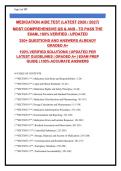
## TABLE OF CONTENTS
| **SECTION 1** | Medication Aide Roles and Responsibilities | 1-20 |
| **SECTION 2** | Legal and Ethical Standards | 21-40 |
| **SECTION 3** | Medication Rights and Safety Principles | 41-60 |
| **SECTION 4** | Infection Prevention and Standard Precautions | 61-80 |
| **SECTION 5** | Medication Classifications and Pharmacology | 81-110 |
| **SECTION 6** | Dosage Calculations and Measurement | 111-130 |
| **SECTION 7** | Medication Administration Procedures | 131-160 |
| **SECTION 8** | Documentation and Reporting | 161-180 |
| **SECTION 9** | Medication Errors and Incident Response | 181-200 |
| **SECTION 10** | Resident Assessment and Observation | 201-220 |
| **SECTION 11** | Controlled Substances | 221-240 |
| **SECTION 12** | Storage, Disposal, and Security of Medications | 241-260 |
| **SECTION 13** | Communication and Resident Education | 261-275 |
| **SECTION 14** | Emergency Situations | 276-290 |
| **SECTION 15** | Professional Accountability | 291-300 |
,Page 2 of 177
## SECTION 1: MEDICATION AIDE ROLES AND RESPONSIBILITIES
### Question 1
A medication aide is preparing to administer medications on a long-term care unit. Which of the
following tasks is within the medication aide's scope of practice?
A) Administering subcutaneous insulin injections
B) Administering oral medications to stable residents
C) Administering intravenous antibiotics
D) Interpreting laboratory results and adjusting medication doses
**Correct Answer: B) Administering oral medications to stable residents**
**Rationale:** Medication aides are authorized to administer routine medications via permitted
routes (oral, eye, ear, nasal, inhalant, transdermal, topical, vaginal, rectal) to stable patients under
the supervision of a licensed nurse. Subcutaneous and intravenous injections, as well as
interpreting lab results and adjusting doses, are outside the scope of practice for a medication
aide and require licensed nursing or medical personnel.
---
### Question 2
Who is ultimately responsible for the medications given by a medication aide?
A) The medication aide who administered the medication
B) The delegating licensed nurse (RN or LPN)
C) The attending physician
D) The facility administrator
,Page 3 of 177
**Correct Answer: B) The delegating licensed nurse (RN or LPN)**
**Rationale:** The delegating licensed nurse (RN or LPN) is ultimately responsible for the
medications given by a medication aide. While the medication aide is accountable for their own
actions in administering medications correctly, the supervising nurse bears legal responsibility
for delegation and supervision of the medication aide's tasks.
---
### Question 3
A medication aide is asked by a nurse to administer a medication via a route the aide has not
been trained to use. What is the most appropriate action?
A) Administer the medication as requested to avoid conflict
B) Refuse politely and report the request to the supervising nurse immediately
C) Ask another medication aide how to administer the medication
D) Research the route online and proceed with administration
**Correct Answer: B) Refuse politely and report the request to the supervising nurse
immediately**
**Rationale:** Medication aides must never administer medications via routes they are not
trained or authorized to use. Prohibited routes include subcutaneous, intradermal, intramuscular,
and intravascular injections, as well as medications via tubes and ostomies. Refusing politely and
reporting to the supervising nurse is the correct professional response to maintain patient safety
and stay within the scope of practice.
---
### Question 4
, Page 4 of 177
Which of the following best describes the primary role of a medication aide?
A) To independently prescribe and administer medications
B) To assist licensed nurses in administering routine medications to stable patients
C) To perform comprehensive physical assessments
D) To diagnose medical conditions and develop treatment plans
**Correct Answer: B) To assist licensed nurses in administering routine medications to stable
patients**
**Rationale:** The primary role of a medication aide is to assist licensed nurses in administering
routine medications to stable patients. Medication aides work under the direct supervision of a
licensed nurse and are not authorized to prescribe, diagnose, or perform independent clinical
assessments.
---
### Question 5
A medication aide notices that a resident's blood pressure is significantly lower than usual before
administering a prescribed antihypertensive medication. What is the most appropriate action?
A) Administer the medication because it is prescribed
B) Hold the medication and promptly notify the supervising nurse
C) Ask another medication aide whether the medication should be given
D) Administer half the dose and document the blood pressure
**Correct Answer: B) Hold the medication and promptly notify the supervising nurse**
## TABLE OF CONTENTS
| **SECTION 1** | Medication Aide Roles and Responsibilities | 1-20 |
| **SECTION 2** | Legal and Ethical Standards | 21-40 |
| **SECTION 3** | Medication Rights and Safety Principles | 41-60 |
| **SECTION 4** | Infection Prevention and Standard Precautions | 61-80 |
| **SECTION 5** | Medication Classifications and Pharmacology | 81-110 |
| **SECTION 6** | Dosage Calculations and Measurement | 111-130 |
| **SECTION 7** | Medication Administration Procedures | 131-160 |
| **SECTION 8** | Documentation and Reporting | 161-180 |
| **SECTION 9** | Medication Errors and Incident Response | 181-200 |
| **SECTION 10** | Resident Assessment and Observation | 201-220 |
| **SECTION 11** | Controlled Substances | 221-240 |
| **SECTION 12** | Storage, Disposal, and Security of Medications | 241-260 |
| **SECTION 13** | Communication and Resident Education | 261-275 |
| **SECTION 14** | Emergency Situations | 276-290 |
| **SECTION 15** | Professional Accountability | 291-300 |
,Page 2 of 177
## SECTION 1: MEDICATION AIDE ROLES AND RESPONSIBILITIES
### Question 1
A medication aide is preparing to administer medications on a long-term care unit. Which of the
following tasks is within the medication aide's scope of practice?
A) Administering subcutaneous insulin injections
B) Administering oral medications to stable residents
C) Administering intravenous antibiotics
D) Interpreting laboratory results and adjusting medication doses
**Correct Answer: B) Administering oral medications to stable residents**
**Rationale:** Medication aides are authorized to administer routine medications via permitted
routes (oral, eye, ear, nasal, inhalant, transdermal, topical, vaginal, rectal) to stable patients under
the supervision of a licensed nurse. Subcutaneous and intravenous injections, as well as
interpreting lab results and adjusting doses, are outside the scope of practice for a medication
aide and require licensed nursing or medical personnel.
---
### Question 2
Who is ultimately responsible for the medications given by a medication aide?
A) The medication aide who administered the medication
B) The delegating licensed nurse (RN or LPN)
C) The attending physician
D) The facility administrator
,Page 3 of 177
**Correct Answer: B) The delegating licensed nurse (RN or LPN)**
**Rationale:** The delegating licensed nurse (RN or LPN) is ultimately responsible for the
medications given by a medication aide. While the medication aide is accountable for their own
actions in administering medications correctly, the supervising nurse bears legal responsibility
for delegation and supervision of the medication aide's tasks.
---
### Question 3
A medication aide is asked by a nurse to administer a medication via a route the aide has not
been trained to use. What is the most appropriate action?
A) Administer the medication as requested to avoid conflict
B) Refuse politely and report the request to the supervising nurse immediately
C) Ask another medication aide how to administer the medication
D) Research the route online and proceed with administration
**Correct Answer: B) Refuse politely and report the request to the supervising nurse
immediately**
**Rationale:** Medication aides must never administer medications via routes they are not
trained or authorized to use. Prohibited routes include subcutaneous, intradermal, intramuscular,
and intravascular injections, as well as medications via tubes and ostomies. Refusing politely and
reporting to the supervising nurse is the correct professional response to maintain patient safety
and stay within the scope of practice.
---
### Question 4
, Page 4 of 177
Which of the following best describes the primary role of a medication aide?
A) To independently prescribe and administer medications
B) To assist licensed nurses in administering routine medications to stable patients
C) To perform comprehensive physical assessments
D) To diagnose medical conditions and develop treatment plans
**Correct Answer: B) To assist licensed nurses in administering routine medications to stable
patients**
**Rationale:** The primary role of a medication aide is to assist licensed nurses in administering
routine medications to stable patients. Medication aides work under the direct supervision of a
licensed nurse and are not authorized to prescribe, diagnose, or perform independent clinical
assessments.
---
### Question 5
A medication aide notices that a resident's blood pressure is significantly lower than usual before
administering a prescribed antihypertensive medication. What is the most appropriate action?
A) Administer the medication because it is prescribed
B) Hold the medication and promptly notify the supervising nurse
C) Ask another medication aide whether the medication should be given
D) Administer half the dose and document the blood pressure
**Correct Answer: B) Hold the medication and promptly notify the supervising nurse**


