

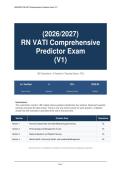
(2026/2027) RN VATI Comprehensive Predictor Exam (V1)
(2026/2027)
RN VATI Comprehensive
Predictor Exam
(V1)
180 Questions | 4 Sections | Passing Score: 75%
A+ Verified 4 75% 2023/24
Item Count Sections Passing Score Edition
Instructions:
This examination contains 180 multiple-choice questions divided into four sections. Read each question
carefully and select the best answer. There is only one correct answer for each question. A detailed
answer key with rationales is provided at the end of this document.
Section Content Area Questions
Section 1 Nursing Fundamentals and Adult Medical-Surgical Nursing 45
Section 2 Pharmacology and Management of Care 45
Section 3 Maternal-Newborn and Pediatric Nursing 45
Section 4 Mental Health, Community Health, and Leadership/Management 45
This document is intended for educational and examination preparation purposes.
Page 1
,(2026/2027) RN VATI Comprehensive Predictor Exam (V1)
Section 1: Nursing Fundamentals and Adult Medical-Surgical
Nursing
Question 1 A nurse is assessing a 68-year-old patient admitted with pneumonia. The patient has a
temperature of 38.9C, a productive cough with rust-colored sputum, and reports pleuritic chest pain on
the right side. Which assessment finding requires immediate intervention by the nurse?
A. Oxygen saturation of 88% on room air
B. Respiratory rate of 24 breaths per minute
C. Heart rate of 102 beats per minute
D. Blood pressure of 148/92 mmHg
Question 2 A nurse is caring for a patient who had abdominal surgery 8 hours ago. The patient
reports increasing abdominal pain and distention, has not passed flatus, and the nasogastric tube has
drained 400 mL over the past 2 hours. Which nursing action is most appropriate at this time?
A. Assess bowel sounds in all four quadrants
B. Administer the prescribed opioid analgesic
C. Increase the nasogastric tube suction to high intermittent
D. Notify the surgeon immediately
Question 3 A nurse is providing discharge teaching to a patient with newly diagnosed heart failure.
The patient asks why they need to weigh themselves every morning. Which response by the nurse is
most accurate?
A. Daily weight monitoring is the earliest indicator of fluid retention before symptoms develop
B. Weight gain helps track whether your heart medications are working effectively
C. Daily weights help the doctor calculate how much fluid you are drinking each day
D. Weight changes are used to determine if you need to restrict your sodium intake
Question 4 A nurse is caring for a patient with a newly inserted chest tube following a pneumothorax.
The drainage system is bubbling intermittently in the water-seal chamber. Which action by the nurse is
most appropriate?
A. Document the finding as an expected observation
B. Immediately clamp the chest tube and notify the provider
C. Apply an occlusive dressing around the insertion site
D. Add more sterile water to the water-seal chamber
Question 5 A nurse is preparing to administer a blood transfusion to a patient with anemia. The blood
bank delivers 2 units of packed red blood cells. Which action should the nurse take first?
A. Verify the patient identity and blood product with another nurse at the bedside
B. Assess the patients vital signs and temperature before starting the transfusion
C. Prime the blood administration set with normal saline and inspect the blood product
D. Obtain the patients informed consent and document the transfusion start time
Question 6 A nurse is caring for a patient who has been on bed rest for 5 days following a hip
fracture. The patient is now being prepared for discharge. Which intervention should the nurse prioritize
to prevent complications?
A. Teach the patient how to perform ankle pumps and calf exercises every hour while awake
B. Encourage the patient to drink at least 3 liters of fluid daily to prevent dehydration
C. Remind the patient to take a stool softener every night to prevent constipation
D. Instruct the patient to use incentive spirometry every 2 hours to prevent pneumonia
Page 2
,(2026/2027) RN VATI Comprehensive Predictor Exam (V1)
Question 7 A nurse is reviewing laboratory results for a patient with chronic kidney disease. The
potassium level is 6.2 mEq/L. Which electrocardiogram change should the nurse anticipate and monitor
for?
A. Tall peaked T waves and a widened QRS complex
B. Flattened T waves and the presence of U waves
C. ST-segment elevation and pathological Q waves
D. Prolonged PR interval and absent P waves
Question 8 A nurse is caring for a patient with a newly diagnosed deep vein thrombosis in the left
lower extremity. The patient is receiving intravenous heparin therapy. Which assessment finding should
the nurse report immediately to the healthcare provider?
A. Blood in the urine with a urine output of 30 mL per hour
B. A heparin infusion rate of 1,200 units per hour
C. An activated partial thromboplastin time of 65 seconds
D. Hematoma formation at the peripheral intravenous insertion site
Question 9 A nurse is caring for a patient who is 24 hours postoperative following a total
thyroidectomy. The patient develops muscle twitching, tingling in the fingers, and a positive Chvostek
sign. Which laboratory result should the nurse anticipate?
A. Decreased serum calcium levels
B. Elevated serum parathyroid hormone levels
C. Decreased serum thyroid-stimulating hormone levels
D. Elevated serum potassium levels
Question 10 A nurse is caring for a patient with a colostomy. The patient asks what foods they should
avoid to prevent odor and gas. Which food should the nurse recommend the patient limit?
A. Eggs and asparagus
B. Bananas and rice
C. White bread and crackers
D. Applesauce and oatmeal
Question 11 A nurse is assessing a patient with a traumatic brain injury who is being monitored in the
intensive care unit. The patient is receiving mannitol to reduce intracranial pressure. Which assessment
finding indicates the medication is having the desired effect?
A. Urine output increases to 100 mL per hour
B. Pupil size decreases from 6 mm to 4 mm
C. Heart rate decreases from 110 to 88 beats per minute
D. Systolic blood pressure increases from 100 to 120 mmHg
Question 12 A nurse is caring for a patient with a nasogastric tube placed for gastric decompression.
The patient complains of nausea and the nurse notices the drainage bag is collapsed. Which action
should the nurse take first?
A. Check the suction setting and ensure the tubing is not kinked
B. Irrigate the nasogastric tube with 30 mL of normal saline
C. Reposition the patient onto the left side
D. Administer the prescribed antiemetic medication
Question 13 A nurse is caring for a patient with a tracheostomy tube. The nurse notes that the patient
is having difficulty breathing and the tracheostomy site is bubbling with air. Which intervention should
the nurse perform immediately?
A. Assess the tracheostomy tube for displacement and call for assistance
Page 3
, (2026/2027) RN VATI Comprehensive Predictor Exam (V1)
B. Apply a sterile occlusive dressing over the tracheostomy site
C. Insert a sterile suction catheter through the tracheostomy tube
D. Remove the tracheostomy tube and ventilate the patient with a bag-valve mask
Question 14 A nurse is providing discharge instructions to a patient who had a total hip arthroplasty.
Which statement by the patient indicates understanding of the hip precautions?
A. I will avoid bending forward at the waist more than 90 degrees when sitting
B. I can cross my legs at the knee as long as I use a pillow between them
C. I should sleep on my stomach to keep the hip in a neutral position
D. I will use a raised toilet seat and keep my knees higher than my hips
Question 15 A nurse is caring for a patient with a small-bore feeding tube. The nurse verifies proper
tube placement before administering a feeding. Which method is the most reliable for confirming
placement?
A. Measurement of gastric pH from aspirated contents
B. Auscultation over the epigastrium during air insufflation
C. Measurement of the tube length at the external exit site
D. Checking for carbon dioxide detection at the tube opening
Question 16 A nurse is assessing a patient who has been receiving intravenous morphine via a
patient-controlled analgesia pump for 3 days following a total knee replacement. The patient is now
difficult to arouse and has a respiratory rate of 8 breaths per minute. Which medication should the
nurse prepare to administer?
A. Naloxone
B. Flumazenil
C. Naltrexone
D. Protamine sulfate
Question 17 A nurse is caring for a patient with a spinal cord injury at the T6 level. The patient
develops a severe headache, flushing above the level of injury, and bradycardia while the urinary
catheter is being changed. Which condition should the nurse suspect?
A. Autonomic dysreflexia
B. Neurogenic shock
C. Spinal shock
D. Syndrome of inappropriate antidiuretic hormone
Question 18 A nurse is preparing a patient for a colonoscopy. The patient has been prescribed
polyethylene glycol electrolyte solution. Which instruction should the nurse provide?
A. Drink the solution chilled and rapidly consume the full amount
B. Sip the solution slowly over 8 hours to prevent nausea
C. Take the solution with food to prevent gastric irritation
D. Mix the solution with fruit juice to improve palatability
Question 19 A nurse is caring for a patient with a burn injury covering 40% of the total body surface
area. The patient is in the emergent phase of burn care. Which nursing intervention is the highest
priority?
A. Maintain a patent airway and adequate oxygenation
B. Administer intravenous opioid analgesics for pain management
C. Apply topical antimicrobial ointment to the burn wounds
D. Insert an indwelling urinary catheter to monitor fluid output
Page 4
(2026/2027)
RN VATI Comprehensive
Predictor Exam
(V1)
180 Questions | 4 Sections | Passing Score: 75%
A+ Verified 4 75% 2023/24
Item Count Sections Passing Score Edition
Instructions:
This examination contains 180 multiple-choice questions divided into four sections. Read each question
carefully and select the best answer. There is only one correct answer for each question. A detailed
answer key with rationales is provided at the end of this document.
Section Content Area Questions
Section 1 Nursing Fundamentals and Adult Medical-Surgical Nursing 45
Section 2 Pharmacology and Management of Care 45
Section 3 Maternal-Newborn and Pediatric Nursing 45
Section 4 Mental Health, Community Health, and Leadership/Management 45
This document is intended for educational and examination preparation purposes.
Page 1
,(2026/2027) RN VATI Comprehensive Predictor Exam (V1)
Section 1: Nursing Fundamentals and Adult Medical-Surgical
Nursing
Question 1 A nurse is assessing a 68-year-old patient admitted with pneumonia. The patient has a
temperature of 38.9C, a productive cough with rust-colored sputum, and reports pleuritic chest pain on
the right side. Which assessment finding requires immediate intervention by the nurse?
A. Oxygen saturation of 88% on room air
B. Respiratory rate of 24 breaths per minute
C. Heart rate of 102 beats per minute
D. Blood pressure of 148/92 mmHg
Question 2 A nurse is caring for a patient who had abdominal surgery 8 hours ago. The patient
reports increasing abdominal pain and distention, has not passed flatus, and the nasogastric tube has
drained 400 mL over the past 2 hours. Which nursing action is most appropriate at this time?
A. Assess bowel sounds in all four quadrants
B. Administer the prescribed opioid analgesic
C. Increase the nasogastric tube suction to high intermittent
D. Notify the surgeon immediately
Question 3 A nurse is providing discharge teaching to a patient with newly diagnosed heart failure.
The patient asks why they need to weigh themselves every morning. Which response by the nurse is
most accurate?
A. Daily weight monitoring is the earliest indicator of fluid retention before symptoms develop
B. Weight gain helps track whether your heart medications are working effectively
C. Daily weights help the doctor calculate how much fluid you are drinking each day
D. Weight changes are used to determine if you need to restrict your sodium intake
Question 4 A nurse is caring for a patient with a newly inserted chest tube following a pneumothorax.
The drainage system is bubbling intermittently in the water-seal chamber. Which action by the nurse is
most appropriate?
A. Document the finding as an expected observation
B. Immediately clamp the chest tube and notify the provider
C. Apply an occlusive dressing around the insertion site
D. Add more sterile water to the water-seal chamber
Question 5 A nurse is preparing to administer a blood transfusion to a patient with anemia. The blood
bank delivers 2 units of packed red blood cells. Which action should the nurse take first?
A. Verify the patient identity and blood product with another nurse at the bedside
B. Assess the patients vital signs and temperature before starting the transfusion
C. Prime the blood administration set with normal saline and inspect the blood product
D. Obtain the patients informed consent and document the transfusion start time
Question 6 A nurse is caring for a patient who has been on bed rest for 5 days following a hip
fracture. The patient is now being prepared for discharge. Which intervention should the nurse prioritize
to prevent complications?
A. Teach the patient how to perform ankle pumps and calf exercises every hour while awake
B. Encourage the patient to drink at least 3 liters of fluid daily to prevent dehydration
C. Remind the patient to take a stool softener every night to prevent constipation
D. Instruct the patient to use incentive spirometry every 2 hours to prevent pneumonia
Page 2
,(2026/2027) RN VATI Comprehensive Predictor Exam (V1)
Question 7 A nurse is reviewing laboratory results for a patient with chronic kidney disease. The
potassium level is 6.2 mEq/L. Which electrocardiogram change should the nurse anticipate and monitor
for?
A. Tall peaked T waves and a widened QRS complex
B. Flattened T waves and the presence of U waves
C. ST-segment elevation and pathological Q waves
D. Prolonged PR interval and absent P waves
Question 8 A nurse is caring for a patient with a newly diagnosed deep vein thrombosis in the left
lower extremity. The patient is receiving intravenous heparin therapy. Which assessment finding should
the nurse report immediately to the healthcare provider?
A. Blood in the urine with a urine output of 30 mL per hour
B. A heparin infusion rate of 1,200 units per hour
C. An activated partial thromboplastin time of 65 seconds
D. Hematoma formation at the peripheral intravenous insertion site
Question 9 A nurse is caring for a patient who is 24 hours postoperative following a total
thyroidectomy. The patient develops muscle twitching, tingling in the fingers, and a positive Chvostek
sign. Which laboratory result should the nurse anticipate?
A. Decreased serum calcium levels
B. Elevated serum parathyroid hormone levels
C. Decreased serum thyroid-stimulating hormone levels
D. Elevated serum potassium levels
Question 10 A nurse is caring for a patient with a colostomy. The patient asks what foods they should
avoid to prevent odor and gas. Which food should the nurse recommend the patient limit?
A. Eggs and asparagus
B. Bananas and rice
C. White bread and crackers
D. Applesauce and oatmeal
Question 11 A nurse is assessing a patient with a traumatic brain injury who is being monitored in the
intensive care unit. The patient is receiving mannitol to reduce intracranial pressure. Which assessment
finding indicates the medication is having the desired effect?
A. Urine output increases to 100 mL per hour
B. Pupil size decreases from 6 mm to 4 mm
C. Heart rate decreases from 110 to 88 beats per minute
D. Systolic blood pressure increases from 100 to 120 mmHg
Question 12 A nurse is caring for a patient with a nasogastric tube placed for gastric decompression.
The patient complains of nausea and the nurse notices the drainage bag is collapsed. Which action
should the nurse take first?
A. Check the suction setting and ensure the tubing is not kinked
B. Irrigate the nasogastric tube with 30 mL of normal saline
C. Reposition the patient onto the left side
D. Administer the prescribed antiemetic medication
Question 13 A nurse is caring for a patient with a tracheostomy tube. The nurse notes that the patient
is having difficulty breathing and the tracheostomy site is bubbling with air. Which intervention should
the nurse perform immediately?
A. Assess the tracheostomy tube for displacement and call for assistance
Page 3
, (2026/2027) RN VATI Comprehensive Predictor Exam (V1)
B. Apply a sterile occlusive dressing over the tracheostomy site
C. Insert a sterile suction catheter through the tracheostomy tube
D. Remove the tracheostomy tube and ventilate the patient with a bag-valve mask
Question 14 A nurse is providing discharge instructions to a patient who had a total hip arthroplasty.
Which statement by the patient indicates understanding of the hip precautions?
A. I will avoid bending forward at the waist more than 90 degrees when sitting
B. I can cross my legs at the knee as long as I use a pillow between them
C. I should sleep on my stomach to keep the hip in a neutral position
D. I will use a raised toilet seat and keep my knees higher than my hips
Question 15 A nurse is caring for a patient with a small-bore feeding tube. The nurse verifies proper
tube placement before administering a feeding. Which method is the most reliable for confirming
placement?
A. Measurement of gastric pH from aspirated contents
B. Auscultation over the epigastrium during air insufflation
C. Measurement of the tube length at the external exit site
D. Checking for carbon dioxide detection at the tube opening
Question 16 A nurse is assessing a patient who has been receiving intravenous morphine via a
patient-controlled analgesia pump for 3 days following a total knee replacement. The patient is now
difficult to arouse and has a respiratory rate of 8 breaths per minute. Which medication should the
nurse prepare to administer?
A. Naloxone
B. Flumazenil
C. Naltrexone
D. Protamine sulfate
Question 17 A nurse is caring for a patient with a spinal cord injury at the T6 level. The patient
develops a severe headache, flushing above the level of injury, and bradycardia while the urinary
catheter is being changed. Which condition should the nurse suspect?
A. Autonomic dysreflexia
B. Neurogenic shock
C. Spinal shock
D. Syndrome of inappropriate antidiuretic hormone
Question 18 A nurse is preparing a patient for a colonoscopy. The patient has been prescribed
polyethylene glycol electrolyte solution. Which instruction should the nurse provide?
A. Drink the solution chilled and rapidly consume the full amount
B. Sip the solution slowly over 8 hours to prevent nausea
C. Take the solution with food to prevent gastric irritation
D. Mix the solution with fruit juice to improve palatability
Question 19 A nurse is caring for a patient with a burn injury covering 40% of the total body surface
area. The patient is in the emergent phase of burn care. Which nursing intervention is the highest
priority?
A. Maintain a patent airway and adequate oxygenation
B. Administer intravenous opioid analgesics for pain management
C. Apply topical antimicrobial ointment to the burn wounds
D. Insert an indwelling urinary catheter to monitor fluid output
Page 4


