

NUR 603 Final Exam Review.pdf 2026
NUR 603 Final Exam Review
Study online at https://quizlet.com/_c7379u
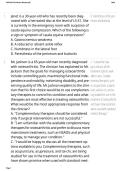
1. Janet is a 30-year-old who has recently been diag- D. Paresthesia of the per-
nosed with a herniated disc at the level of L5-S1. She ineum and buttocks
is currently in the emergency room with suspicion of
cauda equina compression. Which of the following is
a sign or symptom of cauda equina compression?
A. Gastrocnemius weakness
B. A reduced or absent ankle reflex
C. Numbness in the lateral foot
D. Paresthesia of the perineum and buttocks
2. Mr. Jackson is a 65-year-old man recently diagnosed C. "I would be hap-
with osteoarthritis. The clinician has explained to Mr. py to discuss all the
Jackson that the goals for managing osteoarthritis treatment options avail-
include controlling pain, maximizing functional inde- able to you. Comple-
pendence and mobility, minimizing disability, and pre- mentary therapies, such
serving quality of life. Mr. Jackson explains to the clini- as acupuncture, acupres-
cian that his first choice would be to use complemen- sure, and tai-chi, are be-
tary therapies to control his condition and asks what ing studied for use in the
therapies are most effective in treating osteoarthritis. treatment of osteoarthritis
What would be the most appropriate response from and have shown promise
the clinician? when used with standard
A. "Complementary therapies should be considered medical therapy."
only if surgical interventions are not successful."
B. "I am unfamiliar with the available complementary
therapies for osteoarthritis and prefer to discuss more
mainstream treatments, such as NSAIDs and physical
therapy, to manage your condition."
C. "I would be happy to discuss all the treatment op-
tions available to you. Complementary therapies, such
as acupuncture, acupressure, and tai-chi, are being
studied for use in the treatment of osteoarthritis and
have shown promise when used with standard med-
Page 1
, NUR 603 Final Exam Review.pdf 2026
NUR 603 Final Exam Review
Study online at https://quizlet.com/_c7379u
ical therapy."
D. "It would be crazy to use complementary therapies
to treat such a serious condition."
3. John is a 16-year-old boy who presents to the emer- B. McMurray circumduc-
gency room after hurting his knee in a football game. tion test
He described twisting his knee and then being unable
to extend it completely. John tells the clinician that he
heard a pop when the injury occurred and has been
experiencing localized pain. The clinician suspects a
meniscal tear. Which test would be most appropriate
to assess for the presence of a meniscal tear?
A. Valgus stress test
B. McMurray circumduction test
C. Lachman test
D. Varus stress test
4. The clinician suspects that a client has patellar insta- A. Apprehension sign
bility. In order to test for this, the client is seated
with the quadriceps relaxed, and the knee is placed
in extension. Next the patella is displaced laterally,
and the knee flexed to 30°. If instability is present,
this maneuver displaces the patella to an abnormal
position on the lateral femoral condyle, and the client
will perceive pain. Testing for patellar instability in this
way is known as:
A. Apprehension sign
B. Bulge sign
C. Thumb sign
D. None of the above
5. D. Septic arthritis
Page 2
, NUR 603 Final Exam Review.pdf 2026
NUR 603 Final Exam Review
Study online at https://quizlet.com/_c7379u
A clinician has performed a synovial fluid analysis
and the results are as follows: visual analysis: turbid
and yellow, viscosity: decreased, 52,000 white blood
cells (WBCs) per mm3, polymorphonuclear leukocytes
(PMNs): 75%, protein: 5 g/dL. Which of the following
conditions could this result be attributed to?
A. Rheumatoid arthritis
B. Osteoarthritis
C. Gout
D. Septic arthritis
6. Mr. S presents in the clinic with pain, tenderness, ery- A. Elevated uric acid level
thema, and swelling of his left great toe. The clinician
suspects acute gout. Which of the following should
the clinician expect in the initial test results for this
patient?
A. Elevated uric acid level
B. Elevated blood urea nitrogen
C. Decreased urine pH
D. Decreased C-reactive protein
7. Debbie is a 43-year-old female being evaluated for B. Phalen's test
a wrist injury. The clinician is assessing for median
nerve compression by having Debbie maintain forced
flexion of her wrist for 1 minute with the dorsal sur-
face of each hand pressed together. Which of these
tests did the clinician just perform?
A. Allen's test
B. Phalen's test
C. Tinel's sign
D. Finkelstein's test
Page 3
, NUR 603 Final Exam Review.pdf 2026
NUR 603 Final Exam Review
Study online at https://quizlet.com/_c7379u
8. Sam is a 25-year-old who has been diagnosed with low B. Unilateral radicular pain
back strain based on his history of localized low back symptoms that extend be-
pain and muscle spasm along with a normal neurolog- low the knee and are
ical examination. As the clinician, you explain to Sam equal to or greater than
that low back pain is a diagnosis of exclusion. Which the back pain
of the following symptoms would alert the clinician
to the more serious finding of a herniated nucleus
pulposus or ruptured disc?
A. Morning stiffness and limited mobility of the lum-
bar spine
B. Unilateral radicular pain symptoms that extend be-
low the knee and are equal to or greater than the back
pain
C. Fever, chills, and elevated erythrocyte sedimenta-
tion rate
D. Pathologic fractures, severe night pain, weight loss,
and fatigue
9. Felice is a 66-year-old female who complains that C. Lumbar spinal stenosis
walking and prolonged standing causes pain and
weakness in her legs and buttocks. She expresses that
she has short-term relief when she leans on the shop-
ping cart. When she sleeps on her back, she some-
times wakes up in the night in pain. Which of the
following diagnoses is most likely?
A. Multiple sclerosis
B. Herniated lumbar disc
C. Lumbar spinal stenosis
D. Cervical spondylosis
10. To diagnose fibromyalgia, there must be tenderness
on digital palpation in at least 11 of 18 (nine pairs)
Page 4
NUR 603 Final Exam Review
Study online at https://quizlet.com/_c7379u
1. Janet is a 30-year-old who has recently been diag- D. Paresthesia of the per-
nosed with a herniated disc at the level of L5-S1. She ineum and buttocks
is currently in the emergency room with suspicion of
cauda equina compression. Which of the following is
a sign or symptom of cauda equina compression?
A. Gastrocnemius weakness
B. A reduced or absent ankle reflex
C. Numbness in the lateral foot
D. Paresthesia of the perineum and buttocks
2. Mr. Jackson is a 65-year-old man recently diagnosed C. "I would be hap-
with osteoarthritis. The clinician has explained to Mr. py to discuss all the
Jackson that the goals for managing osteoarthritis treatment options avail-
include controlling pain, maximizing functional inde- able to you. Comple-
pendence and mobility, minimizing disability, and pre- mentary therapies, such
serving quality of life. Mr. Jackson explains to the clini- as acupuncture, acupres-
cian that his first choice would be to use complemen- sure, and tai-chi, are be-
tary therapies to control his condition and asks what ing studied for use in the
therapies are most effective in treating osteoarthritis. treatment of osteoarthritis
What would be the most appropriate response from and have shown promise
the clinician? when used with standard
A. "Complementary therapies should be considered medical therapy."
only if surgical interventions are not successful."
B. "I am unfamiliar with the available complementary
therapies for osteoarthritis and prefer to discuss more
mainstream treatments, such as NSAIDs and physical
therapy, to manage your condition."
C. "I would be happy to discuss all the treatment op-
tions available to you. Complementary therapies, such
as acupuncture, acupressure, and tai-chi, are being
studied for use in the treatment of osteoarthritis and
have shown promise when used with standard med-
Page 1
, NUR 603 Final Exam Review.pdf 2026
NUR 603 Final Exam Review
Study online at https://quizlet.com/_c7379u
ical therapy."
D. "It would be crazy to use complementary therapies
to treat such a serious condition."
3. John is a 16-year-old boy who presents to the emer- B. McMurray circumduc-
gency room after hurting his knee in a football game. tion test
He described twisting his knee and then being unable
to extend it completely. John tells the clinician that he
heard a pop when the injury occurred and has been
experiencing localized pain. The clinician suspects a
meniscal tear. Which test would be most appropriate
to assess for the presence of a meniscal tear?
A. Valgus stress test
B. McMurray circumduction test
C. Lachman test
D. Varus stress test
4. The clinician suspects that a client has patellar insta- A. Apprehension sign
bility. In order to test for this, the client is seated
with the quadriceps relaxed, and the knee is placed
in extension. Next the patella is displaced laterally,
and the knee flexed to 30°. If instability is present,
this maneuver displaces the patella to an abnormal
position on the lateral femoral condyle, and the client
will perceive pain. Testing for patellar instability in this
way is known as:
A. Apprehension sign
B. Bulge sign
C. Thumb sign
D. None of the above
5. D. Septic arthritis
Page 2
, NUR 603 Final Exam Review.pdf 2026
NUR 603 Final Exam Review
Study online at https://quizlet.com/_c7379u
A clinician has performed a synovial fluid analysis
and the results are as follows: visual analysis: turbid
and yellow, viscosity: decreased, 52,000 white blood
cells (WBCs) per mm3, polymorphonuclear leukocytes
(PMNs): 75%, protein: 5 g/dL. Which of the following
conditions could this result be attributed to?
A. Rheumatoid arthritis
B. Osteoarthritis
C. Gout
D. Septic arthritis
6. Mr. S presents in the clinic with pain, tenderness, ery- A. Elevated uric acid level
thema, and swelling of his left great toe. The clinician
suspects acute gout. Which of the following should
the clinician expect in the initial test results for this
patient?
A. Elevated uric acid level
B. Elevated blood urea nitrogen
C. Decreased urine pH
D. Decreased C-reactive protein
7. Debbie is a 43-year-old female being evaluated for B. Phalen's test
a wrist injury. The clinician is assessing for median
nerve compression by having Debbie maintain forced
flexion of her wrist for 1 minute with the dorsal sur-
face of each hand pressed together. Which of these
tests did the clinician just perform?
A. Allen's test
B. Phalen's test
C. Tinel's sign
D. Finkelstein's test
Page 3
, NUR 603 Final Exam Review.pdf 2026
NUR 603 Final Exam Review
Study online at https://quizlet.com/_c7379u
8. Sam is a 25-year-old who has been diagnosed with low B. Unilateral radicular pain
back strain based on his history of localized low back symptoms that extend be-
pain and muscle spasm along with a normal neurolog- low the knee and are
ical examination. As the clinician, you explain to Sam equal to or greater than
that low back pain is a diagnosis of exclusion. Which the back pain
of the following symptoms would alert the clinician
to the more serious finding of a herniated nucleus
pulposus or ruptured disc?
A. Morning stiffness and limited mobility of the lum-
bar spine
B. Unilateral radicular pain symptoms that extend be-
low the knee and are equal to or greater than the back
pain
C. Fever, chills, and elevated erythrocyte sedimenta-
tion rate
D. Pathologic fractures, severe night pain, weight loss,
and fatigue
9. Felice is a 66-year-old female who complains that C. Lumbar spinal stenosis
walking and prolonged standing causes pain and
weakness in her legs and buttocks. She expresses that
she has short-term relief when she leans on the shop-
ping cart. When she sleeps on her back, she some-
times wakes up in the night in pain. Which of the
following diagnoses is most likely?
A. Multiple sclerosis
B. Herniated lumbar disc
C. Lumbar spinal stenosis
D. Cervical spondylosis
10. To diagnose fibromyalgia, there must be tenderness
on digital palpation in at least 11 of 18 (nine pairs)
Page 4


