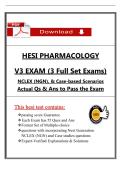
HESI PHARMACOLOGY
V3 EXAM (3 Full Set Exams)
NCLEX (NGN), & Case-based Scenarios
Actual Qs & Ans to Pass the Exam
This hesi test contains:
passing score Guarantee
Each Exam has 55 Ques and Ans
Format Set of Multiple-choice
questions with incorporating Next Generation
NCLEX (NGN) and Case studies questions
Expert-Verified Explanations & Solutions
, Preview Questions Below
Get the Complete PDF After Purchase
"If you require further clarification or in need of any study
resources, feel free to Message me."
,Contents
HESI PHARMACOLOGY V3 EXAM........................ 2
SET 1 ....................................................................... 2
HESI PHARMACOLOGY V3 EXAM...................... 44
SET 2 ..................................................................... 44
HESI PHARMACOLOGY V3 EXAM...................... 82
SET 3 ..................................................................... 82
HESI PHARMACOLOGY V3 EXAM
SET 1
───────────────────────────────────────────────
───────
1) CASE STUDY (NGN-Style Question)
───────────────────────────────────────────────
─────────
Q1. A 54-year-old client with hypertension (HTN) and type 2 diabetes
mellitus (T2DM) is preparing to take the first dose of captopril. His
daily medications include spironolactone 25 mg/day, metformin 500
,mg twice a day, and insulin glargine 25 units daily. The nurse outlines
several instructions:
• Instruction 1: Increase the insulin glargine dose by 3 units on the morning
of the first dose.
• Instruction 2: Limit fluids for several days before the first dose.
• Instruction 3: Lie down if blood pressure drops quickly after the first dose.
• Instruction 4: Monitor blood pressure for several hours after the first dose.
• Instruction 5: Hold spironolactone for 3 days prior to the first dose.
Question: For each nursing instruction below, indicate if it is
Indicated (safe/appropriate) or Contraindicated (unsafe/inappropriate)
for a client starting captopril.
A. 1 and 2 are Indicated; 3, 4, 5 are Contraindicated
B. 1, 2, 5 are Contraindicated; 3, 4 are Indicated
C. 1, 4 are Indicated; 2, 3, 5 are Contraindicated
D. 3, 5 are Indicated; 1, 2, 4 are Contraindicated
Answer: B (Instructions #1, #2, #5 = Contraindicated; Instructions #3, #4 =
Indicated)
Verified Rationale:
• Instruction 1 (increasing insulin without proven need) is contraindicated.
• Instruction 2 (limiting fluids pre–first-dose ACE inhibitor) is
contraindicated: risk of dehydration and severe hypotension.
,• Instruction 3 (lie down if BP drops) is indicated for safety after first-dose
hypotension.
• Instruction 4 (monitor BP for several hours) is indicated to assess first-
dose hypotension.
• Instruction 5 (hold spironolactone for 3 days) is not routinely required
unless hyperkalemia is an active concern.
───────────────────────────────────────────────
─────────
2)
───────────────────────────────────────────────
─────────
Q2. A client with major depression is receiving a new prescription for
duloxetine. Which information is MOST important for the nurse to
obtain?
A. Family history of mental illness
B. Weight change in the last month
C. Liver function laboratory results
D. Recent use of other antidepressants
Answer: C. Liver function laboratory results
Verified Rationale:
Duloxetine (an SNRI) can be hepatotoxic—checking liver enzymes (ALT,
AST) is crucial before therapy. Although a history of mental illness, weight
,changes, and concurrent antidepressants matter, ensuring normal or
monitored hepatic function is highest priority.
───────────────────────────────────────────────
─────────
3)
───────────────────────────────────────────────
─────────
Q3. Which nursing action has the HIGHEST priority when
administering a dose of codeine with acetaminophen to a client?
A. Advise the client that the medication should start working in about 30
minutes
B. Instruct the client to request assistance when ambulating to the
bathroom
C. Tell the client to notify the nurse if the pain is not relieved
D. Administer a stool softener or laxative at the same time
Answer: B. Instruct the client to request assistance when ambulating
Verified Rationale:
Codeine can cause sedation and orthostatic hypotension. The top priority is
preventing falls and injury by having the client call for help when getting up.
───────────────────────────────────────────────
─────────
4) CASE STUDY (NGN-Style) - “Select All That Apply”
,───────────────────────────────────────────────
─────────
Q4. A 54-year-old client with HTN and T2DM has labs suggestive of
possible fluid/electrolyte changes. Which questions should the nurse
ask? Select All That Apply:
A. “Have you noticed the need to urinate less often?”
B. “Are you taking any supplements?”
C. “Do you use any salt substitutes?”
D. “Have you experienced urgency to urinate?”
E. “Have you experienced itching or hives?”
F. “Have you noticed that your skin is dry?”
Correct Answers: A, B, C, D
Verified Rationale:
• Reduced urination could mean fluid retention/kidney changes.
• Supplements may add unexpected potassium or sodium.
• Salt substitutes often contain potassium—important if on spironolactone.
• Urgency can indicate changes in fluid balance or glycemic control.
───────────────────────────────────────────────
─────────
5)
───────────────────────────────────────────────
─────────
,Q5. After receiving five doses of filgrastim, a client’s WBC count rises
from 2,500/mm³ to 5,000/mm³. Which action should the nurse
implement?
A. Inform the client that the medication has been effective
B. Assess the client’s vital signs
C. Implement neutropenic precautions
D. Review culture and sensitivity reports
Answer: A. Inform the client the medication has been effective
Verified Rationale:
Filgrastim helps stimulate neutrophil production. A WBC increase from low
to within normal range demonstrates therapeutic success.
───────────────────────────────────────────────
─────────
6)
───────────────────────────────────────────────
─────────
Q6. A client receives a new prescription for montelukast (Singulair).
Which teaching should the nurse provide?
A. The medication contracts bronchial smooth muscle
B. Montelukast helps increase mucus in the lungs
C. Montelukast helps repair base-lung tissue
D. It prophylactically limits the inflammatory response to allergens
,Answer: D. It prophylactically limits the inflammatory response to allergens
Verified Rationale:
Montelukast is a leukotriene receptor antagonist used in asthma/allergic
conditions to reduce inflammation. It is not a bronchodilator and does not
rebuild damaged tissue.
───────────────────────────────────────────────
─────────
7)
───────────────────────────────────────────────
─────────
Q7. A client with a renal transplant three months ago shows signs of
graft rejection. The client admits to taking St. John’s Wort on a
friend’s advice. Which finding is MOST significant?
A. Adding the herb decreases need for corticosteroids
B. St. John’s Wort can decrease plasma concentrations of cyclosporine
C. The herb can reduce the client’s sodium intake
D. The client likely took it for depression
Answer: B. St. John’s Wort can decrease plasma concentrations of
cyclosporine
Verified Rationale:
, St. John’s Wort induces hepatic enzymes (e.g., CYP3A4), accelerating
cyclosporine metabolism and risking subtherapeutic levels → potential
organ rejection.
───────────────────────────────────────────────
─────────
8)
───────────────────────────────────────────────
─────────
Q8. A client is to receive dalteparin 2,500 units subcut, 2 hours pre-
procedure. The syringe is labeled “5,000 units in 0.2 mL.” How many
mL to administer?
A. 0.05 mL
B. 0.1 mL
C. 0.2 mL
D. 0.25 mL
Answer: B. 0.1 mL
Verified Rationale:
You need half the total units in the syringe. 5,000 → 2,500 is half, so 0.2
mL → 0.1 mL.
───────────────────────────────────────────────
─────────
9)
V3 EXAM (3 Full Set Exams)
NCLEX (NGN), & Case-based Scenarios
Actual Qs & Ans to Pass the Exam
This hesi test contains:
passing score Guarantee
Each Exam has 55 Ques and Ans
Format Set of Multiple-choice
questions with incorporating Next Generation
NCLEX (NGN) and Case studies questions
Expert-Verified Explanations & Solutions
, Preview Questions Below
Get the Complete PDF After Purchase
"If you require further clarification or in need of any study
resources, feel free to Message me."
,Contents
HESI PHARMACOLOGY V3 EXAM........................ 2
SET 1 ....................................................................... 2
HESI PHARMACOLOGY V3 EXAM...................... 44
SET 2 ..................................................................... 44
HESI PHARMACOLOGY V3 EXAM...................... 82
SET 3 ..................................................................... 82
HESI PHARMACOLOGY V3 EXAM
SET 1
───────────────────────────────────────────────
───────
1) CASE STUDY (NGN-Style Question)
───────────────────────────────────────────────
─────────
Q1. A 54-year-old client with hypertension (HTN) and type 2 diabetes
mellitus (T2DM) is preparing to take the first dose of captopril. His
daily medications include spironolactone 25 mg/day, metformin 500
,mg twice a day, and insulin glargine 25 units daily. The nurse outlines
several instructions:
• Instruction 1: Increase the insulin glargine dose by 3 units on the morning
of the first dose.
• Instruction 2: Limit fluids for several days before the first dose.
• Instruction 3: Lie down if blood pressure drops quickly after the first dose.
• Instruction 4: Monitor blood pressure for several hours after the first dose.
• Instruction 5: Hold spironolactone for 3 days prior to the first dose.
Question: For each nursing instruction below, indicate if it is
Indicated (safe/appropriate) or Contraindicated (unsafe/inappropriate)
for a client starting captopril.
A. 1 and 2 are Indicated; 3, 4, 5 are Contraindicated
B. 1, 2, 5 are Contraindicated; 3, 4 are Indicated
C. 1, 4 are Indicated; 2, 3, 5 are Contraindicated
D. 3, 5 are Indicated; 1, 2, 4 are Contraindicated
Answer: B (Instructions #1, #2, #5 = Contraindicated; Instructions #3, #4 =
Indicated)
Verified Rationale:
• Instruction 1 (increasing insulin without proven need) is contraindicated.
• Instruction 2 (limiting fluids pre–first-dose ACE inhibitor) is
contraindicated: risk of dehydration and severe hypotension.
,• Instruction 3 (lie down if BP drops) is indicated for safety after first-dose
hypotension.
• Instruction 4 (monitor BP for several hours) is indicated to assess first-
dose hypotension.
• Instruction 5 (hold spironolactone for 3 days) is not routinely required
unless hyperkalemia is an active concern.
───────────────────────────────────────────────
─────────
2)
───────────────────────────────────────────────
─────────
Q2. A client with major depression is receiving a new prescription for
duloxetine. Which information is MOST important for the nurse to
obtain?
A. Family history of mental illness
B. Weight change in the last month
C. Liver function laboratory results
D. Recent use of other antidepressants
Answer: C. Liver function laboratory results
Verified Rationale:
Duloxetine (an SNRI) can be hepatotoxic—checking liver enzymes (ALT,
AST) is crucial before therapy. Although a history of mental illness, weight
,changes, and concurrent antidepressants matter, ensuring normal or
monitored hepatic function is highest priority.
───────────────────────────────────────────────
─────────
3)
───────────────────────────────────────────────
─────────
Q3. Which nursing action has the HIGHEST priority when
administering a dose of codeine with acetaminophen to a client?
A. Advise the client that the medication should start working in about 30
minutes
B. Instruct the client to request assistance when ambulating to the
bathroom
C. Tell the client to notify the nurse if the pain is not relieved
D. Administer a stool softener or laxative at the same time
Answer: B. Instruct the client to request assistance when ambulating
Verified Rationale:
Codeine can cause sedation and orthostatic hypotension. The top priority is
preventing falls and injury by having the client call for help when getting up.
───────────────────────────────────────────────
─────────
4) CASE STUDY (NGN-Style) - “Select All That Apply”
,───────────────────────────────────────────────
─────────
Q4. A 54-year-old client with HTN and T2DM has labs suggestive of
possible fluid/electrolyte changes. Which questions should the nurse
ask? Select All That Apply:
A. “Have you noticed the need to urinate less often?”
B. “Are you taking any supplements?”
C. “Do you use any salt substitutes?”
D. “Have you experienced urgency to urinate?”
E. “Have you experienced itching or hives?”
F. “Have you noticed that your skin is dry?”
Correct Answers: A, B, C, D
Verified Rationale:
• Reduced urination could mean fluid retention/kidney changes.
• Supplements may add unexpected potassium or sodium.
• Salt substitutes often contain potassium—important if on spironolactone.
• Urgency can indicate changes in fluid balance or glycemic control.
───────────────────────────────────────────────
─────────
5)
───────────────────────────────────────────────
─────────
,Q5. After receiving five doses of filgrastim, a client’s WBC count rises
from 2,500/mm³ to 5,000/mm³. Which action should the nurse
implement?
A. Inform the client that the medication has been effective
B. Assess the client’s vital signs
C. Implement neutropenic precautions
D. Review culture and sensitivity reports
Answer: A. Inform the client the medication has been effective
Verified Rationale:
Filgrastim helps stimulate neutrophil production. A WBC increase from low
to within normal range demonstrates therapeutic success.
───────────────────────────────────────────────
─────────
6)
───────────────────────────────────────────────
─────────
Q6. A client receives a new prescription for montelukast (Singulair).
Which teaching should the nurse provide?
A. The medication contracts bronchial smooth muscle
B. Montelukast helps increase mucus in the lungs
C. Montelukast helps repair base-lung tissue
D. It prophylactically limits the inflammatory response to allergens
,Answer: D. It prophylactically limits the inflammatory response to allergens
Verified Rationale:
Montelukast is a leukotriene receptor antagonist used in asthma/allergic
conditions to reduce inflammation. It is not a bronchodilator and does not
rebuild damaged tissue.
───────────────────────────────────────────────
─────────
7)
───────────────────────────────────────────────
─────────
Q7. A client with a renal transplant three months ago shows signs of
graft rejection. The client admits to taking St. John’s Wort on a
friend’s advice. Which finding is MOST significant?
A. Adding the herb decreases need for corticosteroids
B. St. John’s Wort can decrease plasma concentrations of cyclosporine
C. The herb can reduce the client’s sodium intake
D. The client likely took it for depression
Answer: B. St. John’s Wort can decrease plasma concentrations of
cyclosporine
Verified Rationale:
, St. John’s Wort induces hepatic enzymes (e.g., CYP3A4), accelerating
cyclosporine metabolism and risking subtherapeutic levels → potential
organ rejection.
───────────────────────────────────────────────
─────────
8)
───────────────────────────────────────────────
─────────
Q8. A client is to receive dalteparin 2,500 units subcut, 2 hours pre-
procedure. The syringe is labeled “5,000 units in 0.2 mL.” How many
mL to administer?
A. 0.05 mL
B. 0.1 mL
C. 0.2 mL
D. 0.25 mL
Answer: B. 0.1 mL
Verified Rationale:
You need half the total units in the syringe. 5,000 → 2,500 is half, so 0.2
mL → 0.1 mL.
───────────────────────────────────────────────
─────────
9)