
NR 228 Edapt Minerals.pdf 2026
NR 228 Edapt: Minerals
Study online at https://quizlet.com/_do3lvw
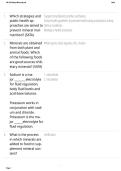
1. Which strategies and Support breastfeeding mother and babies.
public health ap- School health guidelines to promote health eating and physical activity.
proaches are aimed to Dietary Guidelines.
prevent mineral mal- Workplace health promotion.
nutrition? (SATA)
2. Minerals are obtained Whole grains, beef, legumes, fish, chicken
from both plant and
animal foods. Which
of the following foods
are good sources of di-
etary minerals? (SATA)
3. Sodium is a ma- 1. extracellular
jor ________electrolyte 2. intracellular
for fluid regulation,
body fluid levels and
acid-base balance.
Potassium works in
conjunction with sodi-
um and chloride.
Potassium is the ma-
jor ______electrolyte for
fluid regulation.
4. What is the process Fortification
in which minerals are
added to food to sup-
plement mineral con-
tent?
1/5
Page 1
, NR 228 Edapt Minerals.pdf 2026
NR 228 Edapt: Minerals
Study online at https://quizlet.com/_do3lvw
5. ____________is a ma- Sodium
jor extracellular elec- Potassium
trolyte for fluid regu-
lation, body fluid lev-
els and acid-base bal-
ance.
____________ works in
conjunction with sodi-
um and chloride. It is
the major intracellu-
lar electrolyte for fluid
regulation.
6. Identify the function of Sulfur: Found in protein molecules
the major minerals. Chloride: Needed for proper fluid balance, stomach acid
Magnesium: Found in bones; needed for making protein, muscle contrac-
tion, nerve transmission, immune system health
Calcium: Important for healthy bones and teeth; helps muscles relax and
contract; important in nerve functioning, blood clotting, blood pressure
regulation, immune system health
Phosphorus: Important for healthy bones and teeth; found in every cell;
part of the system that maintains acid-base balance
7. Match the trace min- Iron: Organ meats; red meats; fish; poultry; shellfish (especially clams); egg
eral with its food yolks; legumes; dried fruits; dark, leafy greens; iron-enriched breads and
sources. cereals; and fortified cereals
Zinc: Meats, fish, poultry, leavened whole grains, vegetables
Iodine: Seafood, salt, bread, dairy products
Selenium: Meats, seafood, grains
Copper: Legumes, nuts and seeds, whole grains, organ meats, drinking
water
Manganese: Widespread in foods, especially plant foods
2/5
Page 2
NR 228 Edapt: Minerals
Study online at https://quizlet.com/_do3lvw
1. Which strategies and Support breastfeeding mother and babies.
public health ap- School health guidelines to promote health eating and physical activity.
proaches are aimed to Dietary Guidelines.
prevent mineral mal- Workplace health promotion.
nutrition? (SATA)
2. Minerals are obtained Whole grains, beef, legumes, fish, chicken
from both plant and
animal foods. Which
of the following foods
are good sources of di-
etary minerals? (SATA)
3. Sodium is a ma- 1. extracellular
jor ________electrolyte 2. intracellular
for fluid regulation,
body fluid levels and
acid-base balance.
Potassium works in
conjunction with sodi-
um and chloride.
Potassium is the ma-
jor ______electrolyte for
fluid regulation.
4. What is the process Fortification
in which minerals are
added to food to sup-
plement mineral con-
tent?
1/5
Page 1
, NR 228 Edapt Minerals.pdf 2026
NR 228 Edapt: Minerals
Study online at https://quizlet.com/_do3lvw
5. ____________is a ma- Sodium
jor extracellular elec- Potassium
trolyte for fluid regu-
lation, body fluid lev-
els and acid-base bal-
ance.
____________ works in
conjunction with sodi-
um and chloride. It is
the major intracellu-
lar electrolyte for fluid
regulation.
6. Identify the function of Sulfur: Found in protein molecules
the major minerals. Chloride: Needed for proper fluid balance, stomach acid
Magnesium: Found in bones; needed for making protein, muscle contrac-
tion, nerve transmission, immune system health
Calcium: Important for healthy bones and teeth; helps muscles relax and
contract; important in nerve functioning, blood clotting, blood pressure
regulation, immune system health
Phosphorus: Important for healthy bones and teeth; found in every cell;
part of the system that maintains acid-base balance
7. Match the trace min- Iron: Organ meats; red meats; fish; poultry; shellfish (especially clams); egg
eral with its food yolks; legumes; dried fruits; dark, leafy greens; iron-enriched breads and
sources. cereals; and fortified cereals
Zinc: Meats, fish, poultry, leavened whole grains, vegetables
Iodine: Seafood, salt, bread, dairy products
Selenium: Meats, seafood, grains
Copper: Legumes, nuts and seeds, whole grains, organ meats, drinking
water
Manganese: Widespread in foods, especially plant foods
2/5
Page 2


