
NCCT-TSC Exam preparation and Surgical Tech Rousse Part 1
Study online at https://quizlet.com/_fx5hr3
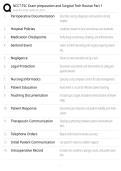
1. Perioperative Documentation Describes nursing diagnoses and outcomes during
surgery.
2. Hospital Policies Guidelines based on local and national care standards.
3. Medication Checkpoints Verify drugs at pharmacy, drawing, and administration.
4. Sentinel Event Severe incident like wrong-site surgery requiring report-
ing.
5. Negligence Failure to meet standard care by a tech.
6. Legal Protection Document assessments and interventions to safeguard
against lawsuits.
7. Nursing Informatics Specialty using computer science for data management.
8. Patient Education Assessment is crucial for effective patient teaching.
9. Teaching Documentation Include topics taught and patient demonstration of knowl-
edge.
10. Patient Response Document pain reduction and patient mobility post-med-
ication.
11. Therapeutic Communication Develops partnership between patient and healthcare
tech.
12. Telephone Orders Repeat orders back to ensure accuracy.
13. Initial Patient Communication Use patient's name to establish rapport.
14. Intraoperative Record Includes skin condition, sponge counts, and patient posi-
tion.
1/9
, NCCT-TSC Exam preparation and Surgical Tech Rousse Part 1
Study online at https://quizlet.com/_fx5hr3
15. Patient Teaching Document teaching topics and family involvement.
16. Effective Messaging Educate patients during admission and post-surgery.
17. Postoperative Care Clarity Provide detailed instructions for patient recovery.
18. Pain Medication Charting Use specific pain scale ratings for documentation.
19. Patient Assessment Evaluate patient stability before mobilization.
20. Documentation Importance Essential for legal protection and care continuity.
21. Patient Teaching Completion Document patient's ability to repeat information.
22. Patient Engagement Encourage patient involvement in their care decisions.
23. Surgical Tech Responsibilities Follow protocols to ensure patient safety and care.
24. Patient Discharge Instructions Provide clear guidance before patient leaves.
25. Patient Mobility Post-Surgery Encourage early movement to prevent complications.
26. Documentation of Incision Care Include patient education on wound management.
27. Patient Condition Reporting Communicate critical patient updates during shift
changes.
28. Assertive response C. "I realize you are probably irritated, but we get busy
during the day, too."
29. Family upset C. Recognize that the family is probably upset and is taking
their feelings out on the tech.
30. Category I-Critical surgical item C. Internal defibrillator paddles
31. Unused sterile items on case cart
2/9
Study online at https://quizlet.com/_fx5hr3
1. Perioperative Documentation Describes nursing diagnoses and outcomes during
surgery.
2. Hospital Policies Guidelines based on local and national care standards.
3. Medication Checkpoints Verify drugs at pharmacy, drawing, and administration.
4. Sentinel Event Severe incident like wrong-site surgery requiring report-
ing.
5. Negligence Failure to meet standard care by a tech.
6. Legal Protection Document assessments and interventions to safeguard
against lawsuits.
7. Nursing Informatics Specialty using computer science for data management.
8. Patient Education Assessment is crucial for effective patient teaching.
9. Teaching Documentation Include topics taught and patient demonstration of knowl-
edge.
10. Patient Response Document pain reduction and patient mobility post-med-
ication.
11. Therapeutic Communication Develops partnership between patient and healthcare
tech.
12. Telephone Orders Repeat orders back to ensure accuracy.
13. Initial Patient Communication Use patient's name to establish rapport.
14. Intraoperative Record Includes skin condition, sponge counts, and patient posi-
tion.
1/9
, NCCT-TSC Exam preparation and Surgical Tech Rousse Part 1
Study online at https://quizlet.com/_fx5hr3
15. Patient Teaching Document teaching topics and family involvement.
16. Effective Messaging Educate patients during admission and post-surgery.
17. Postoperative Care Clarity Provide detailed instructions for patient recovery.
18. Pain Medication Charting Use specific pain scale ratings for documentation.
19. Patient Assessment Evaluate patient stability before mobilization.
20. Documentation Importance Essential for legal protection and care continuity.
21. Patient Teaching Completion Document patient's ability to repeat information.
22. Patient Engagement Encourage patient involvement in their care decisions.
23. Surgical Tech Responsibilities Follow protocols to ensure patient safety and care.
24. Patient Discharge Instructions Provide clear guidance before patient leaves.
25. Patient Mobility Post-Surgery Encourage early movement to prevent complications.
26. Documentation of Incision Care Include patient education on wound management.
27. Patient Condition Reporting Communicate critical patient updates during shift
changes.
28. Assertive response C. "I realize you are probably irritated, but we get busy
during the day, too."
29. Family upset C. Recognize that the family is probably upset and is taking
their feelings out on the tech.
30. Category I-Critical surgical item C. Internal defibrillator paddles
31. Unused sterile items on case cart
2/9


