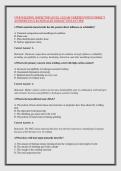
CWB WELDING INSPECTOR LEVEL 3 EXAM VERIFIED WITH CORRECT
ANSWERS PLUS RATIONALES 2026/2027 INSTANT PDF
1.Which material characteristic has the greatest direct influence on weldability?
A. Chemical composition and metallurgical condition
B. Paint color
C. Plate identification number alone
D. Surface appearance alone
Correct Answer: A
Rationale: Chemical composition and metallurgical condition strongly influence weldability,
including susceptibility to cracking, hardening, distortion, and other metallurgical problems.
2.What is the primary concern when welding a steel with high carbon content?
A. Increased susceptibility to hydrogen-assisted cracking
B. Guaranteed elimination of porosity
C. Reduced need for preheating in every case
D. Elimination of residual stress
Correct Answer: A
Rationale: Higher carbon content can increase hardenability and, in combination with hydrogen
and restraint, increase susceptibility to hydrogen-assisted cracking.
3.What is the heat-affected zone (HAZ)?
A. The portion of base metal whose microstructure or properties have been altered by welding
heat
B. The deposited weld metal only
C. The shielding-gas region above the weld
D. The portion of metal removed during grinding
Correct Answer: A
Rationale: The HAZ is base material that does not melt but experiences metallurgical changes
because of the thermal cycle of welding.
4.What does weld heat input primarily describe?
A. The amount of thermal energy introduced into the workpiece per unit length of weld
B. The amount of shielding gas in the cylinder
C. The weight of the welding electrode
D. The total inspection time
,Correct Answer: A
Rationale: Heat input is related to welding current, voltage, travel speed, and process efficiency
and influences weld-metal and HAZ characteristics.
5.What is the potential effect of excessive heat input on a steel weld?
A. Excessive grain growth and changes in mechanical properties
B. Guaranteed elimination of distortion
C. Elimination of the HAZ
D. Guaranteed increase in toughness
Correct Answer: A
Rationale: Excessive heat input can produce undesirable microstructural changes, including
grain coarsening and reduced toughness in susceptible materials.
6.What is hydrogen-assisted cracking commonly associated with?
A. Hydrogen, susceptible microstructure, and tensile stress or restraint
B. Oxygen alone
C. Shielding gas pressure alone
D. Electrode color alone
Correct Answer: A
Rationale: Hydrogen-assisted cracking generally requires a combination of diffusible hydrogen,
a susceptible microstructure, and sufficient tensile stress or restraint.
7.Why is preheating used during welding of certain steels?
A. To control cooling rate and reduce the risk of cracking
B. To eliminate the need for shielding gas
C. To increase welding speed without limits
D. To remove all residual stress
Correct Answer: A
Rationale: Preheating can reduce cooling rates, decrease formation of excessively hard
microstructures, and assist hydrogen diffusion, thereby reducing cracking risk.
8.What is the primary purpose of maintaining an appropriate interpass temperature?
A. Control the thermal cycle and resulting metallurgical properties
B. Determine the welder's certification number
, C. Eliminate all weld discontinuities
D. Replace preheat requirements automatically
Correct Answer: A
Rationale: Interpass temperature affects the cumulative thermal cycle and can influence
microstructure, mechanical properties, distortion, and cracking susceptibility.
9.What is a weld discontinuity?
A. An interruption or irregularity in the normal weld structure that may or may not be rejectable
B. Any weld that is automatically unacceptable
C. A required weld dimension
D. A welding procedure specification
Correct Answer: A
Rationale: A discontinuity is an imperfection or irregularity. It becomes a defect when it exceeds
the applicable acceptance criteria.
10.What distinguishes a defect from a discontinuity?
A. A defect is a discontinuity that exceeds applicable acceptance criteria
B. A defect is always visible to the naked eye
C. A discontinuity is always rejected
D. There is no distinction
Correct Answer: A
Rationale: Acceptance standards determine whether a detected discontinuity is acceptable or
constitutes a rejectable defect.
11.What is porosity in a weld?
A. Gas pockets or voids trapped within the weld metal
B. A crack caused by restraint
C. Excessive weld reinforcement
D. A dimensional error in joint preparation
Correct Answer: A
Rationale: Porosity results when gas becomes trapped in solidifying weld metal.
12.What is lack of fusion?
ANSWERS PLUS RATIONALES 2026/2027 INSTANT PDF
1.Which material characteristic has the greatest direct influence on weldability?
A. Chemical composition and metallurgical condition
B. Paint color
C. Plate identification number alone
D. Surface appearance alone
Correct Answer: A
Rationale: Chemical composition and metallurgical condition strongly influence weldability,
including susceptibility to cracking, hardening, distortion, and other metallurgical problems.
2.What is the primary concern when welding a steel with high carbon content?
A. Increased susceptibility to hydrogen-assisted cracking
B. Guaranteed elimination of porosity
C. Reduced need for preheating in every case
D. Elimination of residual stress
Correct Answer: A
Rationale: Higher carbon content can increase hardenability and, in combination with hydrogen
and restraint, increase susceptibility to hydrogen-assisted cracking.
3.What is the heat-affected zone (HAZ)?
A. The portion of base metal whose microstructure or properties have been altered by welding
heat
B. The deposited weld metal only
C. The shielding-gas region above the weld
D. The portion of metal removed during grinding
Correct Answer: A
Rationale: The HAZ is base material that does not melt but experiences metallurgical changes
because of the thermal cycle of welding.
4.What does weld heat input primarily describe?
A. The amount of thermal energy introduced into the workpiece per unit length of weld
B. The amount of shielding gas in the cylinder
C. The weight of the welding electrode
D. The total inspection time
,Correct Answer: A
Rationale: Heat input is related to welding current, voltage, travel speed, and process efficiency
and influences weld-metal and HAZ characteristics.
5.What is the potential effect of excessive heat input on a steel weld?
A. Excessive grain growth and changes in mechanical properties
B. Guaranteed elimination of distortion
C. Elimination of the HAZ
D. Guaranteed increase in toughness
Correct Answer: A
Rationale: Excessive heat input can produce undesirable microstructural changes, including
grain coarsening and reduced toughness in susceptible materials.
6.What is hydrogen-assisted cracking commonly associated with?
A. Hydrogen, susceptible microstructure, and tensile stress or restraint
B. Oxygen alone
C. Shielding gas pressure alone
D. Electrode color alone
Correct Answer: A
Rationale: Hydrogen-assisted cracking generally requires a combination of diffusible hydrogen,
a susceptible microstructure, and sufficient tensile stress or restraint.
7.Why is preheating used during welding of certain steels?
A. To control cooling rate and reduce the risk of cracking
B. To eliminate the need for shielding gas
C. To increase welding speed without limits
D. To remove all residual stress
Correct Answer: A
Rationale: Preheating can reduce cooling rates, decrease formation of excessively hard
microstructures, and assist hydrogen diffusion, thereby reducing cracking risk.
8.What is the primary purpose of maintaining an appropriate interpass temperature?
A. Control the thermal cycle and resulting metallurgical properties
B. Determine the welder's certification number
, C. Eliminate all weld discontinuities
D. Replace preheat requirements automatically
Correct Answer: A
Rationale: Interpass temperature affects the cumulative thermal cycle and can influence
microstructure, mechanical properties, distortion, and cracking susceptibility.
9.What is a weld discontinuity?
A. An interruption or irregularity in the normal weld structure that may or may not be rejectable
B. Any weld that is automatically unacceptable
C. A required weld dimension
D. A welding procedure specification
Correct Answer: A
Rationale: A discontinuity is an imperfection or irregularity. It becomes a defect when it exceeds
the applicable acceptance criteria.
10.What distinguishes a defect from a discontinuity?
A. A defect is a discontinuity that exceeds applicable acceptance criteria
B. A defect is always visible to the naked eye
C. A discontinuity is always rejected
D. There is no distinction
Correct Answer: A
Rationale: Acceptance standards determine whether a detected discontinuity is acceptable or
constitutes a rejectable defect.
11.What is porosity in a weld?
A. Gas pockets or voids trapped within the weld metal
B. A crack caused by restraint
C. Excessive weld reinforcement
D. A dimensional error in joint preparation
Correct Answer: A
Rationale: Porosity results when gas becomes trapped in solidifying weld metal.
12.What is lack of fusion?