
Intro to Psych 0010 Exam 1 - Barb Kucinski
Study online at https://quizlet.com/_hw8axn
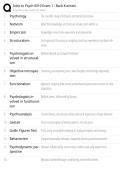
1. Psychology The scientific study of behavior and mental processes.
2. Nativism Belief that knowledge and traits are innate, born within us.
3. Empiricism Knowledge comes from experience and observation.
4. Structuralism Early approach focusing on analyzing conscious experience into basic ele-
ments.
5. Psychologists in- Wilhelm Wundt and Edward Titchener.
volved in structural-
ism
6. Objective introspec- Examining and reporting one's own thoughts and feelings objectively.
tion
7. Functionalism Approach studying how mental and behavioral processes function to help
adaptation.
8. Psychologists in- William James, influenced by Darwin.
volved in functional-
ism
9. Psychoanalysis Freud's theory; unconscious drives and early experiences shape behavior.
10. Gestalt Focus on perception of whole patterns, not just parts.
11. Gollin Figures Test A test using incomplete drawings to study perception and memory.
12. Behaviorism Study of observable behavior, shaped by learning and environment.
13. Psychodynamic per- Behavior influenced by unconscious conflicts and early experiences.
spective
14. Behavior learned through conditioning and reinforcement.
1/8
, Intro to Psych 0010 Exam 1 - Barb Kucinski
Study online at https://quizlet.com/_hw8axn
Behavioral perspec-
tive
15. Humanistic perspec- Emphasis on free will, growth, and self-actualization.
tive
16. Cognitive perspec- Focus on mental processes like thinking, memory, and problem-solving.
tive
17. Sociocultural per- Behavior influenced by social and cultural factors.
spective
18. Biopsychological Behavior explained by brain, genetics, and biology.
perspective
19. Evolutionary per- Behavior shaped by adaptation and natural selection.
spective
20. Scientific research Systematic study; ensures reliable and valid findings.
21. Difference between Basic = knowledge for its own sake; Applied = solve practical problems.
basic and applied re-
search
22. Four criteria for crit- Ask questions, define terms, examine evidence, avoid biases.
ical thinking
23. Law of parsimony Use the simplest explanation that fits the evidence.
24. Difference between Descriptive = observe/describe; Experimental = manipulate variables.
descriptive and ex-
perimental studies
25. Variable A measurable factor that can change in a study.
2/8
Study online at https://quizlet.com/_hw8axn
1. Psychology The scientific study of behavior and mental processes.
2. Nativism Belief that knowledge and traits are innate, born within us.
3. Empiricism Knowledge comes from experience and observation.
4. Structuralism Early approach focusing on analyzing conscious experience into basic ele-
ments.
5. Psychologists in- Wilhelm Wundt and Edward Titchener.
volved in structural-
ism
6. Objective introspec- Examining and reporting one's own thoughts and feelings objectively.
tion
7. Functionalism Approach studying how mental and behavioral processes function to help
adaptation.
8. Psychologists in- William James, influenced by Darwin.
volved in functional-
ism
9. Psychoanalysis Freud's theory; unconscious drives and early experiences shape behavior.
10. Gestalt Focus on perception of whole patterns, not just parts.
11. Gollin Figures Test A test using incomplete drawings to study perception and memory.
12. Behaviorism Study of observable behavior, shaped by learning and environment.
13. Psychodynamic per- Behavior influenced by unconscious conflicts and early experiences.
spective
14. Behavior learned through conditioning and reinforcement.
1/8
, Intro to Psych 0010 Exam 1 - Barb Kucinski
Study online at https://quizlet.com/_hw8axn
Behavioral perspec-
tive
15. Humanistic perspec- Emphasis on free will, growth, and self-actualization.
tive
16. Cognitive perspec- Focus on mental processes like thinking, memory, and problem-solving.
tive
17. Sociocultural per- Behavior influenced by social and cultural factors.
spective
18. Biopsychological Behavior explained by brain, genetics, and biology.
perspective
19. Evolutionary per- Behavior shaped by adaptation and natural selection.
spective
20. Scientific research Systematic study; ensures reliable and valid findings.
21. Difference between Basic = knowledge for its own sake; Applied = solve practical problems.
basic and applied re-
search
22. Four criteria for crit- Ask questions, define terms, examine evidence, avoid biases.
ical thinking
23. Law of parsimony Use the simplest explanation that fits the evidence.
24. Difference between Descriptive = observe/describe; Experimental = manipulate variables.
descriptive and ex-
perimental studies
25. Variable A measurable factor that can change in a study.
2/8


