
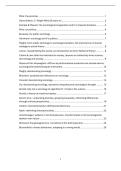
Mills: the promise ............................................................................................. 1
Gane & Back: C. Wright Mills 50 years on ............................................................ 2
Kemple & Mawani: the sociological imagination and it’s imperial shadows ............ 3
Mills: on politics................................................................................................ 4
Burawoy: for public sociology ............................................................................ 6
Hartmann: sociology and it’s publics .................................................................. 7
Meghji: from public sociology to sociological publics, the importance of reverse
tutelage to social theory .................................................................................... 8
Latour: reassembling the social, an introduction to Actor-Network Theory ............ 8
Callon & Law: after the individual in society, lessons on collectivity from science,
technology and society...................................................................................... 9
Meyers & Van Hoyweghen: ANT en de performatieve productie van sociale kennis,
sociologische beschrijving als interventie ......................................................... 10
Meghji: decolonizing sociology ......................................................................... 11
Bhambra: postkolonial reflections on sociology ................................................ 13
Connell: decolonizing sociology ....................................................................... 14
Go: decolonizing sociology, epistemic inequality and sociological thought ......... 15
Airoldi: why not a sociology of algorithms? + Code in the culture ........................ 16
Airoldi: a theory of machine habitus ................................................................. 17
Zanoni et al.: unpacking diversity, grasping inequality, rethinking differences
through critical perspectives............................................................................ 19
Collins: intersectionality’s definitional dilemmas .............................................. 21
Nash: rethinking intersectionality ..................................................................... 23
Verschraegen: welkom in het Antropoceen, transformaties in het sociologische
denken over natuur ......................................................................................... 23
Bonneuil: the geological turn, narratives of the Anthropocene ............................ 24
Blumenfeld: climate barbarism, adapting to a wrong world ................................ 26
1
,Mills: the promise
Kritiek op mainstream sociologie:
- Bureaucratische ethos: wetenschap geleid dr macht/geld ipv co-creatie met publieken.
- Voorkeur voor grand theorie, abstract.
- Abstract empirisme: fetisjisme van methoden en technieken.
Sociologische verbeelding laat mensen toe om relatie biografie en geschiedenis te zien =
connectie tussen personal troubles of milieu en public issues of social structure.
- Schakelen tsn die 2 perspectieven = bifocale bril sociologie.
-> 3 vragen stellen:
1. Wat is de structuur vd samenleving en hoe verhoudt deze zich tot andere sociale ordes?
2. Waar staat deze samenleving id menselijke geschiedenis en hoe verandert zij?
3. Welke types mensen overheersen in deze samenleving/periode, en hoe worden zij
gevormd dr sociale structuren?
=> Creëert sociologische quality of mind, kwaliteit van geest die ons toestaat dit te begrijpen.
3 neigingen vd sociologie:
1. Naar een theorie vd geschiedenis: sociologie als encyclopedie, kijkend naar volledige
mensenleven.
2. Naar een systematische theorie vd natuur vd mens en samenleving: sociale relaties
classificeren, laat geschiedenis vallen.
3. Naar empirische studies van moderne sociologische feiten: studie van academische
leftovers, liberale patriarchie.
The promise, de belofte vd sociologie = individuen helpen een quality of mind te ontwikkelen +
genuine publics (actief, bewust) creëren (<-> passieve massa).
Sociologie moet hiervoor een ambacht, craft zijn ipv rigide bureaucratiscshe wetenschap.
- Methodologische flexibiliteit: Theorie en methode mogen nooit vooraf vastliggen, maar
moeten bepaald worden door het empirische probleem.
- Literair vakmanschap: De socioloog moet begrijpelijk schrijven voor een niet-
universitair publiek en streven naar "sociologische poëzie".
2
, Kritische noot uit de lessen: Hoewel Mills' visie krachtig is, heeft hij blinde vlekken. Hij wordt vaak
als paternalistisch gezien (hij wil de gewone man opvoeden), is androcentrisch (focus op de
man als historische actor) en zijn werk is eurocentrisch geworteld in de westerse ervaring.
3


