
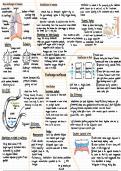
Gas exchange in humans Ventilation in insects ·ventilation in insects is the
pumping of the abdomen
bronchioles larynx - which draws air in and out of the tracheal
smooth muscle, ⑧ trachea-c-shaped ·insects have no transport system rely on ↳ air moves directly to the tracheoles and to muscle
no cartilage cartilage rings the
gas exchange system to
bring oxygen directly tissue
to prevent collapse to tissues
Tracheal system
tertiary spiracles -
close often to minimise water loss the +
need t
bronchus bronchus trap humid air-less osmosis
hairs
surrounding them series of tubes that supply
terminal airsacs along the trachea can store oxygen if spiracles oxygen directly
to muscles
are closed
bronchiole ribcage for a long time limits size of insects as
distr
Adapter ·when muscles areactive, it can'tmeet the demands
alveoli diaphragm ·large SA-lots of tracheoles slid moves out of tracheoles
of a larger organism
·
steep conc
gradient -
spiracles constantly for faster diffusion an exoskeleton would limit
Inhaling Exhaling supplied with
oxygen which is used for
which
to occur movement too
ribcage moves respiration produces CO2
Sh
Y
r up +
out ↳ conc. in air is lower than
oxygen
8I
ribcage
-
↳ external C -> moves in the cells- diffusion occurs ① mouth opens
intercostal L downtin short diffusion distance -
thin Ventilation in fish ② buccal cavity floor drops volume,
muscles ↳ external tracheoles, tracheal system ↑ pressure, water moves in downpressure grad.
:
> intercostal supplies oxygen straight to
contract M 0 ③ opercular cavity expands, volume,
aphragm diaphragm muscles relax bucca
!
C
cells + muscles 8
Opercular ↓ pressure
U
cavity ④
buccal floor
down
cavity E
moves MOVES up rises - mouth closes -
volume decreases while
Exchange surfaces T A ↓ volume, pressure - water moves
·volume increases H W
gradient
·
over
gills down pressure
while pressure decreases, pressure increases / ⑤
gas exchange occurs in gills
air in
allowing forcingair out
·fish have
single,
a closed ⑥ opercular cavity contracts +
Ventilation volume, pressure
circulatory system operculum opens -
ALVEOLI
Se
S
/
alveolihave low CO2
-
Spirometer method: water exits fish
↳
always removing CO2 out of ·wear a nose clip to keep results Gas
Exchange
C
we re m
⑪ the valid
body to keep conc. gradient
⑱ t keep adaptations diffusion:large SA/lots of lamella on gill
for fast
·alveolihave high O2 due to hid is suspended in water to
CO2 diffuses in
↳
high to low breathing in to keep conc an
airtight chamber
filaments), steep conc. gradient (countercurrent flow), short diffusion
CONC.
gradient subject breathes out until
in and
pathway/lamella+ capillaries are both one cell thick)
fish
f highly open to
Oxygen is used up
-
active - swim with mouths maintain a
alveoli
- & O
RB
the lid moves up and down while
favourable conc.
gradient
high to low conc breathing occurs
diffuses The
Kymograph pen draws gill filaments-feathery projections that clump together when out
·
02 ↳ a
of
⑲
out
Diffusion conc trace water- reduces less
-
as the lid moves SA
so diffusion occurs
⑧ RBC ↓ diffusion distance
operculum -
gill cover -
protects gills
Safety: counter current
--
flow
--
Measurements ·
don'tuse asthmatic subjects
-
Adaptations of alveoli t capillaries ·
use medical grade oxygen ①
water arrives + some
oxygen diffuses to
- Tidal volume -
the mouthpiece must be the blood through capillary walls
lots of small alveoli- &SA
peak trough
to
disinfected before t after ② water continues to move along until
single layer of epithelial cells t 2
Vital capacity --
use fresh soda lime to remove there is little
oxygen left
surrounded by capillaries highest peak to CO2 ③ blood flows in the opposite direction to
↳ A diffusion distance lowest trough the water so that the most oxygenated
constant diffusion of & ventilation tidal volumex ventilation
gasese conc
Pulmonary water meets the most oxygenated blood
·
- -
gradient -
oxygen consumption -
gradient of the d rate ↳no equilibrium is reached
troughs ↳ diffusion is always taking place
no, of breaths per
minute
pumping of the abdomen
bronchioles larynx - which draws air in and out of the tracheal
smooth muscle, ⑧ trachea-c-shaped ·insects have no transport system rely on ↳ air moves directly to the tracheoles and to muscle
no cartilage cartilage rings the
gas exchange system to
bring oxygen directly tissue
to prevent collapse to tissues
Tracheal system
tertiary spiracles -
close often to minimise water loss the +
need t
bronchus bronchus trap humid air-less osmosis
hairs
surrounding them series of tubes that supply
terminal airsacs along the trachea can store oxygen if spiracles oxygen directly
to muscles
are closed
bronchiole ribcage for a long time limits size of insects as
distr
Adapter ·when muscles areactive, it can'tmeet the demands
alveoli diaphragm ·large SA-lots of tracheoles slid moves out of tracheoles
of a larger organism
·
steep conc
gradient -
spiracles constantly for faster diffusion an exoskeleton would limit
Inhaling Exhaling supplied with
oxygen which is used for
which
to occur movement too
ribcage moves respiration produces CO2
Sh
Y
r up +
out ↳ conc. in air is lower than
oxygen
8I
ribcage
-
↳ external C -> moves in the cells- diffusion occurs ① mouth opens
intercostal L downtin short diffusion distance -
thin Ventilation in fish ② buccal cavity floor drops volume,
muscles ↳ external tracheoles, tracheal system ↑ pressure, water moves in downpressure grad.
:
> intercostal supplies oxygen straight to
contract M 0 ③ opercular cavity expands, volume,
aphragm diaphragm muscles relax bucca
!
C
cells + muscles 8
Opercular ↓ pressure
U
cavity ④
buccal floor
down
cavity E
moves MOVES up rises - mouth closes -
volume decreases while
Exchange surfaces T A ↓ volume, pressure - water moves
·volume increases H W
gradient
·
over
gills down pressure
while pressure decreases, pressure increases / ⑤
gas exchange occurs in gills
air in
allowing forcingair out
·fish have
single,
a closed ⑥ opercular cavity contracts +
Ventilation volume, pressure
circulatory system operculum opens -
ALVEOLI
Se
S
/
alveolihave low CO2
-
Spirometer method: water exits fish
↳
always removing CO2 out of ·wear a nose clip to keep results Gas
Exchange
C
we re m
⑪ the valid
body to keep conc. gradient
⑱ t keep adaptations diffusion:large SA/lots of lamella on gill
for fast
·alveolihave high O2 due to hid is suspended in water to
CO2 diffuses in
↳
high to low breathing in to keep conc an
airtight chamber
filaments), steep conc. gradient (countercurrent flow), short diffusion
CONC.
gradient subject breathes out until
in and
pathway/lamella+ capillaries are both one cell thick)
fish
f highly open to
Oxygen is used up
-
active - swim with mouths maintain a
alveoli
- & O
RB
the lid moves up and down while
favourable conc.
gradient
high to low conc breathing occurs
diffuses The
Kymograph pen draws gill filaments-feathery projections that clump together when out
·
02 ↳ a
of
⑲
out
Diffusion conc trace water- reduces less
-
as the lid moves SA
so diffusion occurs
⑧ RBC ↓ diffusion distance
operculum -
gill cover -
protects gills
Safety: counter current
--
flow
--
Measurements ·
don'tuse asthmatic subjects
-
Adaptations of alveoli t capillaries ·
use medical grade oxygen ①
water arrives + some
oxygen diffuses to
- Tidal volume -
the mouthpiece must be the blood through capillary walls
lots of small alveoli- &SA
peak trough
to
disinfected before t after ② water continues to move along until
single layer of epithelial cells t 2
Vital capacity --
use fresh soda lime to remove there is little
oxygen left
surrounded by capillaries highest peak to CO2 ③ blood flows in the opposite direction to
↳ A diffusion distance lowest trough the water so that the most oxygenated
constant diffusion of & ventilation tidal volumex ventilation
gasese conc
Pulmonary water meets the most oxygenated blood
·
- -
gradient -
oxygen consumption -
gradient of the d rate ↳no equilibrium is reached
troughs ↳ diffusion is always taking place
no, of breaths per
minute


