
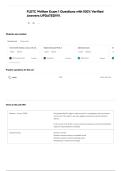
FLETC Written Exam 1 Questions with 100% Verified
Answers UPDATED!!!!!.
Students also studied
Flashcard sets Study guides
TCIC/TLETS Mobile Access with CC... Flight Attendant Week 3 Bail Bond Exam CH
Teacher 50 terms Teacher 28 terms Teacher 108 terms Te
Macharia_Kenneth Preview reenedani Preview Kiliih_Senior Preview
Practice questions for this set
Learn 1 /7 Study with Learn
Terms in this set (197)
Graham v. Connor (1989) Recognized that the right to make an arrest or investigatory stop necessarily
carries with it the right to use some degree of physical coercion/threat to
affect it.
In the course of an arrest or stop is properly analyzed by Fourth Amendment's
'objective reasonableness' standard
Graham Factors Severity of crime
Whether suspect poses an immediate threat
Whether suspect is actively resisting arrest
Attempting to evade arrest by flight
, Additional factors considered when applying standard # of suspects/# of officers
of Graham v. Connor that may govern the Size, age, condition of officer/suspect
reasonableness of using force Duration of action
Whether force applied resulted in injury
Previous violent history known to officer at time
Use of alcohol/drugs
Suspect's mental history known to officer at time
Presence of innocent bystanders
Availability of officer weapons
Range of Reasonableness Officer responses range from:
Hesitation---------------Aggressive
Tennessee v. Garner (1985) Supreme Court stated it is not reasonable to shoot an unarmed non-dangerous
fleeing suspect.
Key Elements of Tennessee v. Garner Probable cause
Threat
Officer not obligated to wait until death or serious bodily harm is occurring
If based on totality of circumstance and the officer perceives a threat of such
action, a reasonable force option may be used
Pre-Assault Indicators Verbal aggression
Change in posture
Face becomes red, showing teeth, breathing faster
Individual ignores you or stares through you
Aggression
Hands tighten
Individual becomes rigid
Chin tucked
Common Restrictions in Agency Use of Force Policy Use of warning shots
Use of maximum force
Moving vehicles
Exhausting lesser means of force first
Answers UPDATED!!!!!.
Students also studied
Flashcard sets Study guides
TCIC/TLETS Mobile Access with CC... Flight Attendant Week 3 Bail Bond Exam CH
Teacher 50 terms Teacher 28 terms Teacher 108 terms Te
Macharia_Kenneth Preview reenedani Preview Kiliih_Senior Preview
Practice questions for this set
Learn 1 /7 Study with Learn
Terms in this set (197)
Graham v. Connor (1989) Recognized that the right to make an arrest or investigatory stop necessarily
carries with it the right to use some degree of physical coercion/threat to
affect it.
In the course of an arrest or stop is properly analyzed by Fourth Amendment's
'objective reasonableness' standard
Graham Factors Severity of crime
Whether suspect poses an immediate threat
Whether suspect is actively resisting arrest
Attempting to evade arrest by flight
, Additional factors considered when applying standard # of suspects/# of officers
of Graham v. Connor that may govern the Size, age, condition of officer/suspect
reasonableness of using force Duration of action
Whether force applied resulted in injury
Previous violent history known to officer at time
Use of alcohol/drugs
Suspect's mental history known to officer at time
Presence of innocent bystanders
Availability of officer weapons
Range of Reasonableness Officer responses range from:
Hesitation---------------Aggressive
Tennessee v. Garner (1985) Supreme Court stated it is not reasonable to shoot an unarmed non-dangerous
fleeing suspect.
Key Elements of Tennessee v. Garner Probable cause
Threat
Officer not obligated to wait until death or serious bodily harm is occurring
If based on totality of circumstance and the officer perceives a threat of such
action, a reasonable force option may be used
Pre-Assault Indicators Verbal aggression
Change in posture
Face becomes red, showing teeth, breathing faster
Individual ignores you or stares through you
Aggression
Hands tighten
Individual becomes rigid
Chin tucked
Common Restrictions in Agency Use of Force Policy Use of warning shots
Use of maximum force
Moving vehicles
Exhausting lesser means of force first


