

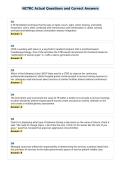
NCTRC Actual Questions and Correct Answers
Q1
A TR facilitation technique that focuses on taste, touch, sight, smell, hearing, and bodily
movement, and is often combined with reminiscence and remotivation is called: sensory
overload aromatherapy sensory stimulation sensory integration
Answer: C
Q2
CTRS is working with teens in a psychiatric inpatient program that is oriented toward
Fruedianpsychology. One of the activities the CTRS would recommend for theclients based on
"sublimation of sexual urges" is: crafts a dance gymnastics tennis
Answer: B
Q3
Which of the following is the LEAST likely way for a CTRS to improve her continuing
professionalcompetence? attend hospital grand rounds present in-service training sessions to
her colleagues read brochures about services at similar facilities attend national conferences
Answer: C
Q4
The best direct way to promote the value of TR within a facility is to provide in-service trainings
to other disciplines attend hospital grand rounds create and post an activity calendar on the
unit create a multidisciplinary assessment
Answer: A
Q5
Client A is displaying what type of behavior:During a discussion on the value of leisure, Client A
said, "We need to change topics. I don't like this one. I think it's for sissies like the rest of you
guys." assertive nonassertive (passive) aggressive noncommittal
Answer: C
Q6
Managed cared has shifted the responsibility of determining the services a patient needs from
the providers of services to the state governments payers of service patient middle class
Answer: B
, Q7
The Comprehensive Evaluation in Recreation Therapy- PhysicalDisabilities (CERT-PD) measures
which of the following sensory abilities EXCEPT visual acuity ocular pursuit depth perception
taste perception
Answer: D
Q8
Title II in the Americans withDisabilities Act of 1990 (and later amendments)
concernsdiscrimination with regard to recreation services and facilities employment education
both physical and programmatic access
Answer: D
Q9
The term "continuity of care" means that the treatment team strives to provide predictable,
connected, meaningful programs to clients client is transitioned from clinical to community
settings client is involved in inclusiverecreation services in the community with non-disabled
peers specialist serves as a casemanager throughout the client's length of stay at the facility
Answer: A
Q10
The CTRS wants the client to gain upper body strength so he canpropel his wheelchair for
longer distances. The CTRS would MOST LIKELY USE weight training wheelchair basketball tai
chi anaerobic exercise
Answer: A
Q11
The Functional Assessment of Characteristics for Therapeutic Recreation- Revised (FACTR-R)
measures what? leisure functioning decision-making skills prerequisite skills related to leisure
participation leisure skills typically needed to live in the community
Answer: C
Q12
Which of the following is an example of a "structure" indicator intherapeutic recreation
services? proportion of therapeutic recreation specialists to other therapists outcomes of clients
who receive therapeutic recreation services frequency of interactions between clients and
therapists client achievement of social interaction skills objectives
Answer: A
Q1
A TR facilitation technique that focuses on taste, touch, sight, smell, hearing, and bodily
movement, and is often combined with reminiscence and remotivation is called: sensory
overload aromatherapy sensory stimulation sensory integration
Answer: C
Q2
CTRS is working with teens in a psychiatric inpatient program that is oriented toward
Fruedianpsychology. One of the activities the CTRS would recommend for theclients based on
"sublimation of sexual urges" is: crafts a dance gymnastics tennis
Answer: B
Q3
Which of the following is the LEAST likely way for a CTRS to improve her continuing
professionalcompetence? attend hospital grand rounds present in-service training sessions to
her colleagues read brochures about services at similar facilities attend national conferences
Answer: C
Q4
The best direct way to promote the value of TR within a facility is to provide in-service trainings
to other disciplines attend hospital grand rounds create and post an activity calendar on the
unit create a multidisciplinary assessment
Answer: A
Q5
Client A is displaying what type of behavior:During a discussion on the value of leisure, Client A
said, "We need to change topics. I don't like this one. I think it's for sissies like the rest of you
guys." assertive nonassertive (passive) aggressive noncommittal
Answer: C
Q6
Managed cared has shifted the responsibility of determining the services a patient needs from
the providers of services to the state governments payers of service patient middle class
Answer: B
, Q7
The Comprehensive Evaluation in Recreation Therapy- PhysicalDisabilities (CERT-PD) measures
which of the following sensory abilities EXCEPT visual acuity ocular pursuit depth perception
taste perception
Answer: D
Q8
Title II in the Americans withDisabilities Act of 1990 (and later amendments)
concernsdiscrimination with regard to recreation services and facilities employment education
both physical and programmatic access
Answer: D
Q9
The term "continuity of care" means that the treatment team strives to provide predictable,
connected, meaningful programs to clients client is transitioned from clinical to community
settings client is involved in inclusiverecreation services in the community with non-disabled
peers specialist serves as a casemanager throughout the client's length of stay at the facility
Answer: A
Q10
The CTRS wants the client to gain upper body strength so he canpropel his wheelchair for
longer distances. The CTRS would MOST LIKELY USE weight training wheelchair basketball tai
chi anaerobic exercise
Answer: A
Q11
The Functional Assessment of Characteristics for Therapeutic Recreation- Revised (FACTR-R)
measures what? leisure functioning decision-making skills prerequisite skills related to leisure
participation leisure skills typically needed to live in the community
Answer: C
Q12
Which of the following is an example of a "structure" indicator intherapeutic recreation
services? proportion of therapeutic recreation specialists to other therapists outcomes of clients
who receive therapeutic recreation services frequency of interactions between clients and
therapists client achievement of social interaction skills objectives
Answer: A


