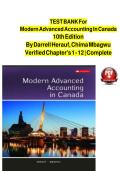
TEST BANK For ff ff
Modern Advanced Accounting In Canada
ff ff ff ff
10th Edition ff
By Darrell Herauf, Chima Mbagwu
ff ff ff ff
Verified Chapter's 1 - 12 | Complete
ff ff ff ff ff ff
1-1
,TABLE OF CONTENTS ff ff
CHAPTER 1 Conceptual and Case Analysis Frameworks for Financial Reporting
ff ff ff ff ff ff ff ff ff
CHAPTER 2 Investments in Equity Securities
ff ff ff ff ff
CHAPTER 3 Business Combinations
ff ff ff
CHAPTER 4 Consolidation of Non-Wholly Owned Subsidiaries
ff ff ff ff ff ff
CHAPTER 5 Consolidation Subsequent to Acquisition Date
ff ff ff ff ff ff
CHAPTER 6 Intercompany Inventory and Land Profits
ff ff ff ff ff ff
CHAPTER 7 (A) Intercompany Profits in Depreciable Assets (B) Intercompany Bondholdings
ff ff ff ff ff ff ff ff ff ff
CHAPTER 8 Consolidated Cash Flows and Changes in Ownership
ff ff ff ff ff ff ff ff
CHAPTER 9 Other Consolidation Reporting Issues
ff ff ff ff ff
CHAPTER 10 Foreign Currency Transactions
ff ff ff ff
CHAPTER 11 Translation and Consolidation of Foreign Operations
ff ff ff ff ff ff ff
CHAPTER 12 Accounting for Not-for-Profit and Public Sector Organizations
ff ff ff ff ff ff ff ff
1-2
, Chapter01 f
ff Conceptual and Case Analysis Frameworks for Financial Reporting ff ff ff ff ff ff ff
Multiple Choice Questions ff ff
1. Which of the following would NOT be a reason to obtain a greater understanding of
ff ff ff ff ff ff ff ff ff ff ff ff ff ff
accounting practices in other nations?
ff ff ff ff ff
A. Financial results are disclosed in different currencies.ff ff ff ff ff ff
B. One needs to be aware of differing disclosure requirements from nation to nation, as this
ff ff ff ff ff ff ff ff ff ff ff ff ff ff
impacts the preparation of financial statements.
ff ff ff ff ff ff
C. Income-smoothing may have affected a foreign subsidiary's results; such smoothing ff ff ff ff ff ff ff ff ff
practices are not permitted in North America.
ff ff ff ff ff ff ff
D. Departures from the historical cost principle may be possible in other nations.
ff ff ff ff ff ff ff ff ff ff ff
Accessibility: Keyboard Navigationff f
Blooms: Remember
f f ff
Difficulty: Easy ff
Learning Objective: 01-01 Describe and apply the conceptual framework for financial reporting.
ff ff ff ff ff ff ff ff ff ff ff
Topic: 01-01 The Conceptual Framework for Financial Reporting
f f ff ff ff ff ff ff ff
2. Which of the following would be most affected by financial statements being prepared
ff ff ff ff ff ff ff ff ff ff ff ff
under different accounting principles?
ff ff ff ff
A. Reduced comparability. ff
B. Reduced reliability. ff
C. Increased complexity. ff
D. Inaccurate asset valuations. ff ff
Accessibility: Keyboard Navigationff f
Blooms: Remember
f f ff
Difficulty: Easy ff
Learning Objective: 01-01 Describe and apply the conceptual framework for financial reporting.
ff ff ff ff ff ff ff ff ff ff ff
Topic: 01-01 The Conceptual Framework for Financial Reporting
f f ff ff ff ff ff ff ff
1-3
, 3. The CPA Canada Handbook - Accounting is the handbook of Canadian accounting
ff ff ff ff ff ff ff ff ff ff ff
standards. Why do companies in Canada ensure that their financial reporting is consistent
ff ff ff ff ff ff ff ff ff ff ff ff ff
with Canadian GAAP?
ff ff ff
A. Their bank requires them to do so.
ff ff ff ff ff ff
B. Their auditors require them to do so.
ff ff ff ff ff ff
C. Reporting under the CPA Canada Handbook - Accounting is required by public companies'
ff ff ff ff ff ff ff ff ff ff ff ff
boards of directors.
ff ff ff
D. Compliance with the CPA Canada Handbook - Accounting pronouncements is usually ff ff ff ff ff ff ff ff ff ff
required by many legal statutes.
ff ff ff ff ff
Accessibility: Keyboard Navigation ff f
Blooms: Remember
f f ff
Difficulty: Easy ff
Learning Objective: 01-01 Describe and apply the conceptual framework for financial reporting.
ff ff ff ff ff ff ff ff ff ff ff
Topic: 01-01 The Conceptual Framework for Financial Reporting
f f ff ff ff ff ff ff ff
4. Which decision has Canada made with respect to financial reporting for private
ff ff ff ff ff ff ff ff ff ff ff
enterprises?
ff
A. To adopt the IFRS standards for small and medium-sized enterprises.
ff ff ff ff ff ff ff ff ff
B. To retain the current standards.
ff ff ff ff
C. To look to US GAAP for standards.
ff ff ff ff ff ff
D. To develop and maintain its own standards for private enterprises.
ff ff ff ff ff ff ff ff ff
Accessibility: Keyboard Navigation ff f
Blooms: Remember
f f ff
Difficulty: Easy ff
Learning Objective: 01-02 Describe how accounting standards in Canada are tailored to different types of organizations.
ff ff ff ff ff ff ff ff ff ff ff ff ff ff ff
Topic: 01-05 GAAP for Private Enterprises
f f ff ff ff ff ff
5. Starting in 2011, what is the definition of a private enterprise (PE) under Canadian GAAP?
ff ff ff ff ff ff ff ff ff ff ff ff ff ff
A. A corporation that has no public shareholders.
ff ff ff ff ff ff
B. A corporation that has less than 500 shareholders and is not listed on a stock exchange.
ff ff ff ff ff ff ff ff ff ff ff ff ff ff ff
C. A corporation which is not profit oriented.
ff ff ff ff ff ff
D. A profit oriented enterprise that has none of its issued and outstanding financial
ff ff ff ff ff ff ff ff ff ff ff ff
instruments traded in a public market and does not hold assets in a fiduciary capacity for a
ff ff ff ff ff ff ff ff ff ff ff ff ff ff ff ff ff
broad group of outsiders as one of its primary businesses.
ff ff ff ff ff ff ff ff ff ff
Accessibility: Keyboard Navigation ff f
Blooms: Remember
f f ff
Difficulty: Easy ff
Learning Objective: 01-02 Describe how accounting standards in Canada are tailored to different types of organizations.
ff ff ff ff ff ff ff ff ff ff ff ff ff ff ff
Topic: 01-05 GAAP for Private Enterprises
f f ff ff ff ff ff
1-4
Modern Advanced Accounting In Canada
ff ff ff ff
10th Edition ff
By Darrell Herauf, Chima Mbagwu
ff ff ff ff
Verified Chapter's 1 - 12 | Complete
ff ff ff ff ff ff
1-1
,TABLE OF CONTENTS ff ff
CHAPTER 1 Conceptual and Case Analysis Frameworks for Financial Reporting
ff ff ff ff ff ff ff ff ff
CHAPTER 2 Investments in Equity Securities
ff ff ff ff ff
CHAPTER 3 Business Combinations
ff ff ff
CHAPTER 4 Consolidation of Non-Wholly Owned Subsidiaries
ff ff ff ff ff ff
CHAPTER 5 Consolidation Subsequent to Acquisition Date
ff ff ff ff ff ff
CHAPTER 6 Intercompany Inventory and Land Profits
ff ff ff ff ff ff
CHAPTER 7 (A) Intercompany Profits in Depreciable Assets (B) Intercompany Bondholdings
ff ff ff ff ff ff ff ff ff ff
CHAPTER 8 Consolidated Cash Flows and Changes in Ownership
ff ff ff ff ff ff ff ff
CHAPTER 9 Other Consolidation Reporting Issues
ff ff ff ff ff
CHAPTER 10 Foreign Currency Transactions
ff ff ff ff
CHAPTER 11 Translation and Consolidation of Foreign Operations
ff ff ff ff ff ff ff
CHAPTER 12 Accounting for Not-for-Profit and Public Sector Organizations
ff ff ff ff ff ff ff ff
1-2
, Chapter01 f
ff Conceptual and Case Analysis Frameworks for Financial Reporting ff ff ff ff ff ff ff
Multiple Choice Questions ff ff
1. Which of the following would NOT be a reason to obtain a greater understanding of
ff ff ff ff ff ff ff ff ff ff ff ff ff ff
accounting practices in other nations?
ff ff ff ff ff
A. Financial results are disclosed in different currencies.ff ff ff ff ff ff
B. One needs to be aware of differing disclosure requirements from nation to nation, as this
ff ff ff ff ff ff ff ff ff ff ff ff ff ff
impacts the preparation of financial statements.
ff ff ff ff ff ff
C. Income-smoothing may have affected a foreign subsidiary's results; such smoothing ff ff ff ff ff ff ff ff ff
practices are not permitted in North America.
ff ff ff ff ff ff ff
D. Departures from the historical cost principle may be possible in other nations.
ff ff ff ff ff ff ff ff ff ff ff
Accessibility: Keyboard Navigationff f
Blooms: Remember
f f ff
Difficulty: Easy ff
Learning Objective: 01-01 Describe and apply the conceptual framework for financial reporting.
ff ff ff ff ff ff ff ff ff ff ff
Topic: 01-01 The Conceptual Framework for Financial Reporting
f f ff ff ff ff ff ff ff
2. Which of the following would be most affected by financial statements being prepared
ff ff ff ff ff ff ff ff ff ff ff ff
under different accounting principles?
ff ff ff ff
A. Reduced comparability. ff
B. Reduced reliability. ff
C. Increased complexity. ff
D. Inaccurate asset valuations. ff ff
Accessibility: Keyboard Navigationff f
Blooms: Remember
f f ff
Difficulty: Easy ff
Learning Objective: 01-01 Describe and apply the conceptual framework for financial reporting.
ff ff ff ff ff ff ff ff ff ff ff
Topic: 01-01 The Conceptual Framework for Financial Reporting
f f ff ff ff ff ff ff ff
1-3
, 3. The CPA Canada Handbook - Accounting is the handbook of Canadian accounting
ff ff ff ff ff ff ff ff ff ff ff
standards. Why do companies in Canada ensure that their financial reporting is consistent
ff ff ff ff ff ff ff ff ff ff ff ff ff
with Canadian GAAP?
ff ff ff
A. Their bank requires them to do so.
ff ff ff ff ff ff
B. Their auditors require them to do so.
ff ff ff ff ff ff
C. Reporting under the CPA Canada Handbook - Accounting is required by public companies'
ff ff ff ff ff ff ff ff ff ff ff ff
boards of directors.
ff ff ff
D. Compliance with the CPA Canada Handbook - Accounting pronouncements is usually ff ff ff ff ff ff ff ff ff ff
required by many legal statutes.
ff ff ff ff ff
Accessibility: Keyboard Navigation ff f
Blooms: Remember
f f ff
Difficulty: Easy ff
Learning Objective: 01-01 Describe and apply the conceptual framework for financial reporting.
ff ff ff ff ff ff ff ff ff ff ff
Topic: 01-01 The Conceptual Framework for Financial Reporting
f f ff ff ff ff ff ff ff
4. Which decision has Canada made with respect to financial reporting for private
ff ff ff ff ff ff ff ff ff ff ff
enterprises?
ff
A. To adopt the IFRS standards for small and medium-sized enterprises.
ff ff ff ff ff ff ff ff ff
B. To retain the current standards.
ff ff ff ff
C. To look to US GAAP for standards.
ff ff ff ff ff ff
D. To develop and maintain its own standards for private enterprises.
ff ff ff ff ff ff ff ff ff
Accessibility: Keyboard Navigation ff f
Blooms: Remember
f f ff
Difficulty: Easy ff
Learning Objective: 01-02 Describe how accounting standards in Canada are tailored to different types of organizations.
ff ff ff ff ff ff ff ff ff ff ff ff ff ff ff
Topic: 01-05 GAAP for Private Enterprises
f f ff ff ff ff ff
5. Starting in 2011, what is the definition of a private enterprise (PE) under Canadian GAAP?
ff ff ff ff ff ff ff ff ff ff ff ff ff ff
A. A corporation that has no public shareholders.
ff ff ff ff ff ff
B. A corporation that has less than 500 shareholders and is not listed on a stock exchange.
ff ff ff ff ff ff ff ff ff ff ff ff ff ff ff
C. A corporation which is not profit oriented.
ff ff ff ff ff ff
D. A profit oriented enterprise that has none of its issued and outstanding financial
ff ff ff ff ff ff ff ff ff ff ff ff
instruments traded in a public market and does not hold assets in a fiduciary capacity for a
ff ff ff ff ff ff ff ff ff ff ff ff ff ff ff ff ff
broad group of outsiders as one of its primary businesses.
ff ff ff ff ff ff ff ff ff ff
Accessibility: Keyboard Navigation ff f
Blooms: Remember
f f ff
Difficulty: Easy ff
Learning Objective: 01-02 Describe how accounting standards in Canada are tailored to different types of organizations.
ff ff ff ff ff ff ff ff ff ff ff ff ff ff ff
Topic: 01-05 GAAP for Private Enterprises
f f ff ff ff ff ff
1-4