

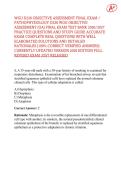
WGU D236 OBJECTIVE ASSESSMENT FINAL EXAM /
PATHOPHYSIOLOGY D236 WGU OBJECTIVE
ASSESSMENT (OA) FINAL EXAM TEST BANK 2026/2027
PRACTICE QUESTIONS AND STUDY GUIDE ACCURATE
EXAM COMPLETE REAL QUESTIONS WITH WELL
ELABORATED SOLUTIONS AND DETAILED
RATIONALES (100% CORRECT VERIFIED ANSWERS)
CURRENTLY UPDATED VERSION 2026 EDITION FULL
REVISED EXAM JUST RELEASED
1. A 55-year-old male with a 30-year history of smoking is examined for
respiratory disturbance. Examination of his bronchial airway reveals that
stratified squamous epithelial cells have replaced the normal columnar
ciliated cells. This type of cellular adaptation is called:
A) Hyperplasia
B) Dysplasia
C) Metaplasia
D) Anaplasia
Correct Answer: C
Rationale: Metaplasia is the reversible replacement of one differentiated
cell type with another. In smokers, the normal pseudostratified ciliated
columnar epithelium of the bronchi is replaced by stratified squamous
epithelium as a protective adaptation to chronic irritation.
,2. A patient with diabetic ketoacidosis demonstrates deep rapid
respirations and decreased bicarbonate levels. Which acid-base
imbalance is most likely present?
A) Respiratory alkalosis
B) Metabolic acidosis
C) Metabolic alkalosis
D) Respiratory acidosis
Correct Answer: B
Rationale: Diabetic ketoacidosis causes metabolic acidosis from ketone
accumulation. The deep rapid respirations (Kussmaul breathing)
represent a compensatory respiratory response to the metabolic acidosis.
3. A patient receiving IV penicillin develops sudden bronchospasm,
hypotension, and urticaria within minutes of administration. This is an
example of which type of hypersensitivity reaction?
A) Type I (IgE-mediated)
B) Type II (Antibody-mediated cytotoxicity)
C) Type III (Immune complex)
D) Type IV (Delayed-type)
Correct Answer: A
Rationale: Anaphylaxis to penicillin is a classic Type I
hypersensitivity reaction, in which drug-specific IgE bound to mast
cells triggers degranulation and release of vasoactive mediators such as
histamine, producing bronchospasm, hypotension, and urticaria within
minutes.
Extracted Text
,2. A patient with diabetic ketoacidosis demonstrates deep rapid
respirations and decreased bicarbonate levels. Which acid-base
imbalance is most likely present?
A) Respiratory alkalosis
B) Metabolic acidosis
C) Metabolic alkalosis
D) Respiratory acidosis
Correct Answer: B
Rationale: Diabetic ketoacidosis causes metabolic acidosis from ketone
accumulation. The deep rapid respirations (Kussmaul breathing)
represent a compensatory respiratory response to the metabolic acidosis.
3. A patient receiving IV penicillin develops sudden bronchospasm,
hypotension, and urticaria within minutes of administration. This is an
example of which type of hypersensitivity reaction?
A) Type I (IgE-mediated)
B) Type II (Antibody-mediated cytotoxicity)
C) Type III (Immune complex)
D) Type IV (Delayed-type)
Correct Answer: A
Rationale: Anaphylaxis to penicillin is a classic Type I
hypersensitivity reaction, in which drug-specific IgE bound to mast
cells triggers degranulation and release of vasoactive mediators such as
histamine, producing bronchospasm, hypotension, and urticaria within
minutes.
, 4. A 45-year-old woman with a history of autoimmune thyroiditis
presents with fatigue, weight gain, and cold intolerance. Laboratory
studies show an elevated TSH and low free T4. Which of the following
best describes the thyroid gland pathology?
A) Granulomatous inflammation with multinucleated giant cells
B) Lymphocytic infiltration with germinal centers and Hürthle cell
metaplasia
C) Follicular hyperplasia with colloid depletion
D) Malignant transformation of follicular cells
Correct Answer: B
Rationale: Hashimoto's thyroiditis is the most common cause of
hypothyroidism in iodine-sufficient regions. Histologically, the thyroid
is infiltrated by lymphocytes and plasma cells with formation of
germinal centers. Hürthle cell (oxyphilic) metaplasia is a characteristic
finding.
5. What are two pulmonary causes leading to respiratory acidosis?
A) Asthma and shortness of breath
B) Hyperventilation and fever
C) Cystic fibrosis and hypoventilation
D) Anemia and pain
Correct Answer: C
Rationale: Respiratory acidosis results from impaired ventilation
causing CO₂ retention. Cystic fibrosis can obstruct airways with thick
mucus, while hypoventilation reduces alveolar ventilation, both leading
to elevated PaCO₂ and respiratory acidosis.
PATHOPHYSIOLOGY D236 WGU OBJECTIVE
ASSESSMENT (OA) FINAL EXAM TEST BANK 2026/2027
PRACTICE QUESTIONS AND STUDY GUIDE ACCURATE
EXAM COMPLETE REAL QUESTIONS WITH WELL
ELABORATED SOLUTIONS AND DETAILED
RATIONALES (100% CORRECT VERIFIED ANSWERS)
CURRENTLY UPDATED VERSION 2026 EDITION FULL
REVISED EXAM JUST RELEASED
1. A 55-year-old male with a 30-year history of smoking is examined for
respiratory disturbance. Examination of his bronchial airway reveals that
stratified squamous epithelial cells have replaced the normal columnar
ciliated cells. This type of cellular adaptation is called:
A) Hyperplasia
B) Dysplasia
C) Metaplasia
D) Anaplasia
Correct Answer: C
Rationale: Metaplasia is the reversible replacement of one differentiated
cell type with another. In smokers, the normal pseudostratified ciliated
columnar epithelium of the bronchi is replaced by stratified squamous
epithelium as a protective adaptation to chronic irritation.
,2. A patient with diabetic ketoacidosis demonstrates deep rapid
respirations and decreased bicarbonate levels. Which acid-base
imbalance is most likely present?
A) Respiratory alkalosis
B) Metabolic acidosis
C) Metabolic alkalosis
D) Respiratory acidosis
Correct Answer: B
Rationale: Diabetic ketoacidosis causes metabolic acidosis from ketone
accumulation. The deep rapid respirations (Kussmaul breathing)
represent a compensatory respiratory response to the metabolic acidosis.
3. A patient receiving IV penicillin develops sudden bronchospasm,
hypotension, and urticaria within minutes of administration. This is an
example of which type of hypersensitivity reaction?
A) Type I (IgE-mediated)
B) Type II (Antibody-mediated cytotoxicity)
C) Type III (Immune complex)
D) Type IV (Delayed-type)
Correct Answer: A
Rationale: Anaphylaxis to penicillin is a classic Type I
hypersensitivity reaction, in which drug-specific IgE bound to mast
cells triggers degranulation and release of vasoactive mediators such as
histamine, producing bronchospasm, hypotension, and urticaria within
minutes.
Extracted Text
,2. A patient with diabetic ketoacidosis demonstrates deep rapid
respirations and decreased bicarbonate levels. Which acid-base
imbalance is most likely present?
A) Respiratory alkalosis
B) Metabolic acidosis
C) Metabolic alkalosis
D) Respiratory acidosis
Correct Answer: B
Rationale: Diabetic ketoacidosis causes metabolic acidosis from ketone
accumulation. The deep rapid respirations (Kussmaul breathing)
represent a compensatory respiratory response to the metabolic acidosis.
3. A patient receiving IV penicillin develops sudden bronchospasm,
hypotension, and urticaria within minutes of administration. This is an
example of which type of hypersensitivity reaction?
A) Type I (IgE-mediated)
B) Type II (Antibody-mediated cytotoxicity)
C) Type III (Immune complex)
D) Type IV (Delayed-type)
Correct Answer: A
Rationale: Anaphylaxis to penicillin is a classic Type I
hypersensitivity reaction, in which drug-specific IgE bound to mast
cells triggers degranulation and release of vasoactive mediators such as
histamine, producing bronchospasm, hypotension, and urticaria within
minutes.
, 4. A 45-year-old woman with a history of autoimmune thyroiditis
presents with fatigue, weight gain, and cold intolerance. Laboratory
studies show an elevated TSH and low free T4. Which of the following
best describes the thyroid gland pathology?
A) Granulomatous inflammation with multinucleated giant cells
B) Lymphocytic infiltration with germinal centers and Hürthle cell
metaplasia
C) Follicular hyperplasia with colloid depletion
D) Malignant transformation of follicular cells
Correct Answer: B
Rationale: Hashimoto's thyroiditis is the most common cause of
hypothyroidism in iodine-sufficient regions. Histologically, the thyroid
is infiltrated by lymphocytes and plasma cells with formation of
germinal centers. Hürthle cell (oxyphilic) metaplasia is a characteristic
finding.
5. What are two pulmonary causes leading to respiratory acidosis?
A) Asthma and shortness of breath
B) Hyperventilation and fever
C) Cystic fibrosis and hypoventilation
D) Anemia and pain
Correct Answer: C
Rationale: Respiratory acidosis results from impaired ventilation
causing CO₂ retention. Cystic fibrosis can obstruct airways with thick
mucus, while hypoventilation reduces alveolar ventilation, both leading
to elevated PaCO₂ and respiratory acidosis.


