

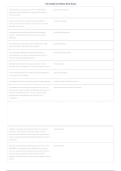
11th Grade US History EOC Exam
railroad baron, a true symbol of the "Gilded Age," Cornelius Vanderbilt
known as the Commodore. A college in Tennessee
bears his name.
owned U.S. Steel and used Vertical integration to Andrew Carnegie
monopolize the steel industry. Gave millions to build
libraries and schools.
developed the air-braking system and alternating George Westinghouse
current - this allowed power to be sent over long
distances.
the sleeping car made him a very wealthy man. 1894 George Pullman
Strike resulted in the death of 34 people.
he invented the telephone and was a pioneer in Alexander Graham Bell
communication not only for the hearing, but for the
deaf and hearing impaired as well.
the light bulb is his most famous invention, he also Thomas Edison
invented the phonograph, and the first motion pictures.
owner of Standard Oil, he used Horizontal Integration John D. Rockefeller
to control the oil business
developed the food processing industry (meat packing) Gustavus Swift and Philip Armour
the belief that the strongest societies will survive. This social darwinism-survival of the fittest
idea was also used to justify monopolies and trusts. If a
business is meant to survive - it will. Laissez - Faire:
government should keep out of business limit
regulations.
distillers conspired with political parties to cheat the Whiskey Ring
U.S. Govt. out of millions of dollars of tax revenue.
Citizens would demand reform within the government.
Money was going to political parties instead of where it
should go.
political machine that controlled politics in NYC in the Tammany Hall
late 1800s. Controlled by Boss William Marcy Tweed
who was exposed by the political cartoons of Thomas
Nast in Harpers Weekly. Nast is the father of the
symbols of political parties, the modern image of Santa
Claus.
, 11th Grade US History EOC Exam
he invented barbed wire and brought an end to the Joseph Glidden
open range.
he invented the typewriter. Christopher Sholes
he made milk chocolate available to the world. A Milton Hershey
Pennsylvania city bears his name.
he invented the telegraph. Samuel F.B. Morse
he was a wealthy banker - purchased Carnegie Steel J.P. Morgan
and created U.S. Steel.
attempt to stop patronage and political scandal, Pendleton Civil Service Act
required government employees to pass a Civil Service
Exam
the first government attempt to regulate business. Interstate Commerce Act
(1887) required railroads to charge fair rates and to
publish those shipping rates.
political movement for the common people. The Populism
government should own the railroads. Bimetallism,
workers should have an 8 hour workday and better
benefits. William Jennings Bryan - Cross of Gold Speech
phrase coined by Mark Twain, describes time period Gilded Age
between 1865-1900, extravagant wealth (top 5% held
86% of the nations wealth) terrible poverty existed
underneath the surface.
an attempt by the US Government to Americanize the Dawes Act
Native Americans. Divided reservations into small family
sized plots of land.
people came to America to escape harsh conditions in Immigration
their own countries. (Gold Rush, Religious Freedom,
Jobs, Land)
protestants, lighter skin, lighter hair, lighter eyes, came Old Immigrants
to America from Western Europe - (Great Britain,
Germany) in search of religious freedom.
, 11th Grade US History EOC Exam
immigrants from Southern and Eastern Europe, they did New Immigrants
not speak English - primarily Catholic. Came for
opportunity - jobs, land.
feelings of hostility for immigrants. It favored people or Nativism
products that were American.
created the Hull House to help the inner-city poor. Jane Addams
Provided health care, and education to those in need.
photographer who showed the harsh conditions in Jacob Riis
America's big cities during the Gilded Age. Published a
book titled How the Other Half Lives.
We should spread the American culture to the less Imperialism (Hawaii, Alaska, Puerto Rico, Guam, Philippines)
fortunate. It would provide more jobs, supply raw
materials, and provide much needed navy bases. It
would also open up new markets for businesses - a
strong sense of nationalism.
(1898) Explosion of the USS Maine in Havana Harbor, Spanish American War
Battle of San Juan Hill - Teddy Roosevelt, the
Philippines, Cuba, Yellow Fever, US support of
Imperialism.
(18th Amendment) illegal to manufacture, distribute, or Prohibition (18th Amendment)
possess any type of alcoholic beverage (distilled
spirits). The Noble Experiment. Opened the door for
organized crime (Al Capone), bootleggers and
smuggling.
President Teddy Roosevelt helped Panama gain Panama Canal
independence from Columbia (created a revolution).
The United States completed the job that France was
unable to finish. This feat greatly increased the power of
the Navy by linking the Atlantic and the Pacific. The
distance of travel (New York to San Francisco) was
shortened by several thousand miles. The United States
would now control shipping in the Western
Hemisphere.
William Randolph Hearst and Joseph Pulitzer published Yellow Journalism
sensational stories and used this form of journalism to
promote the Spanish-American War.
railroad baron, a true symbol of the "Gilded Age," Cornelius Vanderbilt
known as the Commodore. A college in Tennessee
bears his name.
owned U.S. Steel and used Vertical integration to Andrew Carnegie
monopolize the steel industry. Gave millions to build
libraries and schools.
developed the air-braking system and alternating George Westinghouse
current - this allowed power to be sent over long
distances.
the sleeping car made him a very wealthy man. 1894 George Pullman
Strike resulted in the death of 34 people.
he invented the telephone and was a pioneer in Alexander Graham Bell
communication not only for the hearing, but for the
deaf and hearing impaired as well.
the light bulb is his most famous invention, he also Thomas Edison
invented the phonograph, and the first motion pictures.
owner of Standard Oil, he used Horizontal Integration John D. Rockefeller
to control the oil business
developed the food processing industry (meat packing) Gustavus Swift and Philip Armour
the belief that the strongest societies will survive. This social darwinism-survival of the fittest
idea was also used to justify monopolies and trusts. If a
business is meant to survive - it will. Laissez - Faire:
government should keep out of business limit
regulations.
distillers conspired with political parties to cheat the Whiskey Ring
U.S. Govt. out of millions of dollars of tax revenue.
Citizens would demand reform within the government.
Money was going to political parties instead of where it
should go.
political machine that controlled politics in NYC in the Tammany Hall
late 1800s. Controlled by Boss William Marcy Tweed
who was exposed by the political cartoons of Thomas
Nast in Harpers Weekly. Nast is the father of the
symbols of political parties, the modern image of Santa
Claus.
, 11th Grade US History EOC Exam
he invented barbed wire and brought an end to the Joseph Glidden
open range.
he invented the typewriter. Christopher Sholes
he made milk chocolate available to the world. A Milton Hershey
Pennsylvania city bears his name.
he invented the telegraph. Samuel F.B. Morse
he was a wealthy banker - purchased Carnegie Steel J.P. Morgan
and created U.S. Steel.
attempt to stop patronage and political scandal, Pendleton Civil Service Act
required government employees to pass a Civil Service
Exam
the first government attempt to regulate business. Interstate Commerce Act
(1887) required railroads to charge fair rates and to
publish those shipping rates.
political movement for the common people. The Populism
government should own the railroads. Bimetallism,
workers should have an 8 hour workday and better
benefits. William Jennings Bryan - Cross of Gold Speech
phrase coined by Mark Twain, describes time period Gilded Age
between 1865-1900, extravagant wealth (top 5% held
86% of the nations wealth) terrible poverty existed
underneath the surface.
an attempt by the US Government to Americanize the Dawes Act
Native Americans. Divided reservations into small family
sized plots of land.
people came to America to escape harsh conditions in Immigration
their own countries. (Gold Rush, Religious Freedom,
Jobs, Land)
protestants, lighter skin, lighter hair, lighter eyes, came Old Immigrants
to America from Western Europe - (Great Britain,
Germany) in search of religious freedom.
, 11th Grade US History EOC Exam
immigrants from Southern and Eastern Europe, they did New Immigrants
not speak English - primarily Catholic. Came for
opportunity - jobs, land.
feelings of hostility for immigrants. It favored people or Nativism
products that were American.
created the Hull House to help the inner-city poor. Jane Addams
Provided health care, and education to those in need.
photographer who showed the harsh conditions in Jacob Riis
America's big cities during the Gilded Age. Published a
book titled How the Other Half Lives.
We should spread the American culture to the less Imperialism (Hawaii, Alaska, Puerto Rico, Guam, Philippines)
fortunate. It would provide more jobs, supply raw
materials, and provide much needed navy bases. It
would also open up new markets for businesses - a
strong sense of nationalism.
(1898) Explosion of the USS Maine in Havana Harbor, Spanish American War
Battle of San Juan Hill - Teddy Roosevelt, the
Philippines, Cuba, Yellow Fever, US support of
Imperialism.
(18th Amendment) illegal to manufacture, distribute, or Prohibition (18th Amendment)
possess any type of alcoholic beverage (distilled
spirits). The Noble Experiment. Opened the door for
organized crime (Al Capone), bootleggers and
smuggling.
President Teddy Roosevelt helped Panama gain Panama Canal
independence from Columbia (created a revolution).
The United States completed the job that France was
unable to finish. This feat greatly increased the power of
the Navy by linking the Atlantic and the Pacific. The
distance of travel (New York to San Francisco) was
shortened by several thousand miles. The United States
would now control shipping in the Western
Hemisphere.
William Randolph Hearst and Joseph Pulitzer published Yellow Journalism
sensational stories and used this form of journalism to
promote the Spanish-American War.


