

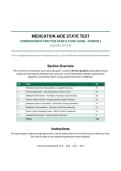
MEDICATION AIDE STATE TEST
COMPREHENSIVE PRACTICE EXAM & STUDY GUIDE - VERSION 2
2026/2027 EDITION
This is an independent practice exam for educational study; it is not an official state medication aide certification examination.
Section Overview
This is Version 2 of the practice exam and study guide. It contains 100 new questions across eight sections,
aligned with state-specific medication aide curriculum, current federal/state medication administration
regulations, and evidence-based nursing assistant practices for 2026/2027.
Sec Topic Qs
1 Medication Aide Roles, Responsibilities, & Legal/Ethical Issues 15
2 Pharmacology Basics - Drug Classifications, Routes, Forms 15
3 Medication Administration - Five Rights, Techniques, Documentation 20
4 Safety & Infection Control - Storage, Handling, Aseptic Technique 15
5 Medication Orders & Calculations - Conversions, Dosage Calculations 10
6 Monitoring & Documentation - Vital Signs, Side Effects, Reporting 10
7 Ethical, Legal, & Regulatory Issues - HIPAA, Consent, Regulations 10
8 Integrated Case Studies - Complex Resident Scenarios 5
TOTAL 100
Instructions
For each question, select the single best answer. Use the answer key at the end of the exam to check your work.
Each item includes a brief rationale explaining the correct response.
Answer Key Distribution: 25 A · 25 B · 25 C · 25 D
, Section 1: Medication Aide Roles, Responsibilities, & Legal/Ethical Issues
Q1: A medication aide who is asked to perform a task beyond their training should:
A. Attempt it anyway
B. Ask the resident if it is okay
C. Decline the task and notify the supervising nurse [CORRECT]
D. Complete it silently
Correct Answer: C
Rationale: Tasks beyond training/scope must be declined and reported to the supervising nurse. Attempting them is unsafe and
outside the aide's authority.
Q2: Which individual holds the ultimate accountability for a task delegated to a medication aide?
A. The medication aide alone
B. The resident
C. The delegating licensed nurse [CORRECT]
D. The housekeeper
Correct Answer: C
Rationale: The delegating nurse retains accountability for delegated tasks and must supervise. The aide performs the task but the
nurse retains responsibility.
Q3: A medication aide's scope of practice is most accurately defined by:
A. State regulations and the aide's approved training program [CORRECT]
B. Whatever tasks are available
C. The facility's busiest day
D. The family's requests
Correct Answer: A
Rationale: Scope is defined by state regulations and approved training. Tasks are not determined by availability, workload, or
family requests.
Q4: Which of the following would be a violation of a medication aide's scope of practice?
A. Documenting medication administration
B. Reporting a medication error
C. Making independent decisions to change a resident's medication dose [CORRECT]
D. Following a nurse's instruction
Correct Answer: C
Rationale: Changing doses independently exceeds the aide's scope, which requires licensed judgment. Documenting, reporting,
and following instructions are within scope.
Q5: The best response when a resident asks a medication aide for medical advice about a new symptom is to:
A. Give the resident a diagnosis
B. Suggest a new medication
C. Ignore the request
D. Encourage the resident to speak with the supervising nurse or prescriber [CORRECT]
Correct Answer: D
Rationale: Medical advice and diagnosis are outside the aide's scope. The aide should refer the resident to the nurse or
prescriber.
Q6: A medication aide who is feeling ill and feverish should:
A. Work anyway without telling anyone
B. Avoid hand washing
C. Report their illness to the supervisor and follow facility policy about working while ill [CORRECT]
D. Blame others
Correct Answer: C
Medication Aide State Test - v2 - 2026/2027 Practice & Study Guide Page 2
, Rationale: Illness should be reported and facility policy followed to protect residents and the aide. Working while ill can spread
infection.
Q7: Medication aides are generally permitted to administer which of the following?
A. Oral medications delegated by the nurse and documented [CORRECT]
B. IV chemotherapy
C. Newly prescribed IV antibiotics
D. Blood transfusions
Correct Answer: A
Rationale: Oral medication administration delegated by a nurse is within scope. IV therapy, chemotherapy, and transfusions
require licensed professionals.
Q8: A medication aide observes a suspected medication diversion (a drug missing). The aide should:
A. Ignore it
B. Replace the drug quietly
C. Accuse a coworker publicly
D. Report the suspected diversion to the supervisor immediately [CORRECT]
Correct Answer: D
Rationale: Suspected diversion must be reported immediately. Ignoring, quietly replacing, or publicly accusing is not appropriate.
Q9: The most important person for a medication aide to communicate medication concerns to is:
A. Other residents
B. The maintenance staff
C. The supervising licensed nurse [CORRECT]
D. Visitors
Correct Answer: C
Rationale: Medication concerns must be communicated to the supervising nurse, who can act on them. The other parties are not
appropriate.
Q10: A medication aide's duty to a resident includes:
A. Only completing paperwork
B. Protecting the resident's safety, dignity, and rights [CORRECT]
C. Prioritizing convenience
D. Avoiding reporting issues
Correct Answer: B
Rationale: The aide's duty centers on resident safety, dignity, and rights. Paperwork and convenience are secondary to resident
welfare.
Q11: When a resident has a question about a medication, the medication aide should:
A. Refuse to discuss it
B. Answer within scope or refer to the nurse for full information [CORRECT]
C. Guess an answer
D. Dismiss the question
Correct Answer: B
Rationale: The aide may answer basic questions within scope but should refer clinical questions to the nurse. Refusing or
guessing is not helpful or safe.
Q12: A medication aide who is unsure whether a task is within their scope should:
A. Just do it
B. Assume it is allowed
C. Ask a resident
D. Check with the supervising nurse before acting [CORRECT]
Correct Answer: D
Rationale: When uncertain, the aide must confirm with the supervising nurse. Acting on assumptions is unsafe.
Medication Aide State Test - v2 - 2026/2027 Practice & Study Guide Page 3
COMPREHENSIVE PRACTICE EXAM & STUDY GUIDE - VERSION 2
2026/2027 EDITION
This is an independent practice exam for educational study; it is not an official state medication aide certification examination.
Section Overview
This is Version 2 of the practice exam and study guide. It contains 100 new questions across eight sections,
aligned with state-specific medication aide curriculum, current federal/state medication administration
regulations, and evidence-based nursing assistant practices for 2026/2027.
Sec Topic Qs
1 Medication Aide Roles, Responsibilities, & Legal/Ethical Issues 15
2 Pharmacology Basics - Drug Classifications, Routes, Forms 15
3 Medication Administration - Five Rights, Techniques, Documentation 20
4 Safety & Infection Control - Storage, Handling, Aseptic Technique 15
5 Medication Orders & Calculations - Conversions, Dosage Calculations 10
6 Monitoring & Documentation - Vital Signs, Side Effects, Reporting 10
7 Ethical, Legal, & Regulatory Issues - HIPAA, Consent, Regulations 10
8 Integrated Case Studies - Complex Resident Scenarios 5
TOTAL 100
Instructions
For each question, select the single best answer. Use the answer key at the end of the exam to check your work.
Each item includes a brief rationale explaining the correct response.
Answer Key Distribution: 25 A · 25 B · 25 C · 25 D
, Section 1: Medication Aide Roles, Responsibilities, & Legal/Ethical Issues
Q1: A medication aide who is asked to perform a task beyond their training should:
A. Attempt it anyway
B. Ask the resident if it is okay
C. Decline the task and notify the supervising nurse [CORRECT]
D. Complete it silently
Correct Answer: C
Rationale: Tasks beyond training/scope must be declined and reported to the supervising nurse. Attempting them is unsafe and
outside the aide's authority.
Q2: Which individual holds the ultimate accountability for a task delegated to a medication aide?
A. The medication aide alone
B. The resident
C. The delegating licensed nurse [CORRECT]
D. The housekeeper
Correct Answer: C
Rationale: The delegating nurse retains accountability for delegated tasks and must supervise. The aide performs the task but the
nurse retains responsibility.
Q3: A medication aide's scope of practice is most accurately defined by:
A. State regulations and the aide's approved training program [CORRECT]
B. Whatever tasks are available
C. The facility's busiest day
D. The family's requests
Correct Answer: A
Rationale: Scope is defined by state regulations and approved training. Tasks are not determined by availability, workload, or
family requests.
Q4: Which of the following would be a violation of a medication aide's scope of practice?
A. Documenting medication administration
B. Reporting a medication error
C. Making independent decisions to change a resident's medication dose [CORRECT]
D. Following a nurse's instruction
Correct Answer: C
Rationale: Changing doses independently exceeds the aide's scope, which requires licensed judgment. Documenting, reporting,
and following instructions are within scope.
Q5: The best response when a resident asks a medication aide for medical advice about a new symptom is to:
A. Give the resident a diagnosis
B. Suggest a new medication
C. Ignore the request
D. Encourage the resident to speak with the supervising nurse or prescriber [CORRECT]
Correct Answer: D
Rationale: Medical advice and diagnosis are outside the aide's scope. The aide should refer the resident to the nurse or
prescriber.
Q6: A medication aide who is feeling ill and feverish should:
A. Work anyway without telling anyone
B. Avoid hand washing
C. Report their illness to the supervisor and follow facility policy about working while ill [CORRECT]
D. Blame others
Correct Answer: C
Medication Aide State Test - v2 - 2026/2027 Practice & Study Guide Page 2
, Rationale: Illness should be reported and facility policy followed to protect residents and the aide. Working while ill can spread
infection.
Q7: Medication aides are generally permitted to administer which of the following?
A. Oral medications delegated by the nurse and documented [CORRECT]
B. IV chemotherapy
C. Newly prescribed IV antibiotics
D. Blood transfusions
Correct Answer: A
Rationale: Oral medication administration delegated by a nurse is within scope. IV therapy, chemotherapy, and transfusions
require licensed professionals.
Q8: A medication aide observes a suspected medication diversion (a drug missing). The aide should:
A. Ignore it
B. Replace the drug quietly
C. Accuse a coworker publicly
D. Report the suspected diversion to the supervisor immediately [CORRECT]
Correct Answer: D
Rationale: Suspected diversion must be reported immediately. Ignoring, quietly replacing, or publicly accusing is not appropriate.
Q9: The most important person for a medication aide to communicate medication concerns to is:
A. Other residents
B. The maintenance staff
C. The supervising licensed nurse [CORRECT]
D. Visitors
Correct Answer: C
Rationale: Medication concerns must be communicated to the supervising nurse, who can act on them. The other parties are not
appropriate.
Q10: A medication aide's duty to a resident includes:
A. Only completing paperwork
B. Protecting the resident's safety, dignity, and rights [CORRECT]
C. Prioritizing convenience
D. Avoiding reporting issues
Correct Answer: B
Rationale: The aide's duty centers on resident safety, dignity, and rights. Paperwork and convenience are secondary to resident
welfare.
Q11: When a resident has a question about a medication, the medication aide should:
A. Refuse to discuss it
B. Answer within scope or refer to the nurse for full information [CORRECT]
C. Guess an answer
D. Dismiss the question
Correct Answer: B
Rationale: The aide may answer basic questions within scope but should refer clinical questions to the nurse. Refusing or
guessing is not helpful or safe.
Q12: A medication aide who is unsure whether a task is within their scope should:
A. Just do it
B. Assume it is allowed
C. Ask a resident
D. Check with the supervising nurse before acting [CORRECT]
Correct Answer: D
Rationale: When uncertain, the aide must confirm with the supervising nurse. Acting on assumptions is unsafe.
Medication Aide State Test - v2 - 2026/2027 Practice & Study Guide Page 3


