

Page 1 of 187
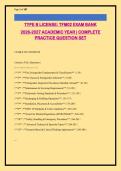
TYPE B LICENSE: TFM02 EXAM BANK
2026-2027 ACADEMIC YEAR | COMPLETE
PRACTICE QUESTION SET
# TABLE OF CONTENTS
| Section | Title | Questions |
|---------|-------|-----------|
| **1** | **Fire Extinguisher Fundamentals & Classification** | 1-30 |
| **2** | **Fire Classes & Extinguisher Selection** | 31-60 |
| **3** | **Extinguisher Inspection Procedures (Monthly/Annual)** | 61-90 |
| **4** | **Maintenance & Servicing Requirements** | 91-120 |
| **5** | **Hydrostatic Testing Standards & Procedures** | 121-150 |
| **6** | **Recharging & Refilling Operations** | 151-175 |
| **7** | **Installation, Placement & Accessibility** | 176-200 |
| **8** | **NFPA 10 Standards & Code Compliance** | 201-225 |
| **9** | **Texas Fire Marshal Regulations (SFMO/TDLR)** | 226-245 |
| **10** | **Safety, Handling & Emergency Procedures** | 246-265 |
| **11** | **Advanced Technical & Specialty Topics** | 266-285 |
| **12** | **Scenario-Based & Critical Thinking Applications** | 286-300 |
---
,Page 2 of 187
# SECTION 1: FIRE EXTINGUISHER FUNDAMENTALS & CLASSIFICATION
**Question 1**
What are the five main types of portable fire extinguishers recognized by NFPA 10?
A) Water, Foam, Dry Chemical, CO₂, and Halon
B) Water, Foam, Dry Powder, CO₂, and Wet Chemical
C) Water, Foam, Dry Chemical, Halon, and Clean Agent
D) Water, Dry Chemical, CO₂, Halon, and Wet Chemical
**Correct Answer:** B
**Rationale:** NFPA 10 recognizes five primary types of portable fire extinguishers: Water,
Foam, Dry Powder, Carbon Dioxide (CO₂), and Wet Chemical. Each type is specifically
designed for different classes of fire. Water extinguishers are effective on Class A fires; Foam
extinguishers work on Class A and B fires; Dry Powder extinguishers are multipurpose (Class A,
B, C, and D); CO₂ extinguishers are used for Class B and C fires; and Wet Chemical
extinguishers are designed for Class A and K fires.
---
**Question 2**
A dry chemical fire extinguisher contains a powder composed primarily of small particles.
Which of the following is NOT a common dry chemical agent used in these extinguishers?
A) Sodium bicarbonate
B) Potassium bicarbonate
C) Ammonium phosphate
D) Potassium chloride
,Page 3 of 187
**Correct Answer:** D
**Rationale:** Common dry chemical agents used in fire extinguishers include sodium
bicarbonate, potassium bicarbonate, and ammonium phosphate. These agents provide resistance
to packing and caking, ensuring proper flow capabilities during discharge. Potassium chloride is
not typically used as a dry chemical extinguishing agent; it is more commonly associated with
other applications such as fertilizer or as a salt substitute.
---
**Question 3**
Which type of fire extinguisher is characterized as a "clean agent" that leaves no residue and is
safe for use on high-value electronics?
A) Water extinguisher
B) Dry powder extinguisher
C) Halogenated agent extinguisher
D) Foam extinguisher
**Correct Answer:** C
**Rationale:** Halogenated agents (clean agents) are specifically designed for Class B and C
fires and are safe for use on high-value electronics and sensitive equipment. They do not leave
residue, making them ideal for protecting computer rooms, data centers, and other areas with
delicate equipment. Water and foam extinguishers leave residue and can damage electronics,
while dry powder extinguishers, though effective, leave a residue that can be corrosive to
sensitive components.
---
, Page 4 of 187
**Question 4**
What does ASTM stand for in the context of fire extinguisher standards?
A) American Standard Testing Method
B) Association for Standardized Testing Materials
C) American Society for Testing and Materials
D) American Safety and Testing Management
**Correct Answer:** C
**Rationale:** ASTM stands for the American Society for Testing and Materials. This
organization develops and publishes technical standards for a wide range of materials, products,
systems, and services, including fire extinguishers. ASTM standards are critical in the fire
protection industry for ensuring that extinguishers and their components meet specific
performance and safety requirements.
---
**Question 5**
What is the primary purpose of the UL (Underwriter's Laboratories) listing on a fire
extinguisher?
A) To indicate the manufacturer's warranty period
B) To certify that the extinguisher meets specific safety and performance standards
C) To show the extinguisher's expiration date
D) To identify the chemical composition of the extinguishing agent
**Correct Answer:** B
TYPE B LICENSE: TFM02 EXAM BANK
2026-2027 ACADEMIC YEAR | COMPLETE
PRACTICE QUESTION SET
# TABLE OF CONTENTS
| Section | Title | Questions |
|---------|-------|-----------|
| **1** | **Fire Extinguisher Fundamentals & Classification** | 1-30 |
| **2** | **Fire Classes & Extinguisher Selection** | 31-60 |
| **3** | **Extinguisher Inspection Procedures (Monthly/Annual)** | 61-90 |
| **4** | **Maintenance & Servicing Requirements** | 91-120 |
| **5** | **Hydrostatic Testing Standards & Procedures** | 121-150 |
| **6** | **Recharging & Refilling Operations** | 151-175 |
| **7** | **Installation, Placement & Accessibility** | 176-200 |
| **8** | **NFPA 10 Standards & Code Compliance** | 201-225 |
| **9** | **Texas Fire Marshal Regulations (SFMO/TDLR)** | 226-245 |
| **10** | **Safety, Handling & Emergency Procedures** | 246-265 |
| **11** | **Advanced Technical & Specialty Topics** | 266-285 |
| **12** | **Scenario-Based & Critical Thinking Applications** | 286-300 |
---
,Page 2 of 187
# SECTION 1: FIRE EXTINGUISHER FUNDAMENTALS & CLASSIFICATION
**Question 1**
What are the five main types of portable fire extinguishers recognized by NFPA 10?
A) Water, Foam, Dry Chemical, CO₂, and Halon
B) Water, Foam, Dry Powder, CO₂, and Wet Chemical
C) Water, Foam, Dry Chemical, Halon, and Clean Agent
D) Water, Dry Chemical, CO₂, Halon, and Wet Chemical
**Correct Answer:** B
**Rationale:** NFPA 10 recognizes five primary types of portable fire extinguishers: Water,
Foam, Dry Powder, Carbon Dioxide (CO₂), and Wet Chemical. Each type is specifically
designed for different classes of fire. Water extinguishers are effective on Class A fires; Foam
extinguishers work on Class A and B fires; Dry Powder extinguishers are multipurpose (Class A,
B, C, and D); CO₂ extinguishers are used for Class B and C fires; and Wet Chemical
extinguishers are designed for Class A and K fires.
---
**Question 2**
A dry chemical fire extinguisher contains a powder composed primarily of small particles.
Which of the following is NOT a common dry chemical agent used in these extinguishers?
A) Sodium bicarbonate
B) Potassium bicarbonate
C) Ammonium phosphate
D) Potassium chloride
,Page 3 of 187
**Correct Answer:** D
**Rationale:** Common dry chemical agents used in fire extinguishers include sodium
bicarbonate, potassium bicarbonate, and ammonium phosphate. These agents provide resistance
to packing and caking, ensuring proper flow capabilities during discharge. Potassium chloride is
not typically used as a dry chemical extinguishing agent; it is more commonly associated with
other applications such as fertilizer or as a salt substitute.
---
**Question 3**
Which type of fire extinguisher is characterized as a "clean agent" that leaves no residue and is
safe for use on high-value electronics?
A) Water extinguisher
B) Dry powder extinguisher
C) Halogenated agent extinguisher
D) Foam extinguisher
**Correct Answer:** C
**Rationale:** Halogenated agents (clean agents) are specifically designed for Class B and C
fires and are safe for use on high-value electronics and sensitive equipment. They do not leave
residue, making them ideal for protecting computer rooms, data centers, and other areas with
delicate equipment. Water and foam extinguishers leave residue and can damage electronics,
while dry powder extinguishers, though effective, leave a residue that can be corrosive to
sensitive components.
---
, Page 4 of 187
**Question 4**
What does ASTM stand for in the context of fire extinguisher standards?
A) American Standard Testing Method
B) Association for Standardized Testing Materials
C) American Society for Testing and Materials
D) American Safety and Testing Management
**Correct Answer:** C
**Rationale:** ASTM stands for the American Society for Testing and Materials. This
organization develops and publishes technical standards for a wide range of materials, products,
systems, and services, including fire extinguishers. ASTM standards are critical in the fire
protection industry for ensuring that extinguishers and their components meet specific
performance and safety requirements.
---
**Question 5**
What is the primary purpose of the UL (Underwriter's Laboratories) listing on a fire
extinguisher?
A) To indicate the manufacturer's warranty period
B) To certify that the extinguisher meets specific safety and performance standards
C) To show the extinguisher's expiration date
D) To identify the chemical composition of the extinguishing agent
**Correct Answer:** B


