

NR602 Week 8 Final Exam (2026/2027) / NR 602 Primary Care of the Childbearing &
Childrearing Family Final Exam Test Bank: 100 Questions & Answers with Rationales |
Chamberlain University | Rated A+
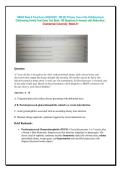
Question
A 7-year-old boy is brought to the clinic with periorbital edema, dark-colored urine, and
decreased urine output that began abruptly this morning. His mother reports he had a skin
infection treated at home about 3 weeks ago. On examination, his blood pressure is elevated, and
he has mild weight gain. Based on this presentation, which diagnosis is MOST consistent with
his age, history, and clinical findings?
Answers: A – D
A. Congenital polycystic kidney disease presenting with abdominal mass
✔ B. Poststreptococcal glomerulonephritis related to a recent skin infection
C. Acute pyelonephritis associated with an ascending urinary tract infection
D. Minimal change nephrotic syndrome triggered by recent medication use
Brief Rationale:
Poststreptococcal Glomerulonephritis (PSGN): Classically presents 1 to 3 weeks after
a Group A Beta-Hemolytic Streptococcal skin infection (impetigo) or pharyngitis. The
classic triad of nephritic syndrome includes hematuria (dark/cola-colored urine), edema
(periorbital edema, weight gain), and hypertension (elevated blood pressure) with
oliguria (decreased urine output).
,Question
An otherwise healthy 8-year-old child has persistent nocturnal enuresis occurring 4 nights per
week. Evaluation has ruled out urinary tract infection, diabetes, and structural abnormalities.
The family is motivated for treatment and prefers a non-pharmacologic option with the BEST
long-term success. Which intervention is MOST appropriate to recommend first?
Answers: A – D
A. Reassure the family and delay treatment until adolescence
B. Begin nightly desmopressin therapy for rapid symptom control
C. Initiate anticholinergic medication to increase bladder capacity
✔ D. Use an enuresis alarm combined with behavioral bladder training
Key Rationale:
Enuresis Alarm Therapy: Considered the first-line non-pharmacologic treatment for
primary monosymptomatic nocturnal enuresis in children aged 5 years or older. It boasts
the highest long-term cure rate and lowest relapse rate compared to pharmacological
treatments once a motivated family and child are ready to participate.
, Question
A 5-year-old child is brought to the clinic for frequent temper tantrums, name-calling, deliberate
annoyance of peers, and refusal to follow adult instructions. These behaviors occur across
settings and are interfering with peer relationships and preschool functioning. Which
interpretation is MOST appropriate?
Answers: A – D
A. The behaviors are developmentally typical and expected to resolve without intervention
B. The presentation is best explained by transient stress related to a recent life change
✔ C. The pattern suggests pathological social aggression that may precede oppositional
defiant disorder
D. The findings are most consistent with adolescent-onset conduct disorder
Key Rationale:
Oppositional Defiant Disorder (ODD) Features: Frequent temper outbursts, actively
defying rules/adult requests, deliberately annoying others, and hostility that occurs across
multiple settings and impairs social or academic functioning point toward pathologically
elevated oppositional and aggressive behaviors (a precursor to or diagnostic of ODD)
rather than typical early childhood behavior.
Childrearing Family Final Exam Test Bank: 100 Questions & Answers with Rationales |
Chamberlain University | Rated A+
Question
A 7-year-old boy is brought to the clinic with periorbital edema, dark-colored urine, and
decreased urine output that began abruptly this morning. His mother reports he had a skin
infection treated at home about 3 weeks ago. On examination, his blood pressure is elevated, and
he has mild weight gain. Based on this presentation, which diagnosis is MOST consistent with
his age, history, and clinical findings?
Answers: A – D
A. Congenital polycystic kidney disease presenting with abdominal mass
✔ B. Poststreptococcal glomerulonephritis related to a recent skin infection
C. Acute pyelonephritis associated with an ascending urinary tract infection
D. Minimal change nephrotic syndrome triggered by recent medication use
Brief Rationale:
Poststreptococcal Glomerulonephritis (PSGN): Classically presents 1 to 3 weeks after
a Group A Beta-Hemolytic Streptococcal skin infection (impetigo) or pharyngitis. The
classic triad of nephritic syndrome includes hematuria (dark/cola-colored urine), edema
(periorbital edema, weight gain), and hypertension (elevated blood pressure) with
oliguria (decreased urine output).
,Question
An otherwise healthy 8-year-old child has persistent nocturnal enuresis occurring 4 nights per
week. Evaluation has ruled out urinary tract infection, diabetes, and structural abnormalities.
The family is motivated for treatment and prefers a non-pharmacologic option with the BEST
long-term success. Which intervention is MOST appropriate to recommend first?
Answers: A – D
A. Reassure the family and delay treatment until adolescence
B. Begin nightly desmopressin therapy for rapid symptom control
C. Initiate anticholinergic medication to increase bladder capacity
✔ D. Use an enuresis alarm combined with behavioral bladder training
Key Rationale:
Enuresis Alarm Therapy: Considered the first-line non-pharmacologic treatment for
primary monosymptomatic nocturnal enuresis in children aged 5 years or older. It boasts
the highest long-term cure rate and lowest relapse rate compared to pharmacological
treatments once a motivated family and child are ready to participate.
, Question
A 5-year-old child is brought to the clinic for frequent temper tantrums, name-calling, deliberate
annoyance of peers, and refusal to follow adult instructions. These behaviors occur across
settings and are interfering with peer relationships and preschool functioning. Which
interpretation is MOST appropriate?
Answers: A – D
A. The behaviors are developmentally typical and expected to resolve without intervention
B. The presentation is best explained by transient stress related to a recent life change
✔ C. The pattern suggests pathological social aggression that may precede oppositional
defiant disorder
D. The findings are most consistent with adolescent-onset conduct disorder
Key Rationale:
Oppositional Defiant Disorder (ODD) Features: Frequent temper outbursts, actively
defying rules/adult requests, deliberately annoying others, and hostility that occurs across
multiple settings and impairs social or academic functioning point toward pathologically
elevated oppositional and aggressive behaviors (a precursor to or diagnostic of ODD)
rather than typical early childhood behavior.


