

NUR 6111 Exam 3 | Comprehensive Test Bank | WPU | 2026
NUR 6111 EXAM 3
COMPREHENSIVE TEST BANK | 2026 UPDATE
Advanced Pathophysiology & Clinical Reasoning
William Paterson University | Graduate Nursing (APRN)
2026 | 2027 Academic Standards | 100% Correct Solutions
Endocrine & Metabolic | Renal/Fluid/Electrolyte/Acid-Base
Neurological & Musculoskeletal
Hematologic, Immunologic, & 2026 Clinical Updates
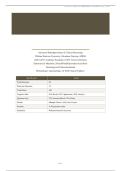
Specification Detail
Total Questions 40
Points per Question 2.5
Total Points 100
Cognitive Mix 30% Recall / 50% Application / 20% Analysis
Question Style 75% Scenario-Based / 25% Direct
Format Multiple Choice (A-D), One Correct
Sections 4 (10 questions each)
Institution William Paterson University
Page 1
, NUR 6111 Exam 3 | Comprehensive Test Bank | WPU | 2026
PART 1: EXAM QUESTIONS
Section 1: Endocrine & Metabolic Pathophysiology
Q1: A 22-year-old male with type 1 diabetes presents with Kussmaul respirations, glucose 510 mg/dL, pH 7.10,
bicarbonate 5 mEq/L, anion gap 30, and positive serum ketones. Which pathophysiologic cascade best explains
his DKA?
A. Relative insulin deficiency with preserved lipogenesis suppressing significant ketogenesis
B. Absolute insulin deficiency causing unopposed hormone-sensitive lipase activity, massive FFA release,
hepatic beta-oxidation and ketogenesis (acetoacetate, beta-hydroxybutyrate) producing high-anion-gap
metabolic acidosis with concurrent osmotic diuresis and volume depletion [CORRECT]
C. Lactic acidosis from tissue hypoperfusion as the sole acid-base disturbance
D. Uremic acidosis from accumulated organic acids in chronic kidney disease
Correct Answer: B
Rationale: DKA results from absolute insulin deficiency: without insulin, hormone-sensitive lipase is unopposed,
releasing FFAs that the liver converts to ketone bodies via HMG-CoA synthase, causing high-AG metabolic acidosis.
Osmotic diuresis causes dehydration and electrolyte shifts. Option A describes HHS (relative deficiency, suppressed
ketogenesis). Option C is lactic acidosis (different AG etiology). Option D is uremic acidosis without ketosis.
Q2: A 58-year-old female with type 2 diabetes presents with glucose 920 mg/dL, serum osmolality 385
mOsm/kg, pH 7.30, bicarbonate 22 mEq/L, and minimal urine ketones. Which diagnosis and key
pathophysiologic distinction from DKA is most accurate?
A. DKA with absolute insulin deficiency and prominent ketosis
B. HHS characterized by severe hyperglycemia and hyperosmolality with relative insulin deficiency sufficient to
suppress lipolysis and ketogenesis but inadequate to promote peripheral glucose utilization, causing profound
osmotic diuresis and dehydration without significant ketoacidosis [CORRECT]
C. Mixed DKA-HHS with equal contributions from both mechanisms
D. Alcoholic ketoacidosis with negligible hyperglycemia
Correct Answer: B
Rationale: HHS is distinguished from DKA by relative (not absolute) insulin deficiency: enough insulin remains to
suppress hormone-sensitive lipase and ketogenesis, but insufficient to prevent severe hyperglycemia. This produces
profound hyperosmolality (>320 mOsm/kg) with minimal ketosis. Option A would show prominent ketonuria and
metabolic acidosis. Option C would show both significant ketosis and hyperosmolality. Option D features ketosis
without extreme hyperglycemia.
Q3: A 35-year-old female presents with weight loss, tremor, heat intolerance, and diffuse goiter. TSH is 0.02
mIU/mL, free T4 elevated, and TSI positive. Which pathophysiologic mechanism causes her thyrotoxicosis?
A. Subacute thyroiditis with follicular destruction and transient hormone release
B. TSH-secreting pituitary adenoma with elevated TSH and free T4
C. Graves disease: TSI (thyroid-stimulating immunoglobulins) activate TSH receptors on follicular cells,
stimulating hypertrophy (diffuse goiter) and unregulated thyroid hormone synthesis, with suppressed TSH from
negative feedback [CORRECT]
D. Exogenous levothyroxine ingestion causing factitious hyperthyroidism
Correct Answer: C
Rationale: Graves disease is caused by TSI (IgG autoantibodies) that activate TSH receptors, stimulating follicular
hypertrophy and excess T3/T4 synthesis. TSH is suppressed via negative feedback. Diffuse goiter and TSI positivity
distinguish it from other causes. Option A is painful and transient. Option B would have elevated (not suppressed) TSH.
Option D lacks goiter and TSI.
Q4: A 40-year-old female presents with hypotension, hyperpigmentation, hyponatremia (124 mEq/L),
hyperkalemia (5.9 mEq/L), and morning cortisol 2.5 mcg/dL with elevated ACTH. Which mechanism explains
Page 2
, NUR 6111 Exam 3 | Comprehensive Test Bank | WPU | 2026
the electrolyte abnormalities in Addison disease?
A. Secondary adrenal insufficiency with preserved aldosterone production and no hyperkalemia
B. Primary adrenal insufficiency destroying zona glomerulosa (aldosterone deficiency causing impaired Na+
reabsorption and K+ excretion) and zona fasciculata/reticularis (cortisol deficiency with elevated ACTH causing
hyperpigmentation) [CORRECT]
C. Conn syndrome with autonomous aldosterone secretion causing hypernatremia and hypokalemia
D. SIADH with dilutional hyponatremia alone without hyperkalemia
Correct Answer: B
Rationale: Addison disease destroys all adrenal cortex zones: aldosterone deficiency (zona glomerulosa) causes renal
Na+ wasting and K+ retention (hyponatremia, hyperkalemia); cortisol deficiency removes negative feedback, elevating
ACTH and stimulating melanocytes (hyperpigmentation). Option A spares aldosterone (renin-angiotensin regulated).
Option C causes opposite electrolytes. Option D causes hyponatremia without hyperkalemia.
Q5: A 45-year-old male presents with central obesity, moon facies, purple striae, hypertension, and
hyperglycemia. Midnight cortisol is elevated and does not suppress with low-dose dexamethasone. High-dose
dexamethasone partially suppresses cortisol. Which etiology is most likely?
A. Ectopic ACTH secretion from small cell lung carcinoma (non-suppressible with high-dose dexamethasone)
B. Adrenal adenoma autonomously secreting cortisol (non-suppressible, low ACTH)
C. Cushing disease (pituitary ACTH-secreting adenoma): partial suppression with high-dose dexamethasone
because pituitary adenomas retain partial glucocorticoid negative feedback responsiveness [CORRECT]
D. Pseudo-Cushing from alcoholism with complete dexamethasone suppressibility
Correct Answer: C
Rationale: Cushing disease (pituitary ACTH adenoma) typically shows partial cortisol suppression with high-dose
dexamethasone because the adenoma retains some feedback responsiveness. Ectopic ACTH (Option A) usually does not
suppress. Adrenal adenoma (Option B) does not suppress and has low ACTH. Pseudo-Cushing (Option D) suppresses
completely.
Q6: A 55-year-old male with type 2 diabetes (HbA1c 9.0%, BMI 33, established ASCVD) is started on
semaglutide per 2026 ADA Standards. Which dual rationale supports this choice?
A. Semaglutide reduces glucose exclusively by increasing urinary glucose excretion like SGLT2 inhibitors
B. GLP-1 receptor agonism stimulates glucose-dependent insulin secretion, suppresses glucagon, delays gastric
emptying, and promotes satiety-induced weight loss, with independent cardiovascular outcome trial evidence
(MACE reduction) supporting use in patients with established ASCVD [CORRECT]
C. Semaglutide acts primarily by enhancing peripheral insulin sensitivity in skeletal muscle
D. Semaglutide directly inhibits hepatic gluconeogenesis without affecting incretin pathways
Correct Answer: B
Rationale: GLP-1 RAs stimulate glucose-dependent insulin secretion (low hypoglycemia risk), suppress glucagon, delay
gastric emptying, and promote satiety/weight loss. Cardiovascular outcome trials (SUSTAIN-6, PIONEER-6)
demonstrate MACE reduction independent of glycemic control. 2026 ADA Standards recommend GLP-1 RAs with
proven CVD benefit for patients with ASCVD. Option A describes SGLT2 inhibitors. Option C describes TZDs. Option
D describes metformin.
Q7: A 48-year-old female presents with fatigue, weight gain, cold intolerance, constipation, and menorrhagia.
TSH is 40 mIU/mL, free T4 is low, and anti-TPO antibodies are strongly positive. Which pathophysiologic
process is occurring?
A. Subacute thyroiditis with painful gland and transient thyrotoxicosis before hypothyroidism
B. Iodine deficiency causing reduced substrate for hormone synthesis without autoimmunity
C. Hashimoto thyroiditis: autoimmune lymphocytic infiltration with anti-TPO/anti-TG antibodies, progressive
follicular cell destruction, decreased T3/T4 synthesis, and compensatory TSH elevation [CORRECT]
D. Post-surgical hypothyroidism after total thyroidectomy
Correct Answer: C
Page 3
NUR 6111 EXAM 3
COMPREHENSIVE TEST BANK | 2026 UPDATE
Advanced Pathophysiology & Clinical Reasoning
William Paterson University | Graduate Nursing (APRN)
2026 | 2027 Academic Standards | 100% Correct Solutions
Endocrine & Metabolic | Renal/Fluid/Electrolyte/Acid-Base
Neurological & Musculoskeletal
Hematologic, Immunologic, & 2026 Clinical Updates
Specification Detail
Total Questions 40
Points per Question 2.5
Total Points 100
Cognitive Mix 30% Recall / 50% Application / 20% Analysis
Question Style 75% Scenario-Based / 25% Direct
Format Multiple Choice (A-D), One Correct
Sections 4 (10 questions each)
Institution William Paterson University
Page 1
, NUR 6111 Exam 3 | Comprehensive Test Bank | WPU | 2026
PART 1: EXAM QUESTIONS
Section 1: Endocrine & Metabolic Pathophysiology
Q1: A 22-year-old male with type 1 diabetes presents with Kussmaul respirations, glucose 510 mg/dL, pH 7.10,
bicarbonate 5 mEq/L, anion gap 30, and positive serum ketones. Which pathophysiologic cascade best explains
his DKA?
A. Relative insulin deficiency with preserved lipogenesis suppressing significant ketogenesis
B. Absolute insulin deficiency causing unopposed hormone-sensitive lipase activity, massive FFA release,
hepatic beta-oxidation and ketogenesis (acetoacetate, beta-hydroxybutyrate) producing high-anion-gap
metabolic acidosis with concurrent osmotic diuresis and volume depletion [CORRECT]
C. Lactic acidosis from tissue hypoperfusion as the sole acid-base disturbance
D. Uremic acidosis from accumulated organic acids in chronic kidney disease
Correct Answer: B
Rationale: DKA results from absolute insulin deficiency: without insulin, hormone-sensitive lipase is unopposed,
releasing FFAs that the liver converts to ketone bodies via HMG-CoA synthase, causing high-AG metabolic acidosis.
Osmotic diuresis causes dehydration and electrolyte shifts. Option A describes HHS (relative deficiency, suppressed
ketogenesis). Option C is lactic acidosis (different AG etiology). Option D is uremic acidosis without ketosis.
Q2: A 58-year-old female with type 2 diabetes presents with glucose 920 mg/dL, serum osmolality 385
mOsm/kg, pH 7.30, bicarbonate 22 mEq/L, and minimal urine ketones. Which diagnosis and key
pathophysiologic distinction from DKA is most accurate?
A. DKA with absolute insulin deficiency and prominent ketosis
B. HHS characterized by severe hyperglycemia and hyperosmolality with relative insulin deficiency sufficient to
suppress lipolysis and ketogenesis but inadequate to promote peripheral glucose utilization, causing profound
osmotic diuresis and dehydration without significant ketoacidosis [CORRECT]
C. Mixed DKA-HHS with equal contributions from both mechanisms
D. Alcoholic ketoacidosis with negligible hyperglycemia
Correct Answer: B
Rationale: HHS is distinguished from DKA by relative (not absolute) insulin deficiency: enough insulin remains to
suppress hormone-sensitive lipase and ketogenesis, but insufficient to prevent severe hyperglycemia. This produces
profound hyperosmolality (>320 mOsm/kg) with minimal ketosis. Option A would show prominent ketonuria and
metabolic acidosis. Option C would show both significant ketosis and hyperosmolality. Option D features ketosis
without extreme hyperglycemia.
Q3: A 35-year-old female presents with weight loss, tremor, heat intolerance, and diffuse goiter. TSH is 0.02
mIU/mL, free T4 elevated, and TSI positive. Which pathophysiologic mechanism causes her thyrotoxicosis?
A. Subacute thyroiditis with follicular destruction and transient hormone release
B. TSH-secreting pituitary adenoma with elevated TSH and free T4
C. Graves disease: TSI (thyroid-stimulating immunoglobulins) activate TSH receptors on follicular cells,
stimulating hypertrophy (diffuse goiter) and unregulated thyroid hormone synthesis, with suppressed TSH from
negative feedback [CORRECT]
D. Exogenous levothyroxine ingestion causing factitious hyperthyroidism
Correct Answer: C
Rationale: Graves disease is caused by TSI (IgG autoantibodies) that activate TSH receptors, stimulating follicular
hypertrophy and excess T3/T4 synthesis. TSH is suppressed via negative feedback. Diffuse goiter and TSI positivity
distinguish it from other causes. Option A is painful and transient. Option B would have elevated (not suppressed) TSH.
Option D lacks goiter and TSI.
Q4: A 40-year-old female presents with hypotension, hyperpigmentation, hyponatremia (124 mEq/L),
hyperkalemia (5.9 mEq/L), and morning cortisol 2.5 mcg/dL with elevated ACTH. Which mechanism explains
Page 2
, NUR 6111 Exam 3 | Comprehensive Test Bank | WPU | 2026
the electrolyte abnormalities in Addison disease?
A. Secondary adrenal insufficiency with preserved aldosterone production and no hyperkalemia
B. Primary adrenal insufficiency destroying zona glomerulosa (aldosterone deficiency causing impaired Na+
reabsorption and K+ excretion) and zona fasciculata/reticularis (cortisol deficiency with elevated ACTH causing
hyperpigmentation) [CORRECT]
C. Conn syndrome with autonomous aldosterone secretion causing hypernatremia and hypokalemia
D. SIADH with dilutional hyponatremia alone without hyperkalemia
Correct Answer: B
Rationale: Addison disease destroys all adrenal cortex zones: aldosterone deficiency (zona glomerulosa) causes renal
Na+ wasting and K+ retention (hyponatremia, hyperkalemia); cortisol deficiency removes negative feedback, elevating
ACTH and stimulating melanocytes (hyperpigmentation). Option A spares aldosterone (renin-angiotensin regulated).
Option C causes opposite electrolytes. Option D causes hyponatremia without hyperkalemia.
Q5: A 45-year-old male presents with central obesity, moon facies, purple striae, hypertension, and
hyperglycemia. Midnight cortisol is elevated and does not suppress with low-dose dexamethasone. High-dose
dexamethasone partially suppresses cortisol. Which etiology is most likely?
A. Ectopic ACTH secretion from small cell lung carcinoma (non-suppressible with high-dose dexamethasone)
B. Adrenal adenoma autonomously secreting cortisol (non-suppressible, low ACTH)
C. Cushing disease (pituitary ACTH-secreting adenoma): partial suppression with high-dose dexamethasone
because pituitary adenomas retain partial glucocorticoid negative feedback responsiveness [CORRECT]
D. Pseudo-Cushing from alcoholism with complete dexamethasone suppressibility
Correct Answer: C
Rationale: Cushing disease (pituitary ACTH adenoma) typically shows partial cortisol suppression with high-dose
dexamethasone because the adenoma retains some feedback responsiveness. Ectopic ACTH (Option A) usually does not
suppress. Adrenal adenoma (Option B) does not suppress and has low ACTH. Pseudo-Cushing (Option D) suppresses
completely.
Q6: A 55-year-old male with type 2 diabetes (HbA1c 9.0%, BMI 33, established ASCVD) is started on
semaglutide per 2026 ADA Standards. Which dual rationale supports this choice?
A. Semaglutide reduces glucose exclusively by increasing urinary glucose excretion like SGLT2 inhibitors
B. GLP-1 receptor agonism stimulates glucose-dependent insulin secretion, suppresses glucagon, delays gastric
emptying, and promotes satiety-induced weight loss, with independent cardiovascular outcome trial evidence
(MACE reduction) supporting use in patients with established ASCVD [CORRECT]
C. Semaglutide acts primarily by enhancing peripheral insulin sensitivity in skeletal muscle
D. Semaglutide directly inhibits hepatic gluconeogenesis without affecting incretin pathways
Correct Answer: B
Rationale: GLP-1 RAs stimulate glucose-dependent insulin secretion (low hypoglycemia risk), suppress glucagon, delay
gastric emptying, and promote satiety/weight loss. Cardiovascular outcome trials (SUSTAIN-6, PIONEER-6)
demonstrate MACE reduction independent of glycemic control. 2026 ADA Standards recommend GLP-1 RAs with
proven CVD benefit for patients with ASCVD. Option A describes SGLT2 inhibitors. Option C describes TZDs. Option
D describes metformin.
Q7: A 48-year-old female presents with fatigue, weight gain, cold intolerance, constipation, and menorrhagia.
TSH is 40 mIU/mL, free T4 is low, and anti-TPO antibodies are strongly positive. Which pathophysiologic
process is occurring?
A. Subacute thyroiditis with painful gland and transient thyrotoxicosis before hypothyroidism
B. Iodine deficiency causing reduced substrate for hormone synthesis without autoimmunity
C. Hashimoto thyroiditis: autoimmune lymphocytic infiltration with anti-TPO/anti-TG antibodies, progressive
follicular cell destruction, decreased T3/T4 synthesis, and compensatory TSH elevation [CORRECT]
D. Post-surgical hypothyroidism after total thyroidectomy
Correct Answer: C
Page 3


