
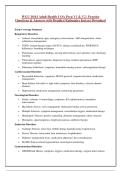
Exam Coverage Summary
Respiratory Disorders
Asthma: exacerbation signs, emergency interventions, ABG interpretation, status
asthmaticus management
COPD: oxygen therapy targets (88-92%), dietary considerations, PINK/BLUE
differences, breathing techniques
Pneumonia: assessment findings, nursing interventions, post-operative care, discharge
teaching
Tuberculosis: signs/symptoms, diagnostic testing, isolation precautions, RIPE
medication regimen
Pulmonary Embolism: symptoms, immediate nursing actions, anticoagulation therapy
Cardiovascular Disorders
Myocardial Infarction: symptoms, MONA protocol, troponin elevation, medication
management
Heart Failure: left-sided vs right-sided symptoms, beta-blockers, calcium channel
blockers
Hypertension: medication management, monitoring parameters
Neurological Disorders
Stroke: ischemic vs hemorrhagic symptoms, tPA administration, immediate
interventions
Myasthenia Gravis: crisis management, medication timing, airway protection
Multiple Sclerosis: symptom management, exacerbation triggers, medication therapy
Huntington's Disease: genetic counseling, dementia management, safety concerns
Meningitis: signs/symptoms, droplet precautions, antibiotic therapy
Endocrine Disorders
Cushing's Disease: moon face, buffalo hump, hyperglycemia, hypertension
Graves' Disease: tachycardia, heat intolerance, exophthalmos
Diabetes: management focus, medication adherence, diet considerations
SIADH: fluid overload, hyponatremia, neurological monitoring
Gastrointestinal Disorders
GERD/Hiatal Hernia: symptoms, triggers, medication therapy, surgical interventions
, Peptic Ulcer Disease: dietary considerations, H. pylori management, medication
avoidance
Diverticulosis: high-fiber diet, complication prevention
Appendicitis: signs/symptoms, interventions to avoid
Cholecystitis/Cholelithiasis: risk factors, signs/symptoms, diagnostic findings,
treatment
Hepatitis: types, transmission routes, treatment approaches
Celiac Disease: gluten-free diet, fat-soluble vitamin supplementation
Crohn's Disease/Ulcerative Colitis: differences, dietary management, medication
therapy, complication recognition
Renal Disorders
Glomerulonephritis: dietary considerations
Renal Calculi: signs/symptoms, interventions
Nephrotoxic drugs: monitoring and prevention
Integumentary Disorders
Burns: full thickness assessment, fluid resuscitation, infection risk
Psoriasis: presentation, topical treatments, autoimmune considerations
Tinea Pedis: treatment, prevention strategies
Pressure Injuries: staging, prevention, assessment
Pharmacology Considerations
Ototoxic drugs: vancomycin, aminoglycosides, loop diuretics, cisplatin
Hepatotoxic drugs: acetaminophen, antifungals
Nephrotoxic drugs: aminoglycosides, amphotericin B, ACE inhibitors, NSAIDs
Vancomycin: monitoring, administration, Red Man Syndrome
Lactulose: mechanism, monitoring, effectiveness assessment
Glaucoma medications: classifications, mechanisms, administration techniques
Fluid and Electrolyte Balance
Hyperkalemia: EKG changes, life-threatening complications
Hyponatremia: neurological monitoring, cerebral edema risk
Hypocalcemia: Chvostek's and Trousseau's signs
Acid-Base Imbalances: respiratory/metabolic acidosis/alkalosis causes and
management
Infectious Disease
, Sepsis: recognition, laboratory findings, septic shock signs
HIV/AIDS: CD4+ count, progression to AIDS, opportunistic infections
Anaphylaxis: IgE response, immediate interventions
Candidiasis: treatment, oral care
Influenza: antiviral therapy timing
Section A: Scenario-Based Questions (Questions 1-125)
1. A 68-year-old male patient with a 40-year smoking history presents to the emergency
department with progressive shortness of breath over the past three days. His oxygen
saturation is 86% on room air, and he has a barrel-shaped chest with prolonged
expiration. Which oxygen saturation target should the nurse prioritize for this patient?
A) Maintain SpO2 greater than 95%
B) Maintain SpO2 between 92-96%
C) Maintain SpO2 between 88-92%
D) Maintain SpO2 between 85-90%
The patient has chronic COPD with likely chronic hypercapnia; oxygen should be titrated to
88-92% to avoid suppressing the hypoxic drive and causing respiratory depression.
2. A 45-year-old female with asthma is exercising at the gym when she develops sudden
shortness of breath and audible wheezing. She has used her rescue inhaler twice with
minimal relief. Her respiratory rate is 28 breaths per minute and oxygen saturation is
91%. Which medication should the nurse anticipate administering first?
A) Prednisone orally
B) Albuterol nebulizer
C) Ipratropium bromide
D) Cromolyn sodium
Albuterol is the first-line rescue medication for acute asthma exacerbation as a short-acting
beta-agonist that provides rapid bronchodilation.
, 3. A patient with myasthenia gravis is scheduled to receive pyridostigmine. The nurse
notes that the patient has difficulty swallowing and is scheduled to eat lunch in 30
minutes. When should the nurse administer this medication?
A) Immediately after the meal
B) 60 minutes after the meal
C) 30-60 minutes before the meal
D) At bedtime only
Pyridostigmine should be given 30-60 minutes before meals to maximize swallowing strength
and reduce aspiration risk during eating.
4. A patient with cirrhosis has been prescribed lactulose. The nurse administers the
medication and monitors for therapeutic effect. Which assessment finding indicates that
the lactulose is effectively reducing ammonia levels in this patient?
A) The patient's blood pressure returns to normal
B) The patient experiences 2-3 soft stools daily
C) The patient's urine output increases significantly
D) The patient's abdominal girth decreases
Lactulose works by acidifying the colon and promoting ammonia excretion through the stool;
2-3 soft stools daily with improved mental status indicates therapeutic effectiveness.
5. An 82-year-old patient with pneumonia is admitted to the medical unit. The nurse
notes that the patient is confused, has a fever of 101.2°F, and is coughing up green
sputum. The patient's oxygen saturation is 89% on 2L nasal cannula. What is the
nurse's priority action?
A) Administer an antipyretic
B) Start IV antibiotics immediately
C) Collect a sputum culture before administering antibiotics
D) Place the patient in a high-Fowler's position
Sputum culture should be collected before initiating antibiotics to identify the causative
organism and guide appropriate antimicrobial therapy.
Respiratory Disorders
Asthma: exacerbation signs, emergency interventions, ABG interpretation, status
asthmaticus management
COPD: oxygen therapy targets (88-92%), dietary considerations, PINK/BLUE
differences, breathing techniques
Pneumonia: assessment findings, nursing interventions, post-operative care, discharge
teaching
Tuberculosis: signs/symptoms, diagnostic testing, isolation precautions, RIPE
medication regimen
Pulmonary Embolism: symptoms, immediate nursing actions, anticoagulation therapy
Cardiovascular Disorders
Myocardial Infarction: symptoms, MONA protocol, troponin elevation, medication
management
Heart Failure: left-sided vs right-sided symptoms, beta-blockers, calcium channel
blockers
Hypertension: medication management, monitoring parameters
Neurological Disorders
Stroke: ischemic vs hemorrhagic symptoms, tPA administration, immediate
interventions
Myasthenia Gravis: crisis management, medication timing, airway protection
Multiple Sclerosis: symptom management, exacerbation triggers, medication therapy
Huntington's Disease: genetic counseling, dementia management, safety concerns
Meningitis: signs/symptoms, droplet precautions, antibiotic therapy
Endocrine Disorders
Cushing's Disease: moon face, buffalo hump, hyperglycemia, hypertension
Graves' Disease: tachycardia, heat intolerance, exophthalmos
Diabetes: management focus, medication adherence, diet considerations
SIADH: fluid overload, hyponatremia, neurological monitoring
Gastrointestinal Disorders
GERD/Hiatal Hernia: symptoms, triggers, medication therapy, surgical interventions
, Peptic Ulcer Disease: dietary considerations, H. pylori management, medication
avoidance
Diverticulosis: high-fiber diet, complication prevention
Appendicitis: signs/symptoms, interventions to avoid
Cholecystitis/Cholelithiasis: risk factors, signs/symptoms, diagnostic findings,
treatment
Hepatitis: types, transmission routes, treatment approaches
Celiac Disease: gluten-free diet, fat-soluble vitamin supplementation
Crohn's Disease/Ulcerative Colitis: differences, dietary management, medication
therapy, complication recognition
Renal Disorders
Glomerulonephritis: dietary considerations
Renal Calculi: signs/symptoms, interventions
Nephrotoxic drugs: monitoring and prevention
Integumentary Disorders
Burns: full thickness assessment, fluid resuscitation, infection risk
Psoriasis: presentation, topical treatments, autoimmune considerations
Tinea Pedis: treatment, prevention strategies
Pressure Injuries: staging, prevention, assessment
Pharmacology Considerations
Ototoxic drugs: vancomycin, aminoglycosides, loop diuretics, cisplatin
Hepatotoxic drugs: acetaminophen, antifungals
Nephrotoxic drugs: aminoglycosides, amphotericin B, ACE inhibitors, NSAIDs
Vancomycin: monitoring, administration, Red Man Syndrome
Lactulose: mechanism, monitoring, effectiveness assessment
Glaucoma medications: classifications, mechanisms, administration techniques
Fluid and Electrolyte Balance
Hyperkalemia: EKG changes, life-threatening complications
Hyponatremia: neurological monitoring, cerebral edema risk
Hypocalcemia: Chvostek's and Trousseau's signs
Acid-Base Imbalances: respiratory/metabolic acidosis/alkalosis causes and
management
Infectious Disease
, Sepsis: recognition, laboratory findings, septic shock signs
HIV/AIDS: CD4+ count, progression to AIDS, opportunistic infections
Anaphylaxis: IgE response, immediate interventions
Candidiasis: treatment, oral care
Influenza: antiviral therapy timing
Section A: Scenario-Based Questions (Questions 1-125)
1. A 68-year-old male patient with a 40-year smoking history presents to the emergency
department with progressive shortness of breath over the past three days. His oxygen
saturation is 86% on room air, and he has a barrel-shaped chest with prolonged
expiration. Which oxygen saturation target should the nurse prioritize for this patient?
A) Maintain SpO2 greater than 95%
B) Maintain SpO2 between 92-96%
C) Maintain SpO2 between 88-92%
D) Maintain SpO2 between 85-90%
The patient has chronic COPD with likely chronic hypercapnia; oxygen should be titrated to
88-92% to avoid suppressing the hypoxic drive and causing respiratory depression.
2. A 45-year-old female with asthma is exercising at the gym when she develops sudden
shortness of breath and audible wheezing. She has used her rescue inhaler twice with
minimal relief. Her respiratory rate is 28 breaths per minute and oxygen saturation is
91%. Which medication should the nurse anticipate administering first?
A) Prednisone orally
B) Albuterol nebulizer
C) Ipratropium bromide
D) Cromolyn sodium
Albuterol is the first-line rescue medication for acute asthma exacerbation as a short-acting
beta-agonist that provides rapid bronchodilation.
, 3. A patient with myasthenia gravis is scheduled to receive pyridostigmine. The nurse
notes that the patient has difficulty swallowing and is scheduled to eat lunch in 30
minutes. When should the nurse administer this medication?
A) Immediately after the meal
B) 60 minutes after the meal
C) 30-60 minutes before the meal
D) At bedtime only
Pyridostigmine should be given 30-60 minutes before meals to maximize swallowing strength
and reduce aspiration risk during eating.
4. A patient with cirrhosis has been prescribed lactulose. The nurse administers the
medication and monitors for therapeutic effect. Which assessment finding indicates that
the lactulose is effectively reducing ammonia levels in this patient?
A) The patient's blood pressure returns to normal
B) The patient experiences 2-3 soft stools daily
C) The patient's urine output increases significantly
D) The patient's abdominal girth decreases
Lactulose works by acidifying the colon and promoting ammonia excretion through the stool;
2-3 soft stools daily with improved mental status indicates therapeutic effectiveness.
5. An 82-year-old patient with pneumonia is admitted to the medical unit. The nurse
notes that the patient is confused, has a fever of 101.2°F, and is coughing up green
sputum. The patient's oxygen saturation is 89% on 2L nasal cannula. What is the
nurse's priority action?
A) Administer an antipyretic
B) Start IV antibiotics immediately
C) Collect a sputum culture before administering antibiotics
D) Place the patient in a high-Fowler's position
Sputum culture should be collected before initiating antibiotics to identify the causative
organism and guide appropriate antimicrobial therapy.


