
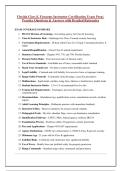
EXAM COVERAGE SUMMARY
1. FDACS Division of Licensing - Governing agency for Class K licensing
2. Class K Instructor Role - Gatekeeper for Class G armed security licensing
3. Curriculum Requirements - 28-hour initial Class G (12 legal, 8 mechanical/safety, 8
range)
4. Annual Requalification - 4-hour Class G annual requirement
5. Statutory Framework - Chapters 493, 776, and 790, Florida Statutes
6. Firearm Safety Rules - Four universal rules of firearm safety
7. Use of Force Standards - Justifiable use of force, reasonable belief standard
8. Stand Your Ground Law - No duty to retreat when lawfully present
9. Legal Liability - Criminal and civil liability for excessive force or improper training
10. Range Safety Protocols - Commands, hot/cold range, cease-fire procedures
11. Malfunctions - Squib loads, misfires, hang-fires, failures to feed/extract, double feeds
12. Student-Instructor Ratios - 1:3 to 1:5 recommended for live-fire
13. Trauma Kit Requirements - Tourniquet, pressure dressings, chest seals,
communication
14. Documentation - Attendance logs, qualification scores, remediation records, incident
reports
15. Adult Learning Principles - Deliberate practice with immediate feedback
16. Instructor Ethics - Honest evaluation, do not pass unsafe students
17. Pedagogical Tools - Dry-fire, chamber flags, cross-eye dominance remediation
18. Qualification Pathways - CJSTC, NRA, federal agency, military DD214
19. Examination Process - Everbuse online (70 questions, remote proctored)
20. Fees and Applications - Chapter 493.6107 requirements
21. Agency Distinctions - CJSTC law enforcement vs. FDACS Class K private security
22. Minimum Age - 21 years old for Class K application
23. Liability Risks - Certificate-only instructors face significant liability
24. Use of Force - Deadly force not justified solely for property protection
25. Range Commands - Standard range safety commands and procedures
,EXAM QUESTIONS 1
QUESTION 1
A Class K instructor is conducting a range qualification for Class G applicants when a
student experiences a failure to fire after pulling the trigger. The student immediately looks
down the barrel to check for an obstruction. What should the instructor do first?
A) Allow the student to continue since they are checking for safety
B) Verbally correct the student and reinforce the rule about never looking down the barrel
C) Document the incident after the range session is complete
D) Send the student home immediately without further instruction
Correct Answer: B
The instructor must provide immediate corrective feedback to prevent unsafe behavior,
reinforcing that looking down the barrel violates firearm safety rules and requires immediate
verbal correction to maintain safety.
QUESTION 2
During a live-fire exercise, you hear a "pop" sound that is noticeably quieter than the
previous shots, and the student's firearm fails to cycle properly. What is the most appropriate
immediate action?
A) Command the student to continue firing to clear the obstruction
B) Call a cease-fire and have the student unload, show clear, and inspect the barrel for a
possible squib load
C) Instruct the student to tap-rack-bang to clear the malfunction
D) Ignore the incident as it is likely a normal ammunition variation
Correct Answer: B
A quiet report with failure to cycle indicates a potential squib load where the bullet is lodged
in the barrel; firing again could cause catastrophic failure and injury, requiring immediate
cease-fire and barrel inspection.
,QUESTION 3
A Class K instructor is preparing documentation for a Class G initial certification course.
Which records must be maintained as part of the training documentation?
A) Only the final qualification scores
B) Attendance logs, qualification scores, remediation records, and incident reports
C) Only incident reports and accident documentation
D) Student demographic information and payment records only
Correct Answer: B
Complete training documentation must include attendance logs, qualification scores,
remediation records, and incident reports to maintain proper records and demonstrate
compliance with training requirements.
QUESTION 4
A student with cross-eye dominance is struggling with accuracy during live-fire qualification.
What is the appropriate remediation strategy for the instructor to employ?
A) Require the student to close both eyes while shooting
B) Recommend techniques such as eye patch use, head positioning, or grip adjustments to
accommodate the dominant eye
C) Allow the student to shoot with their non-dominant hand
D) Disqualify the student from the course
Correct Answer: B
Cross-eye dominance can be addressed through several remediation techniques including eye
patches, modified head positions, grip adjustments, or training the non-dominant eye, without
disqualifying the student.
QUESTION 5
An instructor notices that a Class G student consistently fails to keep their finger off the
trigger during reloading and malfunction clearing. What ethical obligation does the Class K
instructor have?
, A) Pass the student and document the issue later
B) Remediate the student and if the behavior persists, do not pass them
C) Ignore the issue as it will improve with practice
D) Only document the issue if the student fails to qualify
Correct Answer: B
Instructors have an ethical obligation to honestly evaluate students and must not pass unsafe
students; trigger discipline issues require remediation and failure to correct warrants failing
the student.
QUESTION 6
During a range session, a student experiences a double feed malfunction. The student
attempts to clear it but is unsuccessful. What should the instructor do?
A) Take control of the firearm and demonstrate proper clearance techniques
B) Allow the student to continue attempting without intervention
C) Have the student place the firearm down and walk away
D) Call 911 immediately
Correct Answer: A
The instructor should take control of the firearm to safely demonstrate the proper clearance
technique for a double feed, which typically involves locking the slide back, dropping the
magazine, and clearing the chambered round.
QUESTION 7
What is the recommended student-to-instructor ratio for live-fire training according to the
course material?
A) 1:1 only for all training
B) 1:3 to 1:5 recommended
C) 1:10 maximum allowed
D) No ratio is specified or recommended
Correct Answer: B
1. FDACS Division of Licensing - Governing agency for Class K licensing
2. Class K Instructor Role - Gatekeeper for Class G armed security licensing
3. Curriculum Requirements - 28-hour initial Class G (12 legal, 8 mechanical/safety, 8
range)
4. Annual Requalification - 4-hour Class G annual requirement
5. Statutory Framework - Chapters 493, 776, and 790, Florida Statutes
6. Firearm Safety Rules - Four universal rules of firearm safety
7. Use of Force Standards - Justifiable use of force, reasonable belief standard
8. Stand Your Ground Law - No duty to retreat when lawfully present
9. Legal Liability - Criminal and civil liability for excessive force or improper training
10. Range Safety Protocols - Commands, hot/cold range, cease-fire procedures
11. Malfunctions - Squib loads, misfires, hang-fires, failures to feed/extract, double feeds
12. Student-Instructor Ratios - 1:3 to 1:5 recommended for live-fire
13. Trauma Kit Requirements - Tourniquet, pressure dressings, chest seals,
communication
14. Documentation - Attendance logs, qualification scores, remediation records, incident
reports
15. Adult Learning Principles - Deliberate practice with immediate feedback
16. Instructor Ethics - Honest evaluation, do not pass unsafe students
17. Pedagogical Tools - Dry-fire, chamber flags, cross-eye dominance remediation
18. Qualification Pathways - CJSTC, NRA, federal agency, military DD214
19. Examination Process - Everbuse online (70 questions, remote proctored)
20. Fees and Applications - Chapter 493.6107 requirements
21. Agency Distinctions - CJSTC law enforcement vs. FDACS Class K private security
22. Minimum Age - 21 years old for Class K application
23. Liability Risks - Certificate-only instructors face significant liability
24. Use of Force - Deadly force not justified solely for property protection
25. Range Commands - Standard range safety commands and procedures
,EXAM QUESTIONS 1
QUESTION 1
A Class K instructor is conducting a range qualification for Class G applicants when a
student experiences a failure to fire after pulling the trigger. The student immediately looks
down the barrel to check for an obstruction. What should the instructor do first?
A) Allow the student to continue since they are checking for safety
B) Verbally correct the student and reinforce the rule about never looking down the barrel
C) Document the incident after the range session is complete
D) Send the student home immediately without further instruction
Correct Answer: B
The instructor must provide immediate corrective feedback to prevent unsafe behavior,
reinforcing that looking down the barrel violates firearm safety rules and requires immediate
verbal correction to maintain safety.
QUESTION 2
During a live-fire exercise, you hear a "pop" sound that is noticeably quieter than the
previous shots, and the student's firearm fails to cycle properly. What is the most appropriate
immediate action?
A) Command the student to continue firing to clear the obstruction
B) Call a cease-fire and have the student unload, show clear, and inspect the barrel for a
possible squib load
C) Instruct the student to tap-rack-bang to clear the malfunction
D) Ignore the incident as it is likely a normal ammunition variation
Correct Answer: B
A quiet report with failure to cycle indicates a potential squib load where the bullet is lodged
in the barrel; firing again could cause catastrophic failure and injury, requiring immediate
cease-fire and barrel inspection.
,QUESTION 3
A Class K instructor is preparing documentation for a Class G initial certification course.
Which records must be maintained as part of the training documentation?
A) Only the final qualification scores
B) Attendance logs, qualification scores, remediation records, and incident reports
C) Only incident reports and accident documentation
D) Student demographic information and payment records only
Correct Answer: B
Complete training documentation must include attendance logs, qualification scores,
remediation records, and incident reports to maintain proper records and demonstrate
compliance with training requirements.
QUESTION 4
A student with cross-eye dominance is struggling with accuracy during live-fire qualification.
What is the appropriate remediation strategy for the instructor to employ?
A) Require the student to close both eyes while shooting
B) Recommend techniques such as eye patch use, head positioning, or grip adjustments to
accommodate the dominant eye
C) Allow the student to shoot with their non-dominant hand
D) Disqualify the student from the course
Correct Answer: B
Cross-eye dominance can be addressed through several remediation techniques including eye
patches, modified head positions, grip adjustments, or training the non-dominant eye, without
disqualifying the student.
QUESTION 5
An instructor notices that a Class G student consistently fails to keep their finger off the
trigger during reloading and malfunction clearing. What ethical obligation does the Class K
instructor have?
, A) Pass the student and document the issue later
B) Remediate the student and if the behavior persists, do not pass them
C) Ignore the issue as it will improve with practice
D) Only document the issue if the student fails to qualify
Correct Answer: B
Instructors have an ethical obligation to honestly evaluate students and must not pass unsafe
students; trigger discipline issues require remediation and failure to correct warrants failing
the student.
QUESTION 6
During a range session, a student experiences a double feed malfunction. The student
attempts to clear it but is unsuccessful. What should the instructor do?
A) Take control of the firearm and demonstrate proper clearance techniques
B) Allow the student to continue attempting without intervention
C) Have the student place the firearm down and walk away
D) Call 911 immediately
Correct Answer: A
The instructor should take control of the firearm to safely demonstrate the proper clearance
technique for a double feed, which typically involves locking the slide back, dropping the
magazine, and clearing the chambered round.
QUESTION 7
What is the recommended student-to-instructor ratio for live-fire training according to the
course material?
A) 1:1 only for all training
B) 1:3 to 1:5 recommended
C) 1:10 maximum allowed
D) No ratio is specified or recommended
Correct Answer: B


