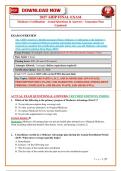
AHIP FINAL EXAM||2027 UPDATED
2027 AHIP FINAL EXAM
Medicare Certification · Actual Questions & Answers · Guarantee Pass
(Updated)
EXAM OVERVIEW
The AHIP (America's Health Insurance Plans) Medicare Certification is the industry's
most widely recognized Medicare training and testing program. Insurance agents are
required to complete this certification annually before they can sell Medicare Advantage
(MA) and Prescription Drug Plans (PDP).
Exam Format: 50 multiple-choice questions(Each Set The Document Contains 3 Sets)
Time Limit: 2 hours
Passing Score: 90% (45 out of 50 correct)
Attempts Allowed: 3 attempts (before repurchase required)
Certification Opens: June 22, 2026
Cost: $175 standard ($125 with carrier/FMO discount link)
Key Topics: MEDICARE PARTS A, B, C, AND D; MEDICARE ADVANTAGE;
PRESCRIPTION DRUG PLANS; CMS MARKETING GUIDELINES; ENROLLMENT
PERIODS; COMPLIANCE; AND FRAUD, WASTE, AND ABUSE (FWA).
ACTUAL EXAM QUESTIONS & ANSWERS(3 REVISED EDITIONS INSIDE)
1. Which of the following is the primary purpose of Medicare Advantage (Part C)?
A. To provide prescription drug coverage only
B. To offer a private alternative to Original Medicare
C. To replace Medicaid for low-income beneficiaries
D. To provide supplemental coverage only
Correct Answer: B
Rationale: Medicare Advantage plans are private health plan alternatives to Original Medicare,
often including additional benefits like dental, vision, and hearing. [citation:2]
2. A beneficiary enrolls in a Medicare Advantage plan during the Annual Enrollment Period
(AEP). When does coverage typically begin?
A. Immediately
B. January 1 of the following year
C. The first day of the month after enrollment
D. The first day of the month after the plan receives the enrollment request
P a g e 1 | 57
,AHIP FINAL EXAM||2027 UPDATED
Correct Answer: B
Rationale: AEP runs from October 15 to December 7. Coverage for enrollments during AEP begins
on January 1 of the following year. [citation:2]
3. A beneficiary is in a Medicare Advantage plan and wants to switch to Original Medicare
mid-year withoutqualifying for a Special Enrollment Period. What is the correct response?
A. They can switch anytime
B. They must wait until the Annual Enrollment Period
C. They can switch during the Initial Enrollment Period
D. They must enroll in Part D immediately
Correct Answer: B
Rationale: Switching from Medicare Advantage to Original Medicare outside designated periods is
generally not allowed unless a Special Enrollment Period applies. [citation:2]
4. In Medicare Part D, which phase begins after a beneficiary meets the deductible and ends
when they reach theinitial coverage limit?
A. Coverage Gap (Donut Hole)
B. Catastrophic Coverage
C. Initial Coverage Phase
D. Deductible Phase
Correct Answer: C
Rationale: The Initial Coverage Phase begins after the deductible is met and continues until the
beneficiary reaches the initial coverage limit. [citation:2]
5. A Medicare Advantage plan offers a "free" gift card to anyone who attends a sales
presentation. Is thisallowed?
A. Allowed if the gift card is under $15
B. Allowed only if the beneficiary signs up
C. Prohibited under CMS marketing guidelines
D. Allowed if it is disclosed in writing
Correct Answer: C
Rationale: CMS prohibits providing gifts or incentives to induce enrollment or attendance at sales
events. This is a clear marketing violation. [citation:2]
6. Which of the following is considered a "Marketing Event" under CMS guidelines?
A. One-on-one appointment
B. Community seminar with plan comparison
C. Enrollment assistance at a pharmacy
D. All of the above
P a g e 2 | 57
,AHIP FINAL EXAM||2027 UPDATED
Correct Answer: D
Rationale: All these are considered marketing events and must comply with CMS rules, including
proper documentation and materials. [citation:2]
7. Which of the following is a key indicator of potential Medicare fraud?
A. Beneficiary requests additional information
B. Provider submits claims for services not rendered
C. Beneficiary changes doctors frequently
D. Provider uses electronic medical records
Correct Answer: B
Rationale: Claims for services not rendered are a classic fraud indicator and should be reported
immediately. [citation:2]
8. A beneficiary's Part D plan denies a medication as non-formulary. What is the next step?
A. File an appeal
B. Enroll in a new plan immediately
C. Accept the denial
D. Contact the pharmacy only
Correct Answer: A
Rationale: The beneficiary has the right to file an appeal or request an exception for non-formulary
medications.
[citation:2]
9. A beneficiary has a chronic condition and requires a drug that is not on the formulary. The
plan offers an"exception" process. What must the plan do?
A. Deny the exception automatically
B. Provide a written explanation and process the exception promptly
C. Require the beneficiary to change providers
D. Only offer a different drug
Correct Answer: B
Rationale: CMS requires plans to provide a written decision and process exceptions in a timely
manner. [citation:2]
10. An agent receives a complaint that a marketing representative misled a beneficiary about
coverage. Whatshould the agent do?
A. Ignore the complaint
B. Report to CMS and the plan's compliance department
P a g e 3 | 57
, AHIP FINAL EXAM||2027 UPDATED
C. Offer the beneficiary a gift card to resolve
D. Ask the beneficiary to change plans
Correct Answer: B
Rationale: Misleading marketing is a compliance violation and must be reported. [citation:2]
11. A plan's CMS Star Rating is important because:
A. It determines the plan's marketing budget
B. It affects enrollment and quality bonus payments
C. It only applies to Medicaid
D. It is not publicly available
Correct Answer: B
Rationale: Star ratings affect quality bonus payments and consumer choice. [citation:2]
12. Which statement is true about the Medicare Advantage Open Enrollment Period (OEP)?
A. It occurs from January 1 to March 31
B. It allows beneficiaries to switch plans or return to Original Medicare
C. It only applies to Part D plans
D. It is the same as Annual Enrollment
Correct Answer: B
Rationale: The MA OEP (January 1–March 31) allows beneficiaries to switch MA plans or return to
Original Medicare, with limited Part D enrollment options. [citation:2]
13. Mr. Khan's employer has recently dropped comprehensive creditable prescription drug
coverage that wasoffered to company retirees. The company told him that he would qualify
for a Special Enrollment Period. What does this mean?
A. He qualifies for a one-time opportunity to enroll in a Part D plan
B. He must enroll immediately or face a penalty
C. He cannot enroll until the next Annual Enrollment Period
D. He is automatically enrolled in a Part D plan
Correct Answer: A
Rationale: Loss of creditable prescription drug coverage triggers a Special Election Period (SEP)
allowing enrollment in a Part D plan. [citation:7]
14. Which part of Medicare covers inpatient hospital services?
A. Part A
B. Part B
C. Part C
P a g e 4 | 57
2027 AHIP FINAL EXAM
Medicare Certification · Actual Questions & Answers · Guarantee Pass
(Updated)
EXAM OVERVIEW
The AHIP (America's Health Insurance Plans) Medicare Certification is the industry's
most widely recognized Medicare training and testing program. Insurance agents are
required to complete this certification annually before they can sell Medicare Advantage
(MA) and Prescription Drug Plans (PDP).
Exam Format: 50 multiple-choice questions(Each Set The Document Contains 3 Sets)
Time Limit: 2 hours
Passing Score: 90% (45 out of 50 correct)
Attempts Allowed: 3 attempts (before repurchase required)
Certification Opens: June 22, 2026
Cost: $175 standard ($125 with carrier/FMO discount link)
Key Topics: MEDICARE PARTS A, B, C, AND D; MEDICARE ADVANTAGE;
PRESCRIPTION DRUG PLANS; CMS MARKETING GUIDELINES; ENROLLMENT
PERIODS; COMPLIANCE; AND FRAUD, WASTE, AND ABUSE (FWA).
ACTUAL EXAM QUESTIONS & ANSWERS(3 REVISED EDITIONS INSIDE)
1. Which of the following is the primary purpose of Medicare Advantage (Part C)?
A. To provide prescription drug coverage only
B. To offer a private alternative to Original Medicare
C. To replace Medicaid for low-income beneficiaries
D. To provide supplemental coverage only
Correct Answer: B
Rationale: Medicare Advantage plans are private health plan alternatives to Original Medicare,
often including additional benefits like dental, vision, and hearing. [citation:2]
2. A beneficiary enrolls in a Medicare Advantage plan during the Annual Enrollment Period
(AEP). When does coverage typically begin?
A. Immediately
B. January 1 of the following year
C. The first day of the month after enrollment
D. The first day of the month after the plan receives the enrollment request
P a g e 1 | 57
,AHIP FINAL EXAM||2027 UPDATED
Correct Answer: B
Rationale: AEP runs from October 15 to December 7. Coverage for enrollments during AEP begins
on January 1 of the following year. [citation:2]
3. A beneficiary is in a Medicare Advantage plan and wants to switch to Original Medicare
mid-year withoutqualifying for a Special Enrollment Period. What is the correct response?
A. They can switch anytime
B. They must wait until the Annual Enrollment Period
C. They can switch during the Initial Enrollment Period
D. They must enroll in Part D immediately
Correct Answer: B
Rationale: Switching from Medicare Advantage to Original Medicare outside designated periods is
generally not allowed unless a Special Enrollment Period applies. [citation:2]
4. In Medicare Part D, which phase begins after a beneficiary meets the deductible and ends
when they reach theinitial coverage limit?
A. Coverage Gap (Donut Hole)
B. Catastrophic Coverage
C. Initial Coverage Phase
D. Deductible Phase
Correct Answer: C
Rationale: The Initial Coverage Phase begins after the deductible is met and continues until the
beneficiary reaches the initial coverage limit. [citation:2]
5. A Medicare Advantage plan offers a "free" gift card to anyone who attends a sales
presentation. Is thisallowed?
A. Allowed if the gift card is under $15
B. Allowed only if the beneficiary signs up
C. Prohibited under CMS marketing guidelines
D. Allowed if it is disclosed in writing
Correct Answer: C
Rationale: CMS prohibits providing gifts or incentives to induce enrollment or attendance at sales
events. This is a clear marketing violation. [citation:2]
6. Which of the following is considered a "Marketing Event" under CMS guidelines?
A. One-on-one appointment
B. Community seminar with plan comparison
C. Enrollment assistance at a pharmacy
D. All of the above
P a g e 2 | 57
,AHIP FINAL EXAM||2027 UPDATED
Correct Answer: D
Rationale: All these are considered marketing events and must comply with CMS rules, including
proper documentation and materials. [citation:2]
7. Which of the following is a key indicator of potential Medicare fraud?
A. Beneficiary requests additional information
B. Provider submits claims for services not rendered
C. Beneficiary changes doctors frequently
D. Provider uses electronic medical records
Correct Answer: B
Rationale: Claims for services not rendered are a classic fraud indicator and should be reported
immediately. [citation:2]
8. A beneficiary's Part D plan denies a medication as non-formulary. What is the next step?
A. File an appeal
B. Enroll in a new plan immediately
C. Accept the denial
D. Contact the pharmacy only
Correct Answer: A
Rationale: The beneficiary has the right to file an appeal or request an exception for non-formulary
medications.
[citation:2]
9. A beneficiary has a chronic condition and requires a drug that is not on the formulary. The
plan offers an"exception" process. What must the plan do?
A. Deny the exception automatically
B. Provide a written explanation and process the exception promptly
C. Require the beneficiary to change providers
D. Only offer a different drug
Correct Answer: B
Rationale: CMS requires plans to provide a written decision and process exceptions in a timely
manner. [citation:2]
10. An agent receives a complaint that a marketing representative misled a beneficiary about
coverage. Whatshould the agent do?
A. Ignore the complaint
B. Report to CMS and the plan's compliance department
P a g e 3 | 57
, AHIP FINAL EXAM||2027 UPDATED
C. Offer the beneficiary a gift card to resolve
D. Ask the beneficiary to change plans
Correct Answer: B
Rationale: Misleading marketing is a compliance violation and must be reported. [citation:2]
11. A plan's CMS Star Rating is important because:
A. It determines the plan's marketing budget
B. It affects enrollment and quality bonus payments
C. It only applies to Medicaid
D. It is not publicly available
Correct Answer: B
Rationale: Star ratings affect quality bonus payments and consumer choice. [citation:2]
12. Which statement is true about the Medicare Advantage Open Enrollment Period (OEP)?
A. It occurs from January 1 to March 31
B. It allows beneficiaries to switch plans or return to Original Medicare
C. It only applies to Part D plans
D. It is the same as Annual Enrollment
Correct Answer: B
Rationale: The MA OEP (January 1–March 31) allows beneficiaries to switch MA plans or return to
Original Medicare, with limited Part D enrollment options. [citation:2]
13. Mr. Khan's employer has recently dropped comprehensive creditable prescription drug
coverage that wasoffered to company retirees. The company told him that he would qualify
for a Special Enrollment Period. What does this mean?
A. He qualifies for a one-time opportunity to enroll in a Part D plan
B. He must enroll immediately or face a penalty
C. He cannot enroll until the next Annual Enrollment Period
D. He is automatically enrolled in a Part D plan
Correct Answer: A
Rationale: Loss of creditable prescription drug coverage triggers a Special Election Period (SEP)
allowing enrollment in a Part D plan. [citation:7]
14. Which part of Medicare covers inpatient hospital services?
A. Part A
B. Part B
C. Part C
P a g e 4 | 57