

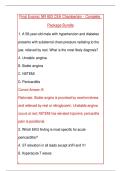
Final Exams) NR 603 CEA Chamberlain - Complete
Package Bundle
1. A 58-year-old male with hypertension and diabetes
presents with substernal chest pressure radiating to the
jaw, relieved by rest. What is the most likely diagnosis?
A. Unstable angina
B. Stable angina
C. NSTEMI
D. Pericarditis
Correct Answer: B
Rationale: Stable angina is provoked by exertion/stress
and relieved by rest or nitroglycerin. Unstable angina
occurs at rest; NSTEMI has elevated troponins; pericarditis
pain is positional.
2. Which EKG finding is most specific for acute
pericarditis?
A. ST elevation in all leads except aVR and V1
B. Hyperacute T waves
1
,C. ST depression in V2–V4
D. Pathologic Q waves
Correct Answer: A
Rationale: Pericarditis causes diffuse ST elevations
(concave up) without reciprocal changes. Hyperacute T
waves suggest hyperkalemia or early MI; Q waves
indicate prior MI.
3. A 72-year-old with heart failure and EF 35% is on
lisinopril, metoprolol, and furosemide. He develops a dry
cough. Which medication is most likely the cause?
A. Metoprolol
B. Lisinopril
C. Furosemide
D. Digoxin
Correct Answer: B
Rationale: ACE inhibitors (lisinopril) cause bradykinin-
mediated dry cough. Metoprolol causes bradycardia;
2
,furosemide causes electrolyte imbalances; digoxin causes
nausea/vision changes.
4. What is the first-line drug for rate control in atrial
fibrillation with heart failure (EF <40%)?
A. Digoxin
B. Amiodarone
C. Metoprolol
D. Diltiazem
Correct Answer: C
Rationale: Beta-blockers (metoprolol) are first-line for
rate control and mortality benefit in HFrEF. Digoxin is
second-line; amiodarone for rhythm control; diltiazem
avoided in HFrEF.
5. A 45-year-old presents with sudden, severe “tearing”
chest pain radiating to the back, unequal BP in arms. Most
likely diagnosis?
A. Pulmonary embolism
B. Myocardial infarction
3
, C. Aortic dissection
D. Esophageal rupture
Correct Answer: C
Rationale: Aortic dissection presents with tearing pain,
pulse deficits, and BP differences. PE has hypoxia; MI has
substernal pressure; esophageal rupture follows vomiting.
6. Which lab finding is most consistent with acute
decompensated heart failure?
A. Elevated BNP
B. Elevated troponin I
C. Low potassium
D. High D-dimer
Correct Answer: A
Rationale: BNP (>500 pg/mL) indicates heart failure.
Troponin suggests MI; D-dimer suggests PE; low K+ is a
diuretic side effect, not diagnostic.
7. A 68-year-old with syncope has a heart rate of 38
bpm, regular rhythm, no P waves, wide QRS. Diagnosis?
4
Package Bundle
1. A 58-year-old male with hypertension and diabetes
presents with substernal chest pressure radiating to the
jaw, relieved by rest. What is the most likely diagnosis?
A. Unstable angina
B. Stable angina
C. NSTEMI
D. Pericarditis
Correct Answer: B
Rationale: Stable angina is provoked by exertion/stress
and relieved by rest or nitroglycerin. Unstable angina
occurs at rest; NSTEMI has elevated troponins; pericarditis
pain is positional.
2. Which EKG finding is most specific for acute
pericarditis?
A. ST elevation in all leads except aVR and V1
B. Hyperacute T waves
1
,C. ST depression in V2–V4
D. Pathologic Q waves
Correct Answer: A
Rationale: Pericarditis causes diffuse ST elevations
(concave up) without reciprocal changes. Hyperacute T
waves suggest hyperkalemia or early MI; Q waves
indicate prior MI.
3. A 72-year-old with heart failure and EF 35% is on
lisinopril, metoprolol, and furosemide. He develops a dry
cough. Which medication is most likely the cause?
A. Metoprolol
B. Lisinopril
C. Furosemide
D. Digoxin
Correct Answer: B
Rationale: ACE inhibitors (lisinopril) cause bradykinin-
mediated dry cough. Metoprolol causes bradycardia;
2
,furosemide causes electrolyte imbalances; digoxin causes
nausea/vision changes.
4. What is the first-line drug for rate control in atrial
fibrillation with heart failure (EF <40%)?
A. Digoxin
B. Amiodarone
C. Metoprolol
D. Diltiazem
Correct Answer: C
Rationale: Beta-blockers (metoprolol) are first-line for
rate control and mortality benefit in HFrEF. Digoxin is
second-line; amiodarone for rhythm control; diltiazem
avoided in HFrEF.
5. A 45-year-old presents with sudden, severe “tearing”
chest pain radiating to the back, unequal BP in arms. Most
likely diagnosis?
A. Pulmonary embolism
B. Myocardial infarction
3
, C. Aortic dissection
D. Esophageal rupture
Correct Answer: C
Rationale: Aortic dissection presents with tearing pain,
pulse deficits, and BP differences. PE has hypoxia; MI has
substernal pressure; esophageal rupture follows vomiting.
6. Which lab finding is most consistent with acute
decompensated heart failure?
A. Elevated BNP
B. Elevated troponin I
C. Low potassium
D. High D-dimer
Correct Answer: A
Rationale: BNP (>500 pg/mL) indicates heart failure.
Troponin suggests MI; D-dimer suggests PE; low K+ is a
diuretic side effect, not diagnostic.
7. A 68-year-old with syncope has a heart rate of 38
bpm, regular rhythm, no P waves, wide QRS. Diagnosis?
4


