
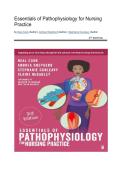
Essentials of Pathophysiology for Nursing
Practice
by Neal Cook (Author), Andrea Shepherd (Author), Stephanie Dunleavy (Author
3RD EDITION
,TABLE OF CONTENTS
Section 1 Health and Disease
Chapter 1 Variation and Disease
Chapter 2 Health and Disease in Society
Chapter 3 Principles of Pharmacology
Chapter 4 Genetic Disorders
Chapter 5 Mental Ill-Health
Section 2 Key Causes of Disease
Chapter 6 Disorders of Immunity and Defence
Chapter 7 Disorders of Blood and Blood Supply
Chapter 8 Cellular Adaptation and Neoplastic Disorders
Chapter 9 Disorders of Support and Protection
Section 3 Disorders of Homeostasis
Chapter 10 Disorders of Renal Function and Fluid Balance
Chapter 11 Disorders of Nutrient Supply and Faecal Elimination
Chapter 12 Disorders of Metabolism
Chapter 13 Disorders of Oxygenation and Carbon Dioxide Elimination
Chapter 14 Disorders of the Cardiovascular System
Section 4 Disorders of Control and Coordination
Chapter 15 Disorders of Neurological Control
Chapter 16 Disorders of Endocrine Regulation
Chapter 17 Disorders of the Female Reproductive System
Chapter 18 Disorders of the Male Reproductive System
,Essentials of Pathophysiology for Nursing Practice, 3rd Edition (Cook,
2022) - Test Bank:
MULTIPLE CHOICE
SECTION 1: HEALTH AND DISEASE
CHAPTER 1: VARIATION AND DISEASE
1. Which of the following best defines pathophysiology?
A) The study of normal body functions and structures
B) The study of functional changes that occur as a result of disease or injury
C) The study of microorganisms that cause infection
D) The study of pharmacological treatments for disease
Answer: B
Rationale: Pathophysiology examines the functional and physiological changes that occur in the body as
a result of disease processes or injury, helping nurses understand the mechanisms underlying clinical
manifestations.
2. The term "etiology" refers to which of the following?
A) The progression of a disease over time
B) The study of disease distribution in populations
C) The cause or origin of a disease
D) The expected outcome of a disease process
Answer: C
Rationale: Etiology refers to the cause or origin of a disease. Understanding etiology helps clinicians
identify risk factors and implement preventive strategies.
, 3. Which term describes the study of the frequency and distribution of diseases within populations?
A) Pathology
B) Epidemiology
C) Physiology
D) Etiology
Answer: B
Rationale: Epidemiology examines the distribution, determinants, and patterns of disease within
populations, providing data that inform public health decisions and clinical practice.
4. A patient is diagnosed with a disease that develops suddenly with severe symptoms but resolves
within a short period. This disease is best described as:
A) Chronic
B) Subacute
C) Acute
D) Latent
Answer: C
Rationale: An acute disease has a rapid onset, severe symptoms, and a relatively short duration. In
contrast, chronic diseases develop slowly and persist over a long period.
5. Which of the following best describes the concept of "homeostasis"?
A) The inability of the body to maintain normal function during illness
B) The process of disease transmission between individuals
C) The body's tendency to maintain a stable internal environment within normal limits
D) The adaptation of cells to a new steady state under stress
Practice
by Neal Cook (Author), Andrea Shepherd (Author), Stephanie Dunleavy (Author
3RD EDITION
,TABLE OF CONTENTS
Section 1 Health and Disease
Chapter 1 Variation and Disease
Chapter 2 Health and Disease in Society
Chapter 3 Principles of Pharmacology
Chapter 4 Genetic Disorders
Chapter 5 Mental Ill-Health
Section 2 Key Causes of Disease
Chapter 6 Disorders of Immunity and Defence
Chapter 7 Disorders of Blood and Blood Supply
Chapter 8 Cellular Adaptation and Neoplastic Disorders
Chapter 9 Disorders of Support and Protection
Section 3 Disorders of Homeostasis
Chapter 10 Disorders of Renal Function and Fluid Balance
Chapter 11 Disorders of Nutrient Supply and Faecal Elimination
Chapter 12 Disorders of Metabolism
Chapter 13 Disorders of Oxygenation and Carbon Dioxide Elimination
Chapter 14 Disorders of the Cardiovascular System
Section 4 Disorders of Control and Coordination
Chapter 15 Disorders of Neurological Control
Chapter 16 Disorders of Endocrine Regulation
Chapter 17 Disorders of the Female Reproductive System
Chapter 18 Disorders of the Male Reproductive System
,Essentials of Pathophysiology for Nursing Practice, 3rd Edition (Cook,
2022) - Test Bank:
MULTIPLE CHOICE
SECTION 1: HEALTH AND DISEASE
CHAPTER 1: VARIATION AND DISEASE
1. Which of the following best defines pathophysiology?
A) The study of normal body functions and structures
B) The study of functional changes that occur as a result of disease or injury
C) The study of microorganisms that cause infection
D) The study of pharmacological treatments for disease
Answer: B
Rationale: Pathophysiology examines the functional and physiological changes that occur in the body as
a result of disease processes or injury, helping nurses understand the mechanisms underlying clinical
manifestations.
2. The term "etiology" refers to which of the following?
A) The progression of a disease over time
B) The study of disease distribution in populations
C) The cause or origin of a disease
D) The expected outcome of a disease process
Answer: C
Rationale: Etiology refers to the cause or origin of a disease. Understanding etiology helps clinicians
identify risk factors and implement preventive strategies.
, 3. Which term describes the study of the frequency and distribution of diseases within populations?
A) Pathology
B) Epidemiology
C) Physiology
D) Etiology
Answer: B
Rationale: Epidemiology examines the distribution, determinants, and patterns of disease within
populations, providing data that inform public health decisions and clinical practice.
4. A patient is diagnosed with a disease that develops suddenly with severe symptoms but resolves
within a short period. This disease is best described as:
A) Chronic
B) Subacute
C) Acute
D) Latent
Answer: C
Rationale: An acute disease has a rapid onset, severe symptoms, and a relatively short duration. In
contrast, chronic diseases develop slowly and persist over a long period.
5. Which of the following best describes the concept of "homeostasis"?
A) The inability of the body to maintain normal function during illness
B) The process of disease transmission between individuals
C) The body's tendency to maintain a stable internal environment within normal limits
D) The adaptation of cells to a new steady state under stress



