TEST BANK V!
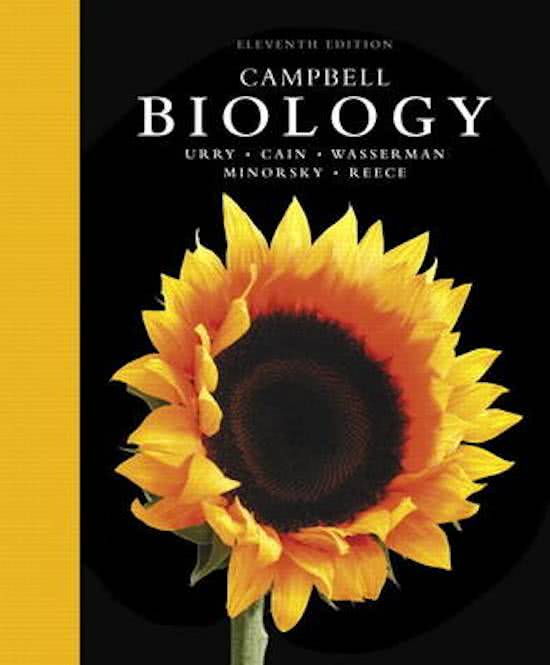
Campbell Biology AP® Edition
V! V! V!
Lisa A. Urry, Michael L. Cain, Steven A. Wasserman, Peter V. Minorsky, Jane B. Reece
V! V! V! V! V! V! V! V! V! V! V! V! V! V!
11th Edition
V!
,Table of Contents
V! V!
ChapterV! 1—Evolution, the Themes of Biology, and Scientific Inquiry
V! V! V! V! V! V! V! 2
Chapter 2—The Chemical Context of Life
V! V! V! V! V! 14
Chapter 3—Water and Life
V! V! V! 28
ChapterV! 4—Carbon and the Molecular Diversity of Life
V! V! V! V! V! V! 42
Chapter 5—The Structure and Function of Large Biological Molecules
V! V! V! V! V! V! V! V! 57
ChapterV! 6—A Tour of the Cell
V! V! V! V! 73
Chapter 7—Membrane Structure and Function
V! V! V! V! 87
Chapter 8—An Introduction to Metabolism
V! V! V! V! 104
Chapter 9—Cellular Respiration and Fermentation
V! V! V! V! 122
ChapterV! 10—Photosynthesis 138
Chapter 11—Cell Commu cation
V! V! V! 156
Chapter 12—The Cell Cycle
V! V! V! 171
Chapter 13—Meiosis and Sexual Life Cycles
V! V! V! V! V! 186
Chapter 14—Mendel and the Gene Idea
V! V! V! V! V! 201
Chapter 15—The Chromosomal Basis of Inheritance
V! V! V! V! V! 216
Chapter 16—The Molecular Basis of Inheritance
V! V! V! V! V! 231
Chapter 17—Gene Expression: From Gene to Protein
V! V! V! V! V! V! 246
Chapter 18—Regulation of Gene Expression
V! V! V! V! 262
Chapter 19—Viruses
V! 276
Chapter 20—DNA Tools and Biotechnology
V! V! V! V! 291
Chapter 21—Genomes and Their Evolution
V! V! V! V! 305
Chapter 22—Descent with Modification: A Darwi an View of Life
V! V! V! V! V! V! V! V! V! 315
Chapter 23—The Evolution of Populations
V! V! V! V! 331
Chapter 24—The Origin of Species
V! V! V! V! 349
Chapter 25—The History of Life on Earth
V! V! V! V! V! V! 367
Chapter 26—Phylogeny and the Tree of Life
V! V! V! V! V! V! 382
Chapter 27—Bacteria and Archaea
V! V! V! 406
Chapter 28—Protists
V! 427
ChapterV! 29—Plant Diversity I: How Plants Colo zed Land
V! V! V! V! V! V! V! 450
Chapter 30—Plant Diversity II: The Evolution of Seed Plants
V! V! V! V! V! V! V! V! 469
ChapterV! 31—Fungi 489
Chapter 32—An Overview of A mal Diversity
V! V! V! V! V! V! 513
Chapter 33—An Introduction to Invertebrates
V! V! V! V! 532
ChapterV! 34—The Origin and Evolution of Vertebrates
V! V! V! V! V! 556
ChapterV! 35—Vascular Plant Structure, Growth, and Development
V! V! V! V! V! 575
ChapterV! 36—Resource Acquisition and Transport in Vascular Plants
V! V! V! V! V! V! 589
ChapterV! 37—Soil and Plant Nutrition
V! V! V! 604
Chapter 38—Angiosperm Reproduction and Biotechnology
V! V! V! V! 615
,Chapter 39—Plant Responses to Internal and External Signals
V! V! V! V! V! V! V! 629
Chapter 40—Basic Principles of A mal Form and Function
V! V! V! V! V! V! V! V! 643
Chapter 41—A mal Nutrition
V! V! V! 659
Chapter 42—Circulation and Gas Exchange
V! V! V! V! 674
Chapter 43—The Immune System
V! V! V! 689
Chapter 44—Osmoregulation and Excretion
V! V! V! 705
Chapter 45—Hormones and the Endocrine System
V! V! V! V! V! 719
Chapter 46—A mal Reproduction
V! V! V! 734
Chapter 47—A mal Development
V! V! V! 750
Chapter 48—Neurons, Synapses, and Signaling
V! V! V! V! 765
Chapter 49—Nervous Systems
V! V! 780
Chapter 50—Sensory and Motor Mecha sms
V! V! V! V! V! 794
Chapter 51—A mal Behavior
V! V! V! 809
Chapter 52—An Introduction to Ecology and the Biosphere
V! V! V! V! V! V! V! 827
Chapter 53—Population Ecology
V! V! 845
Chapter 54—Commu ty Ecology
V! V! V! 869
Chapter 55—Ecosystems and Restoration Ecology
V! V! V! V! 890
ChapterV! 56—Conservation Biology and Global Change V! V! V! V! 909
, TestV!BankV!-
V! CampbellV! Biology,V! 11thV!AP®V! EditionV! (UrryV! 2018)
Chapter 1—Evolution, the Themes of Biology, and Scientific Inquiry
V! V! V! V! V! V! V! V!
MULTIPLE CHOICE V!
1) Cells are V!. V!
A) only found in pairs, because single cells cannot exist independentl
V! V! V! V! V! V! V! V! V!
y
B) limited in size to 200 and 500 micrometers in diameter
V! V! V! V! V! V! V! V! V!
C) characteristic of eukaryotic but not prokaryotic orga sms V! V! V! V! V! V! V!
D) characteristic of prokaryotic and eukaryotic orga sms V! V! V! V! V! V!
ANS: V!V! D PTS: 1 TOP: Section V ! V ! 1.1
MSC: V ! Knowledge/Comprehension
2) In comparison to eukaryotes, prokaryotes
V! V! V! V! V! .
A) are more structurally complex
V! V! V!
B) are larger V!
C) are smaller V!
D) do not have membranes
V! V! V!
ANS: V!V! C PTS: 1 TOP: Section V ! V ! 1.1
MSC: V ! Knowledge/Comprehension
3) Which of the following types of cells utilize deoxyribonucleic acid (DNA) as their genetic
V! V! V! V! V! V! V! V! V! V! V! V! V!
material but do not have the ir D NA enc ased w it hin a nuclear envelope?
W WW T . BSM S .W
V! V! V! V! V! V! V! V! V!
A) a mal V! V! V! V! V!V!
B) plant
C) archaean
D) fungi
ANS: V!V! C PTS: 1 TOP: Section V ! V ! 1.1
MSC: V ! Application/Analysis
4) To understand the chemical basis of inheritance, we must understand the molecular struct
V! V! V! V! V! V! V! V! V! V! V! V!
ure of DNA. This is an example of the application of which concept to the study of biol
V! V! V! V! V! V! V! V! V! V! V! V! V! V! V! V! V!
ogy?
A) evolution
B) emergent properties V!
C) reductio sm V!
D) feedback regulation V!
ANS: V!V! C PTS: 1 TOP: Section V ! V ! 1.1
MSC: V ! Application/Analysis
5) A localized group of orga sms that belong to the same species is called a
V! V! V! V! V! V! V! V! V! V! V! V! V! V! V! .
A) commu ty V!
B) population
C) ecosystem
D) family
ANS: V!V! B PTS: 1 TOP: Section V ! V ! 1.1
MSC: V ! Knowledge/Comprehension
1|Pag
V! V! V! V! V!
e
Campbell Biology AP® Edition
V! V! V!
Lisa A. Urry, Michael L. Cain, Steven A. Wasserman, Peter V. Minorsky, Jane B. Reece
V! V! V! V! V! V! V! V! V! V! V! V! V! V!
11th Edition
V!
,Table of Contents
V! V!
ChapterV! 1—Evolution, the Themes of Biology, and Scientific Inquiry
V! V! V! V! V! V! V! 2
Chapter 2—The Chemical Context of Life
V! V! V! V! V! 14
Chapter 3—Water and Life
V! V! V! 28
ChapterV! 4—Carbon and the Molecular Diversity of Life
V! V! V! V! V! V! 42
Chapter 5—The Structure and Function of Large Biological Molecules
V! V! V! V! V! V! V! V! 57
ChapterV! 6—A Tour of the Cell
V! V! V! V! 73
Chapter 7—Membrane Structure and Function
V! V! V! V! 87
Chapter 8—An Introduction to Metabolism
V! V! V! V! 104
Chapter 9—Cellular Respiration and Fermentation
V! V! V! V! 122
ChapterV! 10—Photosynthesis 138
Chapter 11—Cell Commu cation
V! V! V! 156
Chapter 12—The Cell Cycle
V! V! V! 171
Chapter 13—Meiosis and Sexual Life Cycles
V! V! V! V! V! 186
Chapter 14—Mendel and the Gene Idea
V! V! V! V! V! 201
Chapter 15—The Chromosomal Basis of Inheritance
V! V! V! V! V! 216
Chapter 16—The Molecular Basis of Inheritance
V! V! V! V! V! 231
Chapter 17—Gene Expression: From Gene to Protein
V! V! V! V! V! V! 246
Chapter 18—Regulation of Gene Expression
V! V! V! V! 262
Chapter 19—Viruses
V! 276
Chapter 20—DNA Tools and Biotechnology
V! V! V! V! 291
Chapter 21—Genomes and Their Evolution
V! V! V! V! 305
Chapter 22—Descent with Modification: A Darwi an View of Life
V! V! V! V! V! V! V! V! V! 315
Chapter 23—The Evolution of Populations
V! V! V! V! 331
Chapter 24—The Origin of Species
V! V! V! V! 349
Chapter 25—The History of Life on Earth
V! V! V! V! V! V! 367
Chapter 26—Phylogeny and the Tree of Life
V! V! V! V! V! V! 382
Chapter 27—Bacteria and Archaea
V! V! V! 406
Chapter 28—Protists
V! 427
ChapterV! 29—Plant Diversity I: How Plants Colo zed Land
V! V! V! V! V! V! V! 450
Chapter 30—Plant Diversity II: The Evolution of Seed Plants
V! V! V! V! V! V! V! V! 469
ChapterV! 31—Fungi 489
Chapter 32—An Overview of A mal Diversity
V! V! V! V! V! V! 513
Chapter 33—An Introduction to Invertebrates
V! V! V! V! 532
ChapterV! 34—The Origin and Evolution of Vertebrates
V! V! V! V! V! 556
ChapterV! 35—Vascular Plant Structure, Growth, and Development
V! V! V! V! V! 575
ChapterV! 36—Resource Acquisition and Transport in Vascular Plants
V! V! V! V! V! V! 589
ChapterV! 37—Soil and Plant Nutrition
V! V! V! 604
Chapter 38—Angiosperm Reproduction and Biotechnology
V! V! V! V! 615
,Chapter 39—Plant Responses to Internal and External Signals
V! V! V! V! V! V! V! 629
Chapter 40—Basic Principles of A mal Form and Function
V! V! V! V! V! V! V! V! 643
Chapter 41—A mal Nutrition
V! V! V! 659
Chapter 42—Circulation and Gas Exchange
V! V! V! V! 674
Chapter 43—The Immune System
V! V! V! 689
Chapter 44—Osmoregulation and Excretion
V! V! V! 705
Chapter 45—Hormones and the Endocrine System
V! V! V! V! V! 719
Chapter 46—A mal Reproduction
V! V! V! 734
Chapter 47—A mal Development
V! V! V! 750
Chapter 48—Neurons, Synapses, and Signaling
V! V! V! V! 765
Chapter 49—Nervous Systems
V! V! 780
Chapter 50—Sensory and Motor Mecha sms
V! V! V! V! V! 794
Chapter 51—A mal Behavior
V! V! V! 809
Chapter 52—An Introduction to Ecology and the Biosphere
V! V! V! V! V! V! V! 827
Chapter 53—Population Ecology
V! V! 845
Chapter 54—Commu ty Ecology
V! V! V! 869
Chapter 55—Ecosystems and Restoration Ecology
V! V! V! V! 890
ChapterV! 56—Conservation Biology and Global Change V! V! V! V! 909
, TestV!BankV!-
V! CampbellV! Biology,V! 11thV!AP®V! EditionV! (UrryV! 2018)
Chapter 1—Evolution, the Themes of Biology, and Scientific Inquiry
V! V! V! V! V! V! V! V!
MULTIPLE CHOICE V!
1) Cells are V!. V!
A) only found in pairs, because single cells cannot exist independentl
V! V! V! V! V! V! V! V! V!
y
B) limited in size to 200 and 500 micrometers in diameter
V! V! V! V! V! V! V! V! V!
C) characteristic of eukaryotic but not prokaryotic orga sms V! V! V! V! V! V! V!
D) characteristic of prokaryotic and eukaryotic orga sms V! V! V! V! V! V!
ANS: V!V! D PTS: 1 TOP: Section V ! V ! 1.1
MSC: V ! Knowledge/Comprehension
2) In comparison to eukaryotes, prokaryotes
V! V! V! V! V! .
A) are more structurally complex
V! V! V!
B) are larger V!
C) are smaller V!
D) do not have membranes
V! V! V!
ANS: V!V! C PTS: 1 TOP: Section V ! V ! 1.1
MSC: V ! Knowledge/Comprehension
3) Which of the following types of cells utilize deoxyribonucleic acid (DNA) as their genetic
V! V! V! V! V! V! V! V! V! V! V! V! V!
material but do not have the ir D NA enc ased w it hin a nuclear envelope?
W WW T . BSM S .W
V! V! V! V! V! V! V! V! V!
A) a mal V! V! V! V! V!V!
B) plant
C) archaean
D) fungi
ANS: V!V! C PTS: 1 TOP: Section V ! V ! 1.1
MSC: V ! Application/Analysis
4) To understand the chemical basis of inheritance, we must understand the molecular struct
V! V! V! V! V! V! V! V! V! V! V! V!
ure of DNA. This is an example of the application of which concept to the study of biol
V! V! V! V! V! V! V! V! V! V! V! V! V! V! V! V! V!
ogy?
A) evolution
B) emergent properties V!
C) reductio sm V!
D) feedback regulation V!
ANS: V!V! C PTS: 1 TOP: Section V ! V ! 1.1
MSC: V ! Application/Analysis
5) A localized group of orga sms that belong to the same species is called a
V! V! V! V! V! V! V! V! V! V! V! V! V! V! V! .
A) commu ty V!
B) population
C) ecosystem
D) family
ANS: V!V! B PTS: 1 TOP: Section V ! V ! 1.1
MSC: V ! Knowledge/Comprehension
1|Pag
V! V! V! V! V!
e