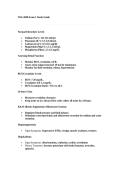
NSG 2600 Exam 1 Study Guide
Normal Electrolyte Levels
Sodium (Na+): 135-145 mEq/L
Potassium (K+): 3.5-5.0 mEq/L
Calcium (Ca2+): 8.5-10.5 mg/dL
Magnesium (Mg2+): 1.5-2.5 mEq/L
Phosphorus (Phos): 2.5-4.5 mg/dL
Assessing Renal Function
Monitor BUN, creatinine, GFR.
Assess urine output (normal: 30 mL/hr minimum).
Monitor for fluid retention, edema, hypertension.
BUN/Creatinine Levels
BUN: 7-20 mg/dL.
Creatinine: 0.6-1.2 mg/dL.
BUN:Creatinine Ratio: ~10:1 to 20:1.
24-hour Urine
Measures creatinine clearance.
Keep urine on ice; discard first void; collect all urine for 24 hours.
RAAS (Renin-Angiotensin-Aldosterone System)
Regulates blood pressure and fluid balance.
Stimulates vasoconstriction and aldosterone secretion for sodium and water
retention.
Hypomagnesemia
Signs/Symptoms: hyperactive DTRs, vertigo, muscle weakness, tremors.
Hypokalemia
Signs/Symptoms: disorientation, confusion, cardiac arrythmias
Dietary Treatment: Increase potassium-rich foods (bananas, avocados,
spinach).
, Nursing Priority Treatment: Place on EKG, Administer oral or IV potassium
replacement (never IV push).
Hyponatremia
Complications: Cerebral edema, seizures, coma.
Hypophosphatemia
Complications of Treatment: Hypercalcemia, arrhythmias if phosphate replaced
too rapidly.
Hypocalcemia
Signs/Symptoms: Positive Chvostek's and Trousseau's signs, muscle spasms,
tetany.
Hyperkalemia
Treatments: Calcium gluconate, insulin with glucose, sodium bicarbonate,
diuretics, dialysis.
Hypernatremia
Prevention: Ensure adequate water intake, restrict sodium levels, read labels
and be aware of sodium-rich foods (foods in box, bottle, can, or bag)
IVF (Intravenous Fluids)
Types/Examples:
o Isotonic: NS (0.9% NaCl), LR.
o Hypotonic: 0.45% NaCl.
o Hypertonic: 3% NaCl, D5NS
o Colloid: Albumin
Fluid Overload
Signs/Symptoms: hypertension, jugular vein distention, rapid weight gain(2-3
lbs overnight/ 5 lbs a week).
Treatment: Diuretics, fluid restriction, oxygen therapy.
Fluid Deficit (dehydration)
Causes: Vomiting, diarrhea, sweating
Normal Electrolyte Levels
Sodium (Na+): 135-145 mEq/L
Potassium (K+): 3.5-5.0 mEq/L
Calcium (Ca2+): 8.5-10.5 mg/dL
Magnesium (Mg2+): 1.5-2.5 mEq/L
Phosphorus (Phos): 2.5-4.5 mg/dL
Assessing Renal Function
Monitor BUN, creatinine, GFR.
Assess urine output (normal: 30 mL/hr minimum).
Monitor for fluid retention, edema, hypertension.
BUN/Creatinine Levels
BUN: 7-20 mg/dL.
Creatinine: 0.6-1.2 mg/dL.
BUN:Creatinine Ratio: ~10:1 to 20:1.
24-hour Urine
Measures creatinine clearance.
Keep urine on ice; discard first void; collect all urine for 24 hours.
RAAS (Renin-Angiotensin-Aldosterone System)
Regulates blood pressure and fluid balance.
Stimulates vasoconstriction and aldosterone secretion for sodium and water
retention.
Hypomagnesemia
Signs/Symptoms: hyperactive DTRs, vertigo, muscle weakness, tremors.
Hypokalemia
Signs/Symptoms: disorientation, confusion, cardiac arrythmias
Dietary Treatment: Increase potassium-rich foods (bananas, avocados,
spinach).
, Nursing Priority Treatment: Place on EKG, Administer oral or IV potassium
replacement (never IV push).
Hyponatremia
Complications: Cerebral edema, seizures, coma.
Hypophosphatemia
Complications of Treatment: Hypercalcemia, arrhythmias if phosphate replaced
too rapidly.
Hypocalcemia
Signs/Symptoms: Positive Chvostek's and Trousseau's signs, muscle spasms,
tetany.
Hyperkalemia
Treatments: Calcium gluconate, insulin with glucose, sodium bicarbonate,
diuretics, dialysis.
Hypernatremia
Prevention: Ensure adequate water intake, restrict sodium levels, read labels
and be aware of sodium-rich foods (foods in box, bottle, can, or bag)
IVF (Intravenous Fluids)
Types/Examples:
o Isotonic: NS (0.9% NaCl), LR.
o Hypotonic: 0.45% NaCl.
o Hypertonic: 3% NaCl, D5NS
o Colloid: Albumin
Fluid Overload
Signs/Symptoms: hypertension, jugular vein distention, rapid weight gain(2-3
lbs overnight/ 5 lbs a week).
Treatment: Diuretics, fluid restriction, oxygen therapy.
Fluid Deficit (dehydration)
Causes: Vomiting, diarrhea, sweating