

NU 578-Exam 2 study guide
For Exam 2 NU 578
This is NOT an all-inclusive guide to the test. However, having a working knowledge of these types of
topics/items will help guide you as you prepare for Exam 2.
Opioids/Pain Relief Chapter 28 page 274
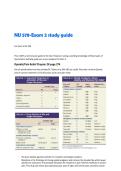
Use of opioids (when are they initiated?): Tables on p 184-185 are useful. Also take a look at Opioids
used in cancer treatment. Ch 92 discusses acute care pain meds
• The pure opioids agonists activate mu receptors and kappa receptors.
• Morphine is the Prototype of strong opioid analgesics and remains the standard by which newer
opioids are measured. The principal indication for morphine is pain relief of moderate to severe
pain. This drug can relieve post operative pain, pain of L&D, and chronic pain caused by cancer
, and other conditions. In addition, morphine can be used to relieve pain of MI and dyspnea
associated with L ventricular failure and pulmonary edema. Morphine relieves pain without
affecting other senses. The drug is more effective against dull, constant pain than against sharp,
intermittent pain.
• PATIENT-CENTERED CARE ACROSS THE LIFE SPAN: Opioid Analgesics
, o Infants: Regular use of opioids during pregnancy can cause physical dependence in the
fetus, resulting in withdrawal after delivery
o Children: adequately assess pain with a standardized pain scale. Aspirin, as an adjuvant
to opioids should be avoided (Reye’s Syndrome). There remains a lack of research
regarding best practice in treatment of chronic non-cancer pain in children
o Pregnant Women: Taking opioids in early pregnancy can increase the risk of congenital
heart defects, spina bifida, and gastroschisis
o Breast Feeding Women: Limited data suggest small amounts of opioids are excreted in
breast milk. This can result in drowsiness
o Older adults: Persistent pain is often undertreated in the frail older population. The
American Geriatrics Association recommends that providers consider treating moderate
to severe uncontrolled pain with opiates after trial of acetaminophen
• Starting opioid therapy with chronic pain should start with immediate release pain killers
• Cancer pain: Treating chronic pain of cancer differs substantially from treating acute pain of
other disorders. When treating cancer pain, the objective is to maximize comfort. Psychologic
and physical dependence are minimal concerns. Patients should be given as much medication as
needed to relieve pain. In the words of one pain specialist, “No patient should wish for death
because of the physician’s reluctance to use adequate amounts of opioids.” With proper
therapy, cancer pain can be effectively managed in about 90% of patients. Cancer can cause
neuropathic pain through infiltration of nerves, and visceral pain through infiltration,
obstruction, and compression of visceral structures.
For Exam 2 NU 578
This is NOT an all-inclusive guide to the test. However, having a working knowledge of these types of
topics/items will help guide you as you prepare for Exam 2.
Opioids/Pain Relief Chapter 28 page 274
Use of opioids (when are they initiated?): Tables on p 184-185 are useful. Also take a look at Opioids
used in cancer treatment. Ch 92 discusses acute care pain meds
• The pure opioids agonists activate mu receptors and kappa receptors.
• Morphine is the Prototype of strong opioid analgesics and remains the standard by which newer
opioids are measured. The principal indication for morphine is pain relief of moderate to severe
pain. This drug can relieve post operative pain, pain of L&D, and chronic pain caused by cancer
, and other conditions. In addition, morphine can be used to relieve pain of MI and dyspnea
associated with L ventricular failure and pulmonary edema. Morphine relieves pain without
affecting other senses. The drug is more effective against dull, constant pain than against sharp,
intermittent pain.
• PATIENT-CENTERED CARE ACROSS THE LIFE SPAN: Opioid Analgesics
, o Infants: Regular use of opioids during pregnancy can cause physical dependence in the
fetus, resulting in withdrawal after delivery
o Children: adequately assess pain with a standardized pain scale. Aspirin, as an adjuvant
to opioids should be avoided (Reye’s Syndrome). There remains a lack of research
regarding best practice in treatment of chronic non-cancer pain in children
o Pregnant Women: Taking opioids in early pregnancy can increase the risk of congenital
heart defects, spina bifida, and gastroschisis
o Breast Feeding Women: Limited data suggest small amounts of opioids are excreted in
breast milk. This can result in drowsiness
o Older adults: Persistent pain is often undertreated in the frail older population. The
American Geriatrics Association recommends that providers consider treating moderate
to severe uncontrolled pain with opiates after trial of acetaminophen
• Starting opioid therapy with chronic pain should start with immediate release pain killers
• Cancer pain: Treating chronic pain of cancer differs substantially from treating acute pain of
other disorders. When treating cancer pain, the objective is to maximize comfort. Psychologic
and physical dependence are minimal concerns. Patients should be given as much medication as
needed to relieve pain. In the words of one pain specialist, “No patient should wish for death
because of the physician’s reluctance to use adequate amounts of opioids.” With proper
therapy, cancer pain can be effectively managed in about 90% of patients. Cancer can cause
neuropathic pain through infiltration of nerves, and visceral pain through infiltration,
obstruction, and compression of visceral structures.


