

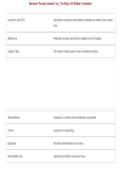
Hartman's Nursing Assistant Care_ The Basics, 5th Edition (Vocabulary)
Long-Term Care (LTC) Care given in long-term care facilities for people who need 24-hour, skilled
care.
Skilled Care Medically necessary care given by a skilled nurse or therapist.
Length of Stay The number of days a person stays in a healthcare facility.
Terminal Illness A disease or condition that will eventually cause death.
Chronic Long-term or long-lasting.
Diagnoses Physicians' determinations of an illness.
Home Health Care Care that is provided in a person's home.
, Hartman's Nursing Assistant Care_ The Basics, 5th Edition (Vocabulary)
Assisted Living Residences for people who do not need skilled, 24-hour care, but do require
some help with daily care.
Adult Day Services Care for people who need some help during certain hours, but who do not
live in the facility where care is given.
Acute Care 24-hour skilled care for short-term illnesses or injuries; generally given in
hospitals and ambulatory surgical centers.
Subacute Care Care given in a hospital or in a long-term care facility for people who need
less care than for an acute illness, but more care than for a chronic illness.
Outpatient Care Care given for less than 24 hours for people who have had treatment or
surgery and need short-term skilled care.
, Hartman's Nursing Assistant Care_ The Basics, 5th Edition (Vocabulary)
Rehabilitation Care that is given by specialists to help restore or improve function after an
illness or injury.
Hospice Care Holistic, compassionate care given to dying people and their families.
Activities of Daily Living (ADLs) Daily personal care tasks such as bathing; caring for skin, nails, hair, and
teeth; dressing; toileting; eating and drinking; walking; and transferring.
Culture Change A term given to the process of transforming services for elders so that they
are based on the values and practices of the person receiving care; core
values include choice, dignity, respect, self-determination, and purposeful
living.
Person-Directed Care A type of care that places the emphasis on the person needing care and his
or her individuality and capabilities.
Medicare A federal health insurance program for people who are 65 or older, are
disabled, or are ill and cannot work.
Medicaid A medical assistance program for people with low incomes, as well as for
people with disabilities.
Charting Documenting important information and observations about residents.
, Hartman's Nursing Assistant Care_ The Basics, 5th Edition (Vocabulary)
Assistive Devices Special equipment that helps a person who is ill or disabled to perform
activities of daily living; also called adaptive devices.
Chain of Command The line of authority within a facility.
Liability A legal term that means someone can be held responsible for harming
someone else.
Scope of Practice Defines the tasks that healthcare providers are legally allowed to do and
how to do them correctly.
Care Plan A plan developed for each resident to achieve certain goals; it outlines the
steps and tasks that the care team must perform.
Policy A course of action that should be taken every time a certain situation occurs.
Long-Term Care (LTC) Care given in long-term care facilities for people who need 24-hour, skilled
care.
Skilled Care Medically necessary care given by a skilled nurse or therapist.
Length of Stay The number of days a person stays in a healthcare facility.
Terminal Illness A disease or condition that will eventually cause death.
Chronic Long-term or long-lasting.
Diagnoses Physicians' determinations of an illness.
Home Health Care Care that is provided in a person's home.
, Hartman's Nursing Assistant Care_ The Basics, 5th Edition (Vocabulary)
Assisted Living Residences for people who do not need skilled, 24-hour care, but do require
some help with daily care.
Adult Day Services Care for people who need some help during certain hours, but who do not
live in the facility where care is given.
Acute Care 24-hour skilled care for short-term illnesses or injuries; generally given in
hospitals and ambulatory surgical centers.
Subacute Care Care given in a hospital or in a long-term care facility for people who need
less care than for an acute illness, but more care than for a chronic illness.
Outpatient Care Care given for less than 24 hours for people who have had treatment or
surgery and need short-term skilled care.
, Hartman's Nursing Assistant Care_ The Basics, 5th Edition (Vocabulary)
Rehabilitation Care that is given by specialists to help restore or improve function after an
illness or injury.
Hospice Care Holistic, compassionate care given to dying people and their families.
Activities of Daily Living (ADLs) Daily personal care tasks such as bathing; caring for skin, nails, hair, and
teeth; dressing; toileting; eating and drinking; walking; and transferring.
Culture Change A term given to the process of transforming services for elders so that they
are based on the values and practices of the person receiving care; core
values include choice, dignity, respect, self-determination, and purposeful
living.
Person-Directed Care A type of care that places the emphasis on the person needing care and his
or her individuality and capabilities.
Medicare A federal health insurance program for people who are 65 or older, are
disabled, or are ill and cannot work.
Medicaid A medical assistance program for people with low incomes, as well as for
people with disabilities.
Charting Documenting important information and observations about residents.
, Hartman's Nursing Assistant Care_ The Basics, 5th Edition (Vocabulary)
Assistive Devices Special equipment that helps a person who is ill or disabled to perform
activities of daily living; also called adaptive devices.
Chain of Command The line of authority within a facility.
Liability A legal term that means someone can be held responsible for harming
someone else.
Scope of Practice Defines the tasks that healthcare providers are legally allowed to do and
how to do them correctly.
Care Plan A plan developed for each resident to achieve certain goals; it outlines the
steps and tasks that the care team must perform.
Policy A course of action that should be taken every time a certain situation occurs.


