

Written by students who passed Immediately available after payment Read online or as PDF Wrong document? Swap it for free 4.6 TrustPilot
logo-home
Document preview thumbnail
Preview 2 out of 13 pages
Exam (elaborations)

GIA Diamond Grading Exam 2 2026 Practice Questions & Answers | Gemological Institute of America (GIA) | 250+ Exam Questions | Diamond Mining, Grading, Color, Fancy Cuts & Diamond Formation

Document preview thumbnail
Preview 2 out of 13 pages

Prepare for the GIA Diamond Grading Exam 2 2026 with this comprehensive collection of 250+ expertly organized practice questions and verified answers covering the advanced concepts of diamond grading, diamond formation, global diamond mining, grading techniques, color evaluation, and fancy-cut diamond analysis. This certification-focused study guide is designed to reinforce the knowledge required for the Gemological Institute of America (GIA) Diamond Grading examination through realistic exam-style questions that strengthen conceptual understanding, grading accuracy, and professional gemological expertise. The guide provides extensive coverage of diamond history, South African diamond discoveries, De Beers, Cecil Rhodes, Barney Barnato, Oppenheimer, Central Selling Organisation (CSO), Diamond Trading Company (DTC), Kimberley Process, Forevermark, Supplier of Choice, diamond pipeline, sightholders, beneficiation, diamond bourses, vertical integration, diamond formation, cratons, kimberlite pipes, lamproite, peridotite, eclogite, alluvial, marine, and primary deposits, open-pit mining, block caving, dense media separation, gravity sorting, grease separation, ore grade, industrial versus cuttable diamonds, diamond exploration, Argyle Mine, Australian pink diamonds, Russian and African diamond sources, fancy-cut grading, emerald cuts, pear shapes, marquise cuts, princess cuts, French tips, keel lines, bow-tie effect, pavilion bulge, shape appeal, length-to-width ratios, symmetry evaluation, masterstones, GIA color grading, face-down color grading, fluorescence, balanced daylight-equivalent lighting, normal and fancy-colored diamonds, and advanced color grading procedures. The structured question-and-answer format makes this resource ideal for certification preparation, gemology coursework, professional development, and final examination review. The material reflects the learning objectives of the Gemological Institute of America (GIA) Diamond Grading curriculum and aligns with internationally recognized gemological standards presented in GIA Diamond Grading, GIA Diamond Essentials, GIA Gem Reference Guide, and GIA Colored Stone Essentials. The content also follows accepted industry principles for diamond grading, mining, and identification established by the Gemological Institute of America. These references are provided for academic context and represent recognized industry standards; they are not cited within the uploaded document. Relevant for Students: GIA Diamond Grading students, Gemological Institute of America (GIA) certification candidates, Graduate Gemologist (GG) students, Applied Jewelry Professional (AJP) students, Diamond Grading Laboratory students, Gemology students, Jewelry Appraisers, Diamond Buyers, Jewelry Retail professionals, Diamond Sales Consultants, Precious Stone Specialists, Jewelry Manufacturers, Auction Specialists, and professionals preparing for GIA Diamond Grading certification examinations. Keywords GIA Diamond Grading Exam 2 2026, GIA Diamond Grading, GIA exam questions, Gemological Institute of America, GIA certification, diamond grading, diamond mining, diamond formation, De Beers, Cecil Rhodes, Barney Barnato, Oppenheimer, Central Selling Organisation, CSO, Diamond Trading Company, DTC, Kimberley Process, Forevermark, Supplier of Choice, diamond pipeline, sightholders, beneficiation, diamond bourse, vertical integration, kimberlite, lamproite, cratons, peridotite, eclogite, alluvial deposits, marine deposits, primary deposits, ore grade, dense media separation, gravity sorting, Argyle Mine, pink diamonds, fancy cut diamonds, emerald cut, marquise cut, pear shape, princess cut, French tip, bow tie effect, pavilion bulge, shape appeal, masterstones, GIA color grading, fluorescence, diamond color grading, fancy colored diamonds, gemology study guide, diamond certification, jewelry education, diamond exam preparation

Content preview

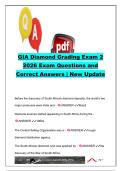
GIA Diamond Grading Exam 2
2026 Exam Questions and
Correct Answers | New Update


Before the discovery of South Africa's diamond deposits, the world's two

major producers were India and - ANSWER ✔✔Brazil


Diamond sources started appearing in South Africa during the -

ANSWER ✔✔1860s


The Central Selling Organisation was a - ANSWER ✔✔rough

diamond distribution agency.


The South African diamond rush was sparked by - ANSWER ✔✔the

discovery of the Star of South Africa.

, The soft, diamond-bearing material near the surface of a diamond field

was named - ANSWER ✔✔yellowground


Cecil Rhodes' main competitor in his early attempts to control diamond

production was - ANSWER ✔✔Barney Barnato.


Who established De Beers Consolidated Mines Ltd. in 1888? -

ANSWER ✔✔Cecil Rhodes


De Beers Consolidated Mines Ltd. was named after - ANSWER

✔✔the owners of a farm where one of the first diamond rushes took

place.

The group that united in 1890 to buy and sell all of the output of the

major diamond producers, including De Beers, was the - ANSWER

✔✔London Diamond Syndicate.


Oppenheimer's answer to low diamond demand in the 1930s was to -

ANSWER ✔✔shut down operations at De Beers mines.


The Diamond Information Center and the Diamond Promotion Service

were created to - ANSWER ✔✔assist in diamond marketing efforts.


The path diamonds followed from mine to consumer was called the -

ANSWER ✔✔diamond pipeline.

Document information

Uploaded on
August 3, 2026
Number of pages
13
Written in
2026/2027
Type
Exam (elaborations)
Contains
Questions & answers
$18.99

Wrong document? Swap it for free Within 14 days of purchase and before downloading, you can choose a different document. You can simply spend the amount again.
Written by students who passed
Immediately available after payment
Read online or as PDF

Seller avatar
Reputation scores are based on the amount of documents a seller has sold for a fee and the reviews they have received for those documents. There are three levels: Bronze, Silver and Gold. The better the reputation, the more your can rely on the quality of the sellers work.
NinjaNerd
3.4
(76)
Sold
409
Followers
6
Items
15622
Last sold
6 hours ago


Why students choose Stuvia

Created by fellow students, verified by reviews

Quality you can trust: written by students who passed their exams and reviewed by others who've used these revision notes.

Didn't get what you expected? Choose another document

No problem! You can straightaway pick a different document that better suits what you're after.

Pay as you like, start learning straight away

No subscription, no commitments. Pay the way you're used to via credit card and download your PDF document instantly.

Student with book image

“Bought, downloaded, and smashed it. It really can be that simple.”

Alisha Student

Working on your references?

Create accurate citations in APA, MLA and Harvard with our free citation generator.

Working on your references?

Frequently asked questions

