
WGU D664
WGU D664
Study online at https://quizlet.com/_h9yzja
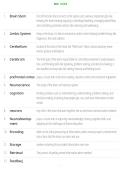
1. Brain Stem Part of the brain that connects to the spinal cord, oversees important jobs like
keeping the heart beating regularly, controlling breathing, managing blood flow,
and controlling automatic actions like sneezing and swallowing.
2. Limbic System Deep in the brain, it is like an emotional control center helping handle feelings like
happiness, fear and sadness
3. Cerebellum located at the back of the head, the "little brain" helps control voluntary move-
ments, posture and balance
4. Cerebrum The front part of the brain responsible for controlling movement, body tempera-
ture, and thinking skills like speaking, problem solving, and decision-making; it
also handles sensory tasks like seeing, hearing and feeling touch.
5. prefrontal cortex plays a crucial role in decision-making, impulse control and emotional regulation
6. Neuroscience The study of the brain and nervous system
7. cognition thinking activities such as remembering, understanding, problem solving, and
decision-making, including how people get, use, and store information in their
minds
8. neurons tiny cells in the brain that work together like an extensive communication network
9. Neurodevelop- plays a crucial role in acquiring new knowledge, honing cognitive skills, and
ment adapting to the challenges of formal education.
10. Encoding refers to the initial processing of information, where sensory input is transformed
into a form that the brain can store and use
11. Storage involves retaining this encoded information over time
12. Retrieval The process of getting stored information when needed
13. Feedbacj
1/8
, WGU D664
WGU D664
Study online at https://quizlet.com/_h9yzja
plays a vital role in refining our learning strategies by providing information about
our performance, guiding future actions.
14. Metacognition involves awareness and understanding of ones thinking processes, enabling
learners to monitor and regulate their learning effectively.
15. Retrieval Practice Actively recalling information from memory, such as answering questions or com-
pleting quizzes, which strengthens long term retention
16. Spacing Study sessions over time rather than cramming all at once, which promotes better
retention and understanding
17. interleaving mixing up different types of problems or topics during study sessions, which
enhances learning by promoting deeper understanding and transfer of knowledge
18. feedback driven using feedback from assessments and evaluations to reflect on and regulate one's
metacognition own learning strategies and understanding
19. Desirable difficul- inroducing challenges or obstacles during learning to cultivate resilience and
ty enhance overall
20. Learning Science Investigates how people learn, encompassing psychology,m neuroscience, educa-
tion, and computer science to understand the cognitive processes, behaviors, and
environments that facilitate learning and knowledge acquisition.
21. research-based arise from solid empirical research or methods shown to positively affect classroom
practices learning
22. Evidence-based practices informed by evidence from studies conducted in educational research
practices and learning science.
23. executive func- the set of mental skills that help individuals plan, focus their attention, and remem-
tion ber insturctions successfully.
2/8
WGU D664
Study online at https://quizlet.com/_h9yzja
1. Brain Stem Part of the brain that connects to the spinal cord, oversees important jobs like
keeping the heart beating regularly, controlling breathing, managing blood flow,
and controlling automatic actions like sneezing and swallowing.
2. Limbic System Deep in the brain, it is like an emotional control center helping handle feelings like
happiness, fear and sadness
3. Cerebellum located at the back of the head, the "little brain" helps control voluntary move-
ments, posture and balance
4. Cerebrum The front part of the brain responsible for controlling movement, body tempera-
ture, and thinking skills like speaking, problem solving, and decision-making; it
also handles sensory tasks like seeing, hearing and feeling touch.
5. prefrontal cortex plays a crucial role in decision-making, impulse control and emotional regulation
6. Neuroscience The study of the brain and nervous system
7. cognition thinking activities such as remembering, understanding, problem solving, and
decision-making, including how people get, use, and store information in their
minds
8. neurons tiny cells in the brain that work together like an extensive communication network
9. Neurodevelop- plays a crucial role in acquiring new knowledge, honing cognitive skills, and
ment adapting to the challenges of formal education.
10. Encoding refers to the initial processing of information, where sensory input is transformed
into a form that the brain can store and use
11. Storage involves retaining this encoded information over time
12. Retrieval The process of getting stored information when needed
13. Feedbacj
1/8
, WGU D664
WGU D664
Study online at https://quizlet.com/_h9yzja
plays a vital role in refining our learning strategies by providing information about
our performance, guiding future actions.
14. Metacognition involves awareness and understanding of ones thinking processes, enabling
learners to monitor and regulate their learning effectively.
15. Retrieval Practice Actively recalling information from memory, such as answering questions or com-
pleting quizzes, which strengthens long term retention
16. Spacing Study sessions over time rather than cramming all at once, which promotes better
retention and understanding
17. interleaving mixing up different types of problems or topics during study sessions, which
enhances learning by promoting deeper understanding and transfer of knowledge
18. feedback driven using feedback from assessments and evaluations to reflect on and regulate one's
metacognition own learning strategies and understanding
19. Desirable difficul- inroducing challenges or obstacles during learning to cultivate resilience and
ty enhance overall
20. Learning Science Investigates how people learn, encompassing psychology,m neuroscience, educa-
tion, and computer science to understand the cognitive processes, behaviors, and
environments that facilitate learning and knowledge acquisition.
21. research-based arise from solid empirical research or methods shown to positively affect classroom
practices learning
22. Evidence-based practices informed by evidence from studies conducted in educational research
practices and learning science.
23. executive func- the set of mental skills that help individuals plan, focus their attention, and remem-
tion ber insturctions successfully.
2/8


