WGU D673
WGU D673
Study online at https://quizlet.com/_hx32cy
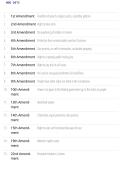
1. 1st Amendment Freedom of speech, religion, press, assembly, petition
2. 2nd Amendment Right to bear arms
3. 3rd Amendment No quartering of soldiers in homes
4. 4th Amendment Protection from unreasonable searches & seizures
5. 5th Amendment Due process, no self-incrimination, no double jeopardy
6. 6th Amendment Right to a speedy, public trial by jury
7. 7th Amendment Right to jury trial in civil cases
8. 8th Amendment No cruel or unusual punishment, fair bail/fines
9. 9th Amendment People have other rights not listed in the Constitution
10. 10th Amend- Powers not given to the federal government go to the states or people
ment
11. 13th Amend- Abolished slavery
ment
12. 14th Amend- Citizenship, equal protection, due process
ment
13. 15th Amend- Right to vote can't be denied because of race
ment
14. 19th Amend- Women's right to vote
ment
15. 22nd Amend- President limited to 2 terms
ment
, WGU D673
WGU D673
Study online at https://quizlet.com/_hx32cy
16. 24th Amend- Abolished poll taxes in federal elections
ment
17. 25th Amend- Presidential succession & disability procedures
ment
18. 26th Amend- Voting age lowered to 18
ment
19. France Pursued fur trade and fishing opportunities, wanted to increase global influence
by claiming new territories, aimed to spread Christianity, and prioritized trading
posts and alliances with natives.
20. England Sought wealth through trade and agricultural development, aimed to establish
a permanent presence and expand territory, established some colonies, and
focused on permanent settlements.
21. Spain Sought gold, silver, and other valuable resources, expanded territory extensively
across the Americas, focused on converting Native American people to Christianity,
and established a strict colonial regime, exploiting local resources and labor
22. The New England Massachusetts, Connecticut, Rhode Island, and New Hampshire, were established
Colonies in the early 1600s. These colonies were known for their rocky terrain and harsh
winters, which made large-scale farming difficult. Instead, the people of New
England turned to fishing, shipbuilding, and trading to build their economy.
23. The Massachu- Founded in 1630, was one of the most significant Puritan settlements. Here,
setts Bay Colony education and religion were closely linked, leading to the founding of Harvard
College in 1636, the first college in North America.
24. Rhode Island Founded by Roger Williams in 1636, was known for its religious tolerance and
separation of church and state, setting it apart from its neighbors.
25.
WGU D673
Study online at https://quizlet.com/_hx32cy
1. 1st Amendment Freedom of speech, religion, press, assembly, petition
2. 2nd Amendment Right to bear arms
3. 3rd Amendment No quartering of soldiers in homes
4. 4th Amendment Protection from unreasonable searches & seizures
5. 5th Amendment Due process, no self-incrimination, no double jeopardy
6. 6th Amendment Right to a speedy, public trial by jury
7. 7th Amendment Right to jury trial in civil cases
8. 8th Amendment No cruel or unusual punishment, fair bail/fines
9. 9th Amendment People have other rights not listed in the Constitution
10. 10th Amend- Powers not given to the federal government go to the states or people
ment
11. 13th Amend- Abolished slavery
ment
12. 14th Amend- Citizenship, equal protection, due process
ment
13. 15th Amend- Right to vote can't be denied because of race
ment
14. 19th Amend- Women's right to vote
ment
15. 22nd Amend- President limited to 2 terms
ment
, WGU D673
WGU D673
Study online at https://quizlet.com/_hx32cy
16. 24th Amend- Abolished poll taxes in federal elections
ment
17. 25th Amend- Presidential succession & disability procedures
ment
18. 26th Amend- Voting age lowered to 18
ment
19. France Pursued fur trade and fishing opportunities, wanted to increase global influence
by claiming new territories, aimed to spread Christianity, and prioritized trading
posts and alliances with natives.
20. England Sought wealth through trade and agricultural development, aimed to establish
a permanent presence and expand territory, established some colonies, and
focused on permanent settlements.
21. Spain Sought gold, silver, and other valuable resources, expanded territory extensively
across the Americas, focused on converting Native American people to Christianity,
and established a strict colonial regime, exploiting local resources and labor
22. The New England Massachusetts, Connecticut, Rhode Island, and New Hampshire, were established
Colonies in the early 1600s. These colonies were known for their rocky terrain and harsh
winters, which made large-scale farming difficult. Instead, the people of New
England turned to fishing, shipbuilding, and trading to build their economy.
23. The Massachu- Founded in 1630, was one of the most significant Puritan settlements. Here,
setts Bay Colony education and religion were closely linked, leading to the founding of Harvard
College in 1636, the first college in North America.
24. Rhode Island Founded by Roger Williams in 1636, was known for its religious tolerance and
separation of church and state, setting it apart from its neighbors.
25.