

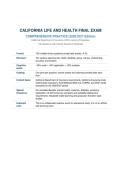
CALIFORNIA LIFE AND HEALTH FINAL EXAM
COMPREHENSIVE PRACTICE (2026/2027 Edition)
California Department of Insurance (CDI) Licensing Preparation
100 Questions with Correct Answers & Rationale
Format: 100 multiple-choice questions (single best answer, A–D).
Structure: Ten sections spanning life, health, disability, group, CA law, underwriting,
annuities, and taxation.
Cognitive ~30% recall • ~50% application • ~20% analysis.
levels:
Grading: One point per question; correct answer and rationale provided after each
item.
Content basis: California Department of Insurance requirements, California Insurance Code,
federal/state regulations, ACA/Medicare/Medi-Cal, COBRA, and NAIC model
standards for the 2026/2027 period.
Special CA-mandated benefits (mental health, maternity, diabetes, screening,
inclusions: telehealth); CA DOI consumer-complaint and suitability/replacement
requirements; integrated estate-planning and group-plan transition case
studies.
Important This is an independent practice exam for educational study; it is not an official
note: CDI licensing exam.
, Section 1: Life Insurance Basics, Types, & Provisions (20 questions)
Q1: Which life insurance product provides temporary protection for a specified period and builds no
cash value?
A. Term life insurance [CORRECT]
B. Whole life insurance
C. Universal life insurance
D. Variable life insurance
Correct Answer: A
Rationale: A is correct: term provides temporary coverage with no cash value. B, C, and D are
permanent/cash-value products.
Q2: Which permanent policy builds cash value with level premiums for life?
A. Term life insurance
B. Whole life insurance [CORRECT]
C. Decreasing term
D. Annual renewable term
Correct Answer: B
Rationale: A is correct: whole life is permanent with level premiums and cash value. B, C, and D are term.
Q3: Which policy offers flexible premiums and an adjustable death benefit with cash value earning
interest?
A. Level term
B. Decreasing term
C. Universal life insurance [CORRECT]
D. Whole life with fixed premium only
Correct Answer: C
Rationale: A is correct: universal life offers flexibility. B and C are term; D does not describe flexibility.
Q4: In variable life insurance, the cash value:
A. Is fixed and guaranteed
B. Has no value
C. Is always tax-free
D. Fluctuates with the performance of underlying subaccounts [CORRECT]
Correct Answer: D
Rationale: A is correct: variable life cash value varies with investments. B, C, and D are incorrect.
Q5: Indexed universal life (IUL) credits interest based on:
A. The performance of a market index (e.g., S&P 500) within caps/floors [CORRECT]
B. A fixed guaranteed rate only
C. No index
D. The beneficiary's age
Correct Answer: A
Rationale: A is correct: IUL credits index-based interest with caps/floors. B, C, and D are incorrect.
California Life and Health Final Exam (2026/2027) Page 2
, Q6: The provision that prevents the insurer from contesting the policy after a period (usually 2
years) is the:
A. Grace period
B. Incontestability clause [CORRECT]
C. Suicide clause
D. Reinstatement clause
Correct Answer: B
Rationale: A is correct: incontestability bars contest after the period. B, C, and D are other provisions.
Q7: The period after the premium due date during which the policy remains in force is the:
A. Contestability period
B. Elimination period
C. Grace period [CORRECT]
D. Free-look period
Correct Answer: C
Rationale: A is correct: the grace period allows late payment. B, C, and D are other periods.
Q8: The clause limiting payment if the insured dies by suicide within the first two years is the:
A. Incontestability clause
B. Assignment clause
C. Entire contract clause
D. Suicide clause [CORRECT]
Correct Answer: D
Rationale: A is correct: the suicide clause limits early suicide payment. B, C, and D are other clauses.
Q9: The person named to receive the death benefit is the:
A. Beneficiary [CORRECT]
B. Policyowner
C. Insured
D. Producer
Correct Answer: A
Rationale: A is correct: the beneficiary receives the death benefit. B, C, and D are other roles.
Q10: The person who holds ownership rights, including naming the beneficiary and surrendering
the policy, is the:
A. Beneficiary
B. Policyowner [CORRECT]
C. Assignee
D. Contingent insured
Correct Answer: B
Rationale: A is correct: the policyowner holds ownership rights. B, C, and D are other roles.
Q11: Which provision states that the application is attached to and made part of the policy?
A. Grace period clause
B. Misstatement of age clause
C. Entire contract clause [CORRECT]
D. Suicide clause
Correct Answer: C
Rationale: A is correct: the entire contract clause incorporates the application. B, C, and D are other
provisions.
California Life and Health Final Exam (2026/2027) Page 3
COMPREHENSIVE PRACTICE (2026/2027 Edition)
California Department of Insurance (CDI) Licensing Preparation
100 Questions with Correct Answers & Rationale
Format: 100 multiple-choice questions (single best answer, A–D).
Structure: Ten sections spanning life, health, disability, group, CA law, underwriting,
annuities, and taxation.
Cognitive ~30% recall • ~50% application • ~20% analysis.
levels:
Grading: One point per question; correct answer and rationale provided after each
item.
Content basis: California Department of Insurance requirements, California Insurance Code,
federal/state regulations, ACA/Medicare/Medi-Cal, COBRA, and NAIC model
standards for the 2026/2027 period.
Special CA-mandated benefits (mental health, maternity, diabetes, screening,
inclusions: telehealth); CA DOI consumer-complaint and suitability/replacement
requirements; integrated estate-planning and group-plan transition case
studies.
Important This is an independent practice exam for educational study; it is not an official
note: CDI licensing exam.
, Section 1: Life Insurance Basics, Types, & Provisions (20 questions)
Q1: Which life insurance product provides temporary protection for a specified period and builds no
cash value?
A. Term life insurance [CORRECT]
B. Whole life insurance
C. Universal life insurance
D. Variable life insurance
Correct Answer: A
Rationale: A is correct: term provides temporary coverage with no cash value. B, C, and D are
permanent/cash-value products.
Q2: Which permanent policy builds cash value with level premiums for life?
A. Term life insurance
B. Whole life insurance [CORRECT]
C. Decreasing term
D. Annual renewable term
Correct Answer: B
Rationale: A is correct: whole life is permanent with level premiums and cash value. B, C, and D are term.
Q3: Which policy offers flexible premiums and an adjustable death benefit with cash value earning
interest?
A. Level term
B. Decreasing term
C. Universal life insurance [CORRECT]
D. Whole life with fixed premium only
Correct Answer: C
Rationale: A is correct: universal life offers flexibility. B and C are term; D does not describe flexibility.
Q4: In variable life insurance, the cash value:
A. Is fixed and guaranteed
B. Has no value
C. Is always tax-free
D. Fluctuates with the performance of underlying subaccounts [CORRECT]
Correct Answer: D
Rationale: A is correct: variable life cash value varies with investments. B, C, and D are incorrect.
Q5: Indexed universal life (IUL) credits interest based on:
A. The performance of a market index (e.g., S&P 500) within caps/floors [CORRECT]
B. A fixed guaranteed rate only
C. No index
D. The beneficiary's age
Correct Answer: A
Rationale: A is correct: IUL credits index-based interest with caps/floors. B, C, and D are incorrect.
California Life and Health Final Exam (2026/2027) Page 2
, Q6: The provision that prevents the insurer from contesting the policy after a period (usually 2
years) is the:
A. Grace period
B. Incontestability clause [CORRECT]
C. Suicide clause
D. Reinstatement clause
Correct Answer: B
Rationale: A is correct: incontestability bars contest after the period. B, C, and D are other provisions.
Q7: The period after the premium due date during which the policy remains in force is the:
A. Contestability period
B. Elimination period
C. Grace period [CORRECT]
D. Free-look period
Correct Answer: C
Rationale: A is correct: the grace period allows late payment. B, C, and D are other periods.
Q8: The clause limiting payment if the insured dies by suicide within the first two years is the:
A. Incontestability clause
B. Assignment clause
C. Entire contract clause
D. Suicide clause [CORRECT]
Correct Answer: D
Rationale: A is correct: the suicide clause limits early suicide payment. B, C, and D are other clauses.
Q9: The person named to receive the death benefit is the:
A. Beneficiary [CORRECT]
B. Policyowner
C. Insured
D. Producer
Correct Answer: A
Rationale: A is correct: the beneficiary receives the death benefit. B, C, and D are other roles.
Q10: The person who holds ownership rights, including naming the beneficiary and surrendering
the policy, is the:
A. Beneficiary
B. Policyowner [CORRECT]
C. Assignee
D. Contingent insured
Correct Answer: B
Rationale: A is correct: the policyowner holds ownership rights. B, C, and D are other roles.
Q11: Which provision states that the application is attached to and made part of the policy?
A. Grace period clause
B. Misstatement of age clause
C. Entire contract clause [CORRECT]
D. Suicide clause
Correct Answer: C
Rationale: A is correct: the entire contract clause incorporates the application. B, C, and D are other
provisions.
California Life and Health Final Exam (2026/2027) Page 3


