

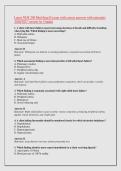
Latest NUR 209 Med-Surg II exam with correct answers with rationales
2026/2027 version A+ Graded
1. A client with heart failure reports increasing shortness of breath and difficulty breathing
when lying flat. Which finding is most concerning?
A. Mild ankle edema
B. Orthopnea
C. Heart rate of 82/min
D. Occasional fatigue
Answer: B
Rationale: Orthopnea can indicate worsening pulmonary congestion associated with heart
failure.
2. Which assessment finding is most characteristic of left-sided heart failure?
A. Pulmonary crackles
B. Enlarged liver
C. Peripheral edema only
D. Jugular vein distention only
Answer: A
Rationale: Left-sided heart failure causes pulmonary congestion, which can produce crackles
and dyspnea.
3. Which finding is commonly associated with right-sided heart failure?
A. Pulmonary edema
B. Peripheral edema
C. Hemoptysis
D. Severe wheezing only
Answer: B
Rationale: Right-sided failure causes systemic venous congestion, producing peripheral edema,
jugular venous distention, and weight gain.
4. A client taking furosemide should be monitored closely for which electrolyte imbalance?
A. Hyperkalemia
B. Hypokalemia
C. Hypermagnesemia
D. Hypercalcemia
Answer: B
Rationale: Loop diuretics increase urinary potassium loss.
5. Which finding should a nurse report immediately in a client receiving digoxin?
A. Apical pulse of 54/min
B. Blood pressure of 128/76 mmHg
,C. Respiratory rate of 18/min
D. Mild thirst
Answer: A
Rationale: Digoxin can cause bradycardia and should generally be withheld and evaluated when
the pulse is significantly low according to the prescribed parameters.
6. Which symptom may indicate digoxin toxicity?
A. Yellow or blurred vision
B. Increased appetite
C. Excessive energy
D. Increased hearing acuity
Answer: A
Rationale: Visual disturbances, nausea, vomiting, and dysrhythmias can occur with digoxin
toxicity.
7. A client with acute pulmonary edema is severely dyspneic. What is the priority nursing
action?
A. Place the client in high-Fowler position
B. Encourage oral fluids
C. Place the client flat
D. Encourage ambulation
Answer: A
Rationale: Upright positioning promotes lung expansion and decreases venous return to the
heart.
8. Which assessment finding suggests pulmonary edema?
A. Pink, frothy sputum
B. Dry skin
C. Bradycardia without respiratory symptoms
D. Increased appetite
Answer: A
Rationale: Pink, frothy sputum is a classic finding associated with severe pulmonary edema.
9. Which laboratory value is most important when monitoring a client receiving warfarin?
A. INR
B. Sodium
C. Amylase
D. Hemoglobin A1c
Answer: A
Rationale: INR is used to monitor the therapeutic effect of warfarin and bleeding risk.
, 10. Which medication is commonly used as an antidote for excessive warfarin
anticoagulation?
A. Vitamin K
B. Naloxone
C. Protamine
D. Atropine
Answer: A
Rationale: Vitamin K can reverse the anticoagulant effect of warfarin.
11. Which medication reverses the anticoagulant effect of unfractionated heparin?
A. Vitamin K
B. Protamine sulfate
C. Naloxone
D. Acetylcysteine
Answer: B
Rationale: Protamine sulfate binds and neutralizes heparin.
12. A client receiving heparin develops sudden thrombocytopenia. Which complication
should the nurse suspect?
A. Heparin-induced thrombocytopenia
B. Iron-deficiency anemia
C. Pernicious anemia
D. Polycythemia
Answer: A
Rationale: A significant platelet decline after heparin exposure may indicate HIT, a potentially
serious prothrombotic condition.
13. Which symptom is most concerning for a myocardial infarction?
A. Crushing chest pressure
B. Mild hunger
C. Itching
D. Increased urination
Answer: A
Rationale: Severe pressure, squeezing, or heaviness in the chest is a classic presentation of
myocardial ischemia.
14. Which laboratory marker is highly specific for myocardial injury?
A. Troponin
B. Sodium
C. Albumin
D. Bilirubin
2026/2027 version A+ Graded
1. A client with heart failure reports increasing shortness of breath and difficulty breathing
when lying flat. Which finding is most concerning?
A. Mild ankle edema
B. Orthopnea
C. Heart rate of 82/min
D. Occasional fatigue
Answer: B
Rationale: Orthopnea can indicate worsening pulmonary congestion associated with heart
failure.
2. Which assessment finding is most characteristic of left-sided heart failure?
A. Pulmonary crackles
B. Enlarged liver
C. Peripheral edema only
D. Jugular vein distention only
Answer: A
Rationale: Left-sided heart failure causes pulmonary congestion, which can produce crackles
and dyspnea.
3. Which finding is commonly associated with right-sided heart failure?
A. Pulmonary edema
B. Peripheral edema
C. Hemoptysis
D. Severe wheezing only
Answer: B
Rationale: Right-sided failure causes systemic venous congestion, producing peripheral edema,
jugular venous distention, and weight gain.
4. A client taking furosemide should be monitored closely for which electrolyte imbalance?
A. Hyperkalemia
B. Hypokalemia
C. Hypermagnesemia
D. Hypercalcemia
Answer: B
Rationale: Loop diuretics increase urinary potassium loss.
5. Which finding should a nurse report immediately in a client receiving digoxin?
A. Apical pulse of 54/min
B. Blood pressure of 128/76 mmHg
,C. Respiratory rate of 18/min
D. Mild thirst
Answer: A
Rationale: Digoxin can cause bradycardia and should generally be withheld and evaluated when
the pulse is significantly low according to the prescribed parameters.
6. Which symptom may indicate digoxin toxicity?
A. Yellow or blurred vision
B. Increased appetite
C. Excessive energy
D. Increased hearing acuity
Answer: A
Rationale: Visual disturbances, nausea, vomiting, and dysrhythmias can occur with digoxin
toxicity.
7. A client with acute pulmonary edema is severely dyspneic. What is the priority nursing
action?
A. Place the client in high-Fowler position
B. Encourage oral fluids
C. Place the client flat
D. Encourage ambulation
Answer: A
Rationale: Upright positioning promotes lung expansion and decreases venous return to the
heart.
8. Which assessment finding suggests pulmonary edema?
A. Pink, frothy sputum
B. Dry skin
C. Bradycardia without respiratory symptoms
D. Increased appetite
Answer: A
Rationale: Pink, frothy sputum is a classic finding associated with severe pulmonary edema.
9. Which laboratory value is most important when monitoring a client receiving warfarin?
A. INR
B. Sodium
C. Amylase
D. Hemoglobin A1c
Answer: A
Rationale: INR is used to monitor the therapeutic effect of warfarin and bleeding risk.
, 10. Which medication is commonly used as an antidote for excessive warfarin
anticoagulation?
A. Vitamin K
B. Naloxone
C. Protamine
D. Atropine
Answer: A
Rationale: Vitamin K can reverse the anticoagulant effect of warfarin.
11. Which medication reverses the anticoagulant effect of unfractionated heparin?
A. Vitamin K
B. Protamine sulfate
C. Naloxone
D. Acetylcysteine
Answer: B
Rationale: Protamine sulfate binds and neutralizes heparin.
12. A client receiving heparin develops sudden thrombocytopenia. Which complication
should the nurse suspect?
A. Heparin-induced thrombocytopenia
B. Iron-deficiency anemia
C. Pernicious anemia
D. Polycythemia
Answer: A
Rationale: A significant platelet decline after heparin exposure may indicate HIT, a potentially
serious prothrombotic condition.
13. Which symptom is most concerning for a myocardial infarction?
A. Crushing chest pressure
B. Mild hunger
C. Itching
D. Increased urination
Answer: A
Rationale: Severe pressure, squeezing, or heaviness in the chest is a classic presentation of
myocardial ischemia.
14. Which laboratory marker is highly specific for myocardial injury?
A. Troponin
B. Sodium
C. Albumin
D. Bilirubin


