

iHuman William Garrett Case Study | 50-Year-Old with
Abdominal pain.
EXAM
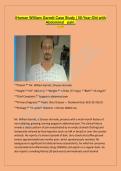
**Patient:** Mr. William Garrett, 50-year-old male
**Height:** 6'0" (183 cm) | **Weight:** 170 lbs (77.3 kg) | **BMI:** 23.4 kg/m²
**Chief Complaint:** Epigastric abdominal pain
**Primary Diagnosis:** Peptic Ulcer Disease — Duodenal Ulcer (ICD-10: K26.9)
**Etiology:** *H. pylori* Infection + Chronic NSAID Use
Mr. William Garrett, a 50-year-old male, presents with a multi-month history of
non-radiating, gnawing, burning epigastric abdominal pain. The clinical history
reveals a classic pattern of pain exacerbated by an empty stomach (fasting) and
temporarily relieved by food ingestion (such as milk or bread) or over-the-counter
antacids. He reports a transient episode of dark, tarry stools and coffee-ground
emesis approximately two months prior, which spontaneously resolved. His
background is significant for bilateral knee osteoarthritis, for which he consumes
nonsteroidal anti-inflammatory drugs (NSAIDs) and aspirin on a regular basis. He
also reports a smoking history (30 pack-years) and moderate social alcohol
, consumption (7-10 beers per week). Physical examination demonstrates focal
tenderness strictly localized to the epigastric region upon deep palpation, with no
signs of peritonitis (no guarding, rigidity, or rebound tenderness).
---
## SOAP NOTE
### SUBJECTIVE (S)
**Chief Complaint:** "Abdominal pain for several months"
**History of Present Illness (HPI) – OLDCARTS Format:**
| Component | Finding |
|-----------|---------|
| **O**nset | Insidious onset over past weeks to months; started a few months
ago |
| **L**ocation | Epigastric region (upper middle abdomen, "in my upper gut, just
below my breast bone") |
| **D**uration | Constant pain; "there all the time" with episodic exacerbations |
| **C**haracter | Burning to aching, gnawing quality |
| **A**ggravating | Empty stomach (fasting), skipping meals, 2-3 hours after a
meal, NSAID use, possibly alcohol |
| **R**elieving | Eating food (milk, bread), over-the-counter antacids |
| **T**iming/Treatments | Antacids provide relief |
Abdominal pain.
EXAM
**Patient:** Mr. William Garrett, 50-year-old male
**Height:** 6'0" (183 cm) | **Weight:** 170 lbs (77.3 kg) | **BMI:** 23.4 kg/m²
**Chief Complaint:** Epigastric abdominal pain
**Primary Diagnosis:** Peptic Ulcer Disease — Duodenal Ulcer (ICD-10: K26.9)
**Etiology:** *H. pylori* Infection + Chronic NSAID Use
Mr. William Garrett, a 50-year-old male, presents with a multi-month history of
non-radiating, gnawing, burning epigastric abdominal pain. The clinical history
reveals a classic pattern of pain exacerbated by an empty stomach (fasting) and
temporarily relieved by food ingestion (such as milk or bread) or over-the-counter
antacids. He reports a transient episode of dark, tarry stools and coffee-ground
emesis approximately two months prior, which spontaneously resolved. His
background is significant for bilateral knee osteoarthritis, for which he consumes
nonsteroidal anti-inflammatory drugs (NSAIDs) and aspirin on a regular basis. He
also reports a smoking history (30 pack-years) and moderate social alcohol
, consumption (7-10 beers per week). Physical examination demonstrates focal
tenderness strictly localized to the epigastric region upon deep palpation, with no
signs of peritonitis (no guarding, rigidity, or rebound tenderness).
---
## SOAP NOTE
### SUBJECTIVE (S)
**Chief Complaint:** "Abdominal pain for several months"
**History of Present Illness (HPI) – OLDCARTS Format:**
| Component | Finding |
|-----------|---------|
| **O**nset | Insidious onset over past weeks to months; started a few months
ago |
| **L**ocation | Epigastric region (upper middle abdomen, "in my upper gut, just
below my breast bone") |
| **D**uration | Constant pain; "there all the time" with episodic exacerbations |
| **C**haracter | Burning to aching, gnawing quality |
| **A**ggravating | Empty stomach (fasting), skipping meals, 2-3 hours after a
meal, NSAID use, possibly alcohol |
| **R**elieving | Eating food (milk, bread), over-the-counter antacids |
| **T**iming/Treatments | Antacids provide relief |


