
NURS 5334 ANTIMICROBIAL EXAM / ACTUAL UNIVERSITY OF
TEXAS ARLINGTON NURS 5334 ANTIMICROBIAL EXAM
2026/2027 COMPREHENSIVE PRACTICE QUESTIONS AND
STUDY GUIDE COMPLETE ACCURATE EXAM APPROVED
QUESTIONS AND CORRECT DETAILED ANSWERS WITH
RATIONALES (100% CORRECT VERIFIED SOLUTIONS) A NEW
UPDATED VERSION 2026 EDITION |GUARANTEED SUCCESS
A+|FULL REVISED EXAM |BRAND NEW!
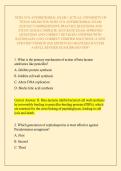
1. What is the primary mechanism of action of beta-lactam
antibiotics like penicillin?
A. Inhibits protein synthesis
B. Inhibits cell wall synthesis
C. Alters DNA replication
D. Blocks folic acid synthesis
Correct Answer: B. Beta-lactams inhibit bacterial cell wall synthesis
by irreversibly binding to penicillin-binding proteins (PBPs), which
are essential for the cross-linking of peptidoglycan, leading to cell
lysis and death.
2. Which generation of cephalosporins is most effective against
Pseudomonas aeruginosa?
A. First
B. Second
C. Third
,D. Fourth
Correct Answer: D. Fourth-generation cephalosporins like cefepime
have enhanced activity against Gram-negative organisms including
Pseudomonas aeruginosa.
3. Vancomycin is the drug of choice for which type of infection?
A. VRE infections
B. MRSA infections
C. Urinary tract infections
D. Syphilis
Correct Answer: B. Vancomycin is a glycopeptide antibiotic that is
the first-line treatment for serious infections caused by methicillin-
resistant Staphylococcus aureus (MRSA).
4. What is the primary toxicity concern with aminoglycosides?
A. Stevens-Johnson syndrome
B. Hepatotoxicity
C. Ototoxicity and nephrotoxicity
D. Anemia
Correct Answer: C. Aminoglycosides (e.g., gentamicin, tobramycin)
are known for their narrow therapeutic window and significant risks
of dose-dependent, irreversible ototoxicity and nephrotoxicity.
,5. Which mineral interactions reduce the absorption of tetracyclines?
A. Sodium and potassium
B. Calcium, iron, and magnesium
C. Phosphate and zinc
D. Chloride and bicarbonate
Correct Answer: B. Tetracyclines chelate with divalent and trivalent
cations, including calcium, iron, magnesium, and aluminum,
forming insoluble complexes that are poorly absorbed.
6. Macrolides (e.g., erythromycin, clarithromycin) inhibit which
hepatic enzyme system?
A. CYP1A2
B. CYP2D6
C. CYP3A4
D. CYP2C19
Correct Answer: C. Erythromycin and clarithromycin are strong
CYP3A4 inhibitors, which can lead to significant drug-drug
interactions.
7. Which antibiotic is most strongly associated with Clostridioides
difficile colitis?
A. Metronidazole
, B. Clindamycin
C. Nitrofurantoin
D. Ciprofloxacin
Correct Answer: B. Clindamycin is highly associated with C. difficile
infection due to its disruption of normal gut flora.
8. Linezolid requires weekly monitoring of which lab value?
A. Liver enzymes
B. Platelet count
C. BUN
D. Calcium
Correct Answer: B. Linezolid may cause thrombocytopenia with
prolonged use (typically >2 weeks); weekly platelet monitoring is
recommended.
9. Sulfonamides inhibit which bacterial process?
A. Bacterial DNA gyrase
B. Folic acid synthesis
C. Ribosomal activity
D. Protein folding
TEXAS ARLINGTON NURS 5334 ANTIMICROBIAL EXAM
2026/2027 COMPREHENSIVE PRACTICE QUESTIONS AND
STUDY GUIDE COMPLETE ACCURATE EXAM APPROVED
QUESTIONS AND CORRECT DETAILED ANSWERS WITH
RATIONALES (100% CORRECT VERIFIED SOLUTIONS) A NEW
UPDATED VERSION 2026 EDITION |GUARANTEED SUCCESS
A+|FULL REVISED EXAM |BRAND NEW!
1. What is the primary mechanism of action of beta-lactam
antibiotics like penicillin?
A. Inhibits protein synthesis
B. Inhibits cell wall synthesis
C. Alters DNA replication
D. Blocks folic acid synthesis
Correct Answer: B. Beta-lactams inhibit bacterial cell wall synthesis
by irreversibly binding to penicillin-binding proteins (PBPs), which
are essential for the cross-linking of peptidoglycan, leading to cell
lysis and death.
2. Which generation of cephalosporins is most effective against
Pseudomonas aeruginosa?
A. First
B. Second
C. Third
,D. Fourth
Correct Answer: D. Fourth-generation cephalosporins like cefepime
have enhanced activity against Gram-negative organisms including
Pseudomonas aeruginosa.
3. Vancomycin is the drug of choice for which type of infection?
A. VRE infections
B. MRSA infections
C. Urinary tract infections
D. Syphilis
Correct Answer: B. Vancomycin is a glycopeptide antibiotic that is
the first-line treatment for serious infections caused by methicillin-
resistant Staphylococcus aureus (MRSA).
4. What is the primary toxicity concern with aminoglycosides?
A. Stevens-Johnson syndrome
B. Hepatotoxicity
C. Ototoxicity and nephrotoxicity
D. Anemia
Correct Answer: C. Aminoglycosides (e.g., gentamicin, tobramycin)
are known for their narrow therapeutic window and significant risks
of dose-dependent, irreversible ototoxicity and nephrotoxicity.
,5. Which mineral interactions reduce the absorption of tetracyclines?
A. Sodium and potassium
B. Calcium, iron, and magnesium
C. Phosphate and zinc
D. Chloride and bicarbonate
Correct Answer: B. Tetracyclines chelate with divalent and trivalent
cations, including calcium, iron, magnesium, and aluminum,
forming insoluble complexes that are poorly absorbed.
6. Macrolides (e.g., erythromycin, clarithromycin) inhibit which
hepatic enzyme system?
A. CYP1A2
B. CYP2D6
C. CYP3A4
D. CYP2C19
Correct Answer: C. Erythromycin and clarithromycin are strong
CYP3A4 inhibitors, which can lead to significant drug-drug
interactions.
7. Which antibiotic is most strongly associated with Clostridioides
difficile colitis?
A. Metronidazole
, B. Clindamycin
C. Nitrofurantoin
D. Ciprofloxacin
Correct Answer: B. Clindamycin is highly associated with C. difficile
infection due to its disruption of normal gut flora.
8. Linezolid requires weekly monitoring of which lab value?
A. Liver enzymes
B. Platelet count
C. BUN
D. Calcium
Correct Answer: B. Linezolid may cause thrombocytopenia with
prolonged use (typically >2 weeks); weekly platelet monitoring is
recommended.
9. Sulfonamides inhibit which bacterial process?
A. Bacterial DNA gyrase
B. Folic acid synthesis
C. Ribosomal activity
D. Protein folding


