
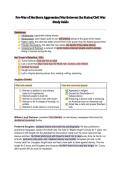
Pre-War of Northern Aggression/War Between the States/Civil War
Study Guide
👉
Definitions:
👉
Abolitionists: supported ending slavery
👉
Sectionalism: each region puts its own self-interest ahead of the good of the nation
👉
States' rights: the idea that states should have more power than the federal government
👉
Popular Sovereignty: the idea that new states can decide if they allow slavery
Underground Railroad: a network of secret routes enslaved people used to escape,
hiding in houses during the day
💥
Nat Turner's Rebellion, 1831:
💥
Turner believed God told him to rebel
💥
Led a revolt that killed more than 50 White men, women, and children
💥
Terrified the South
💥
Caught and executed
Led to Virginia banning slaves from reading, writing, preaching
Angelina Grimké:
What she wanted How she convinced people
📜 Women to petition to end slavery 🌿
🌿 Quoted
Appealed to religion
📜
📜
(asks for 6 signatures)
Wanted people to trust her
🌿 Enslaving
the Declaration of
Independence
📜 Women to convince men with charm
Women to be in charge of morality, no
🌿 Acted
a slave's child is enslaving
an American born on American soil
📜 politics
Wanted to make slavery a moral issue lady
like a calm and proper Southern
William Lloyd Garrison: published The Liberator, an anti-slavery newspaper that drove the
abolitionist movement further
Frederick Douglass: escaped slavery and wrote his autobiography. He also published a
prominent newspaper named The North Star. He lived in "Master Hugh"'s house for 7 years. His
enslaver's wife taught him the alphabet but his enslaver made sure he never read and was
always watched. He bribed white boys with bread to teach him to read every time he had to run
errands. Ignorance was gone, and I realized slavery was terrible. Douglass got sick, so Mr.
Covery beat him. Douglass fought back and had a new spirit to rebel against slavery. The two
fought for 2 hours and Douglass won because he didn't want to be used any longer. Mr. Covey
didn't punish him to save his reputation.
Study Guide
👉
Definitions:
👉
Abolitionists: supported ending slavery
👉
Sectionalism: each region puts its own self-interest ahead of the good of the nation
👉
States' rights: the idea that states should have more power than the federal government
👉
Popular Sovereignty: the idea that new states can decide if they allow slavery
Underground Railroad: a network of secret routes enslaved people used to escape,
hiding in houses during the day
💥
Nat Turner's Rebellion, 1831:
💥
Turner believed God told him to rebel
💥
Led a revolt that killed more than 50 White men, women, and children
💥
Terrified the South
💥
Caught and executed
Led to Virginia banning slaves from reading, writing, preaching
Angelina Grimké:
What she wanted How she convinced people
📜 Women to petition to end slavery 🌿
🌿 Quoted
Appealed to religion
📜
📜
(asks for 6 signatures)
Wanted people to trust her
🌿 Enslaving
the Declaration of
Independence
📜 Women to convince men with charm
Women to be in charge of morality, no
🌿 Acted
a slave's child is enslaving
an American born on American soil
📜 politics
Wanted to make slavery a moral issue lady
like a calm and proper Southern
William Lloyd Garrison: published The Liberator, an anti-slavery newspaper that drove the
abolitionist movement further
Frederick Douglass: escaped slavery and wrote his autobiography. He also published a
prominent newspaper named The North Star. He lived in "Master Hugh"'s house for 7 years. His
enslaver's wife taught him the alphabet but his enslaver made sure he never read and was
always watched. He bribed white boys with bread to teach him to read every time he had to run
errands. Ignorance was gone, and I realized slavery was terrible. Douglass got sick, so Mr.
Covery beat him. Douglass fought back and had a new spirit to rebel against slavery. The two
fought for 2 hours and Douglass won because he didn't want to be used any longer. Mr. Covey
didn't punish him to save his reputation.


