

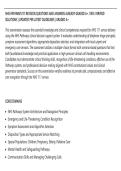
NHS PATHWAYS 111 REVISION QUESTIONS AND ANSWERS ALREADY GRADED A+. 100% VERIFIED
SOLUTIONS | UPDATED PER LATEST GUIDELINES | GRADED A+
This examination assesses the essential knowledge and clinical competencies required for NHS 111 service delivery
using the NHS Pathways clinical decision support system. It evaluates understanding of telephone triage principles,
symptom assessment algorithms, appropriate disposition selection, and integration with local urgent and
emergency care services. The assessment utilizes a multiple-choice format with scenario-based questions that test
both foundational knowledge and practical application in high-pressure clinical call-handling environments.
Candidates must demonstrate critical thinking skills, recognition of life-threatening conditions, effective use of the
Pathways system, and professional decision-making aligned with NHS constitutional values and clinical
governance standards. Success on this examination verifies readiness to provide safe, compassionate, and effective
care navigation through the NHS 111 service.
CORE DOMAINS
NHS Pathways System Architecture and Navigation Principles
Emergency and Life-Threatening Condition Recognition
Symptom Assessment and Algorithm Selection
Disposition Types and Appropriate Service Matching
Special Populations: Children, Pregnancy, Elderly, Palliative Care
Mental Health and Safeguarding Pathways
Communication Skills and Managing Challenging Calls
, Information Governance, Consent, and Confidentiality
Clinical Governance, Audit, and Quality Improvement
Multi-Agency Working and Local Service Integration
SECTION ONE
Question 1
What is the fundamental purpose of the NHS 111 service?
A. To diagnose medical conditions over the telephone
B. To provide a 24/7 integrated urgent care access point that directs patients to the most appropriate service for
their clinical need
C. To replace all GP services
D. To provide routine appointment booking only
🟢 Correct Answer:
B
🔴 RATIONALE:
NHS 111 is designed as a 24/7 integrated urgent care access point that assesses patients' clinical needs and
directs them to the most appropriate service—whether that is emergency ambulance, urgent treatment centre,
GP out-of-hours, community pharmacy, or self-care. It does not diagnose conditions or replace existing
services. It functions as the front door to urgent and emergency care.
,Question 2
A caller reports that their 3-month-old baby feels hot to touch and is unusually drowsy. What is the clinical
significance of this combination in an infant?
A. This is typical infant behaviour
B. Fever with drowsiness in an infant under 3 months is a high-risk presentation requiring emergency
assessment
C. The baby should be given paracetamol and monitored at home
D. Only a GP can assess this presentation
🟢 Correct Answer:
B
🔴 RATIONALE:
Infants under 3 months with fever and drowsiness are at significant risk of serious bacterial infection or sepsis.
NHS Pathways contains specific paediatric fever algorithms that will generate an emergency disposition for this
high-risk combination. Paracetamol and home monitoring are insufficient responses. This is a time-critical
presentation.
Question 3
When using NHS Pathways, what is the correct sequence of actions when a caller reports a patient has collapsed
and is not breathing?
A. Complete the full symptom assessment before taking action
B. Immediately activate the cardiac arrest pathway, provide CPR instructions, and dispatch emergency services
C. Ask the caller to check for a pulse before proceeding
D. Transfer the call to a clinician
, 🟢 Correct Answer:
B
🔴 RATIONALE:
A report of collapse with absent breathing requires immediate activation of the cardiac arrest pathway without
delay. The call handler should provide CPR instructions (compression-only or full CPR as appropriate) and
ensure emergency services are dispatched immediately. Completing a full assessment, checking pulses, or
transferring the call would cause dangerous delays.
Question 4
What is the significance of the "pregnancy" modifier in NHS Pathways algorithms?
A. Pregnancy is irrelevant to clinical triage
B. Pregnancy status alters risk stratification for many presenting complaints and may change the disposition
C. All pregnant patients are automatically sent to the emergency department
D. Pregnancy only affects obstetric symptom assessments
🟢 Correct Answer:
B
🔴 RATIONALE:
Pregnancy significantly alters the clinical risk profile for many conditions, not just obstetric ones. Abdominal
pain, headache, chest pain, and infection in pregnancy all carry additional considerations. NHS Pathways
modifies risk assessment based on pregnancy status, potentially resulting in more urgent dispositions. Not all
pregnant patients require ED attendance.
Question 5
A caller reports that an elderly patient has fallen and cannot get up. The patient is confused but has no visible
SOLUTIONS | UPDATED PER LATEST GUIDELINES | GRADED A+
This examination assesses the essential knowledge and clinical competencies required for NHS 111 service delivery
using the NHS Pathways clinical decision support system. It evaluates understanding of telephone triage principles,
symptom assessment algorithms, appropriate disposition selection, and integration with local urgent and
emergency care services. The assessment utilizes a multiple-choice format with scenario-based questions that test
both foundational knowledge and practical application in high-pressure clinical call-handling environments.
Candidates must demonstrate critical thinking skills, recognition of life-threatening conditions, effective use of the
Pathways system, and professional decision-making aligned with NHS constitutional values and clinical
governance standards. Success on this examination verifies readiness to provide safe, compassionate, and effective
care navigation through the NHS 111 service.
CORE DOMAINS
NHS Pathways System Architecture and Navigation Principles
Emergency and Life-Threatening Condition Recognition
Symptom Assessment and Algorithm Selection
Disposition Types and Appropriate Service Matching
Special Populations: Children, Pregnancy, Elderly, Palliative Care
Mental Health and Safeguarding Pathways
Communication Skills and Managing Challenging Calls
, Information Governance, Consent, and Confidentiality
Clinical Governance, Audit, and Quality Improvement
Multi-Agency Working and Local Service Integration
SECTION ONE
Question 1
What is the fundamental purpose of the NHS 111 service?
A. To diagnose medical conditions over the telephone
B. To provide a 24/7 integrated urgent care access point that directs patients to the most appropriate service for
their clinical need
C. To replace all GP services
D. To provide routine appointment booking only
🟢 Correct Answer:
B
🔴 RATIONALE:
NHS 111 is designed as a 24/7 integrated urgent care access point that assesses patients' clinical needs and
directs them to the most appropriate service—whether that is emergency ambulance, urgent treatment centre,
GP out-of-hours, community pharmacy, or self-care. It does not diagnose conditions or replace existing
services. It functions as the front door to urgent and emergency care.
,Question 2
A caller reports that their 3-month-old baby feels hot to touch and is unusually drowsy. What is the clinical
significance of this combination in an infant?
A. This is typical infant behaviour
B. Fever with drowsiness in an infant under 3 months is a high-risk presentation requiring emergency
assessment
C. The baby should be given paracetamol and monitored at home
D. Only a GP can assess this presentation
🟢 Correct Answer:
B
🔴 RATIONALE:
Infants under 3 months with fever and drowsiness are at significant risk of serious bacterial infection or sepsis.
NHS Pathways contains specific paediatric fever algorithms that will generate an emergency disposition for this
high-risk combination. Paracetamol and home monitoring are insufficient responses. This is a time-critical
presentation.
Question 3
When using NHS Pathways, what is the correct sequence of actions when a caller reports a patient has collapsed
and is not breathing?
A. Complete the full symptom assessment before taking action
B. Immediately activate the cardiac arrest pathway, provide CPR instructions, and dispatch emergency services
C. Ask the caller to check for a pulse before proceeding
D. Transfer the call to a clinician
, 🟢 Correct Answer:
B
🔴 RATIONALE:
A report of collapse with absent breathing requires immediate activation of the cardiac arrest pathway without
delay. The call handler should provide CPR instructions (compression-only or full CPR as appropriate) and
ensure emergency services are dispatched immediately. Completing a full assessment, checking pulses, or
transferring the call would cause dangerous delays.
Question 4
What is the significance of the "pregnancy" modifier in NHS Pathways algorithms?
A. Pregnancy is irrelevant to clinical triage
B. Pregnancy status alters risk stratification for many presenting complaints and may change the disposition
C. All pregnant patients are automatically sent to the emergency department
D. Pregnancy only affects obstetric symptom assessments
🟢 Correct Answer:
B
🔴 RATIONALE:
Pregnancy significantly alters the clinical risk profile for many conditions, not just obstetric ones. Abdominal
pain, headache, chest pain, and infection in pregnancy all carry additional considerations. NHS Pathways
modifies risk assessment based on pregnancy status, potentially resulting in more urgent dispositions. Not all
pregnant patients require ED attendance.
Question 5
A caller reports that an elderly patient has fallen and cannot get up. The patient is confused but has no visible


