

IB ESS SL (2026) ACTUAL UPDATED QUESTIONS AND CORRECT
ANSWERS
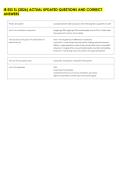
What is atmosphere boundary between earth and space, limit of the biosphere, supports life on earth
What is the atmosphere composed of nitrogen gas 78%, oxygen gas 21% and other gases such as CO2, Ar, Water Vapor,
trace gases (ch4, ozone, nitrous oxides)
what processes move gases in the atmosphere and wind -> moves gases due to differences in air pressure
define them (5) convection -> warm air rises and cool air sinks, creating vertical movements
diffusion -> gases spread from areas of high concentration to low concentration
turbulence -> irregular air flow caused by obstacles like mountains and buildings
jet streams -> fast flowing narrow air currents in the upper atmosphere
What are the atmospheric layers troposphere, stratosphere, mesosphere thermosphere
what is the troposphere 10km
lowest layer of atmosphere
weather phenomena occurs (clouds, precipitation, gas mixing)
highest concentration of water vapor co2 and trace gases
, what is the stratosphere 10km to 50km
above the troposphere
contains the ozone layer
What is differential heating the sun hits the earth and the atmosphere unevenly
the equator receives more direct sunlight making it warmer
the poles receive less direct sunlight making them cooler
results in the tricellular model of atmospheric circulation
The atmosphere is a system, what are its flows, storages, Storages
inputs, outputs, and how does it interact with other earth atmosphere acts as storage of gases such as co2 ch4
systems
Flows
air currents, atmospheric circulation and weather patterns move and redistribute
gases and other substances within the atmosphere
Inputs
natural inputs: gas from volcanic eruptions, gas from plants and organisms, dust
particles from deserts
anthropogenic inputs: greenhouse gases (fossil fuel burning, livestock), air
pollutants from industrial processes, aerosols from combustion
Outputs
respiration and photosynthesis remove gases from atmospheric systems
precipitation and dry deposition remove pollutants and aerosols from the
atmosphere
exchanges & interaction with other systems
biosphere, hydrosphere, lithosphere
What are the key greenhouse gases (GHG) and where do water vapour -> comes from evaporation of water bodies, transpiration from
they come from plants, sublimation of ice and snow and combustion of fossil fuels
CO2 -> comes from burning fossil fuels (coal, oiL, natural gas), deforestation,
industrial processes (cement production)
CH4 -> comes from agriculture (livestock digestion), landfills, natural gas
extraction, rice paddies, wetlands
(more effective than CO2 but found at lower concentrations)
NOx -> come form agricultural practices (fertilizers), fossil fuel combustion,
industrial processes (300 times more effective than co2 but is found at lower
concentrations)
Aerosols are tiny particles or droplets in the atmosphere
black carbon is produced from incomplete combustion of fossil fuels , wood and
other biomass. its found in emissions from diesel engines, cooking stoves, open
burning of vegetation (darkens snow and ice surfaces)
ANSWERS
What is atmosphere boundary between earth and space, limit of the biosphere, supports life on earth
What is the atmosphere composed of nitrogen gas 78%, oxygen gas 21% and other gases such as CO2, Ar, Water Vapor,
trace gases (ch4, ozone, nitrous oxides)
what processes move gases in the atmosphere and wind -> moves gases due to differences in air pressure
define them (5) convection -> warm air rises and cool air sinks, creating vertical movements
diffusion -> gases spread from areas of high concentration to low concentration
turbulence -> irregular air flow caused by obstacles like mountains and buildings
jet streams -> fast flowing narrow air currents in the upper atmosphere
What are the atmospheric layers troposphere, stratosphere, mesosphere thermosphere
what is the troposphere 10km
lowest layer of atmosphere
weather phenomena occurs (clouds, precipitation, gas mixing)
highest concentration of water vapor co2 and trace gases
, what is the stratosphere 10km to 50km
above the troposphere
contains the ozone layer
What is differential heating the sun hits the earth and the atmosphere unevenly
the equator receives more direct sunlight making it warmer
the poles receive less direct sunlight making them cooler
results in the tricellular model of atmospheric circulation
The atmosphere is a system, what are its flows, storages, Storages
inputs, outputs, and how does it interact with other earth atmosphere acts as storage of gases such as co2 ch4
systems
Flows
air currents, atmospheric circulation and weather patterns move and redistribute
gases and other substances within the atmosphere
Inputs
natural inputs: gas from volcanic eruptions, gas from plants and organisms, dust
particles from deserts
anthropogenic inputs: greenhouse gases (fossil fuel burning, livestock), air
pollutants from industrial processes, aerosols from combustion
Outputs
respiration and photosynthesis remove gases from atmospheric systems
precipitation and dry deposition remove pollutants and aerosols from the
atmosphere
exchanges & interaction with other systems
biosphere, hydrosphere, lithosphere
What are the key greenhouse gases (GHG) and where do water vapour -> comes from evaporation of water bodies, transpiration from
they come from plants, sublimation of ice and snow and combustion of fossil fuels
CO2 -> comes from burning fossil fuels (coal, oiL, natural gas), deforestation,
industrial processes (cement production)
CH4 -> comes from agriculture (livestock digestion), landfills, natural gas
extraction, rice paddies, wetlands
(more effective than CO2 but found at lower concentrations)
NOx -> come form agricultural practices (fertilizers), fossil fuel combustion,
industrial processes (300 times more effective than co2 but is found at lower
concentrations)
Aerosols are tiny particles or droplets in the atmosphere
black carbon is produced from incomplete combustion of fossil fuels , wood and
other biomass. its found in emissions from diesel engines, cooking stoves, open
burning of vegetation (darkens snow and ice surfaces)


