

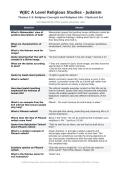
WJEC A Level Religious Studies - Judaism
Themes 2-3: Religious Concepts and Religious Life - Flashcard Set
104 independently written question-and-answer cards
Question Answer
What is Maimonides’ view of Maimonides argues that positive human attributes cannot be
positive descriptions of God? applied literally to God. Because God is unlike created
beings, negative theology—stating what God is not—is safer
than describing what God is.
What are characteristics of Omniscient, perfect, holy, eternal, incorporeal, genderless,
God? omnipresent, merciful, just, omnibenevolent.
What is the Hebrew word for Tzelem.
image?
Quote showing that 'the self' is "So God created mankind in his own image." Genesis 1:27.
created in a divine image.
What are the duties according • They are created in God’s divine image, and they have the
to Jews? special duty to fulfil within humanity.
• Should live moral and Holy lives to set an example to
others in humanity.
Quote by Isaiah about Judaism. "A light to guide the nations."
What is nefesh? Nefesh commonly means life, living being or soul. In this
context, it presents human life as a divine gift rather than
treating the person as merely a physical body.
How does Jewish teaching The mitzvot regulate everyday conduct so that life can be
emphasise the holiness of lived in holiness. Saadia Gaon also stresses that embodied
human life? human life enables people to fulfil God’s purposes, while
Kabbalistic traditions describe different dimensions of the
soul.
What is an example from the Mikveh - "He must immerse his entire body in water."
613 mitzvot that ensure people
stay holy?
What is Pikuach nefesh? The principle that saving, protecting and preserving life is of
utmost importance.
Where does the idea of Pikuach Basis in the Torah: "Do not do anything that endangers your
nefesh come from? neighbour's life." (Leviticus 19:16).
Quote from Babylonian Talmud "That he shall live by them, and not that he shall die by
about Pikuach nefesh. them."
What is a modern example of Organ donation. In principle, Judaism supports and
Pikuach nefesh? encourages organ donation in order to save lives. This
principle can sometimes override the strong objections to
any unnecessary interference with the body after death
(nivul hamet), and the requirement for immediate burial of
the complete body.
Scholarly opinion on Pikuach "One who saves a single life - it is as if he has saved an
nefesh. entire world." Pirke D'Rav Eliezer, Chapter 48.
What is the Hebrew name for Yetzer hara.
evil inclination?
Unofficial independent revision resource. Not affiliated with or endorsed by WJEC/CBAC or Eduqas.
, Question Answer
What is the Hebrew name for Yetzer hatov.
good inclination?
How does rabbinic Genesis 2:7 uses the Hebrew form vayyitzer (“formed”).
interpretation explain Rabbinic interpretation links its doubled letter yod with the
humanity’s good and evil two inclinations within humanity: yetzer hatov and yetzer
inclinations? hara.
What is yetzer hatov? Influences a person to follow the 613 mitzvot in order to
maintain the Mosaic covenant with God. Described as the
'conscience' - an inner voice that guides an individual to
make the correct decision.
What is yetzer hara? This evil inclination can lead to acts of sin. Comes from the
desires within the person - it is not, in itself, and evil force. As
it was created by God, it does have a positive dimension.
How can the two inclinations be The comparison is that yetzer hara resembles instinctive
compared with Freud’s model desire, while yetzer hatov resembles moral restraint. Like
of the mind? Freud’s id, ego and superego, the inclinations can be
understood as competing forces that require balance.
What is the idea of free will • Believe that God gave humans free will.
within Judaism? • Personal choice as to which force to follow.
• If people choose the evil inclination, there is still
opportunity to repent.
What is atonement? The concept of beginning again with God with the right
attitudes and actions.
What is Teshuvah? Return to God.
What is the summary of • Prayer begins with declaration that there is only 1 God.
Deuteronomy 6:4-9? • 613 mitzvot should be the central focus of Jewish life.
• 613 mitzvot should be taught to children and discussed
(yeshiva).
• Jews are to be reminded of 613 mitzvot by wearing tefillin
and filling mezuzot on their doorpost with the Shema.
What is the summary of • The second part of Shema declares Jewish acceptance and
Deuteronomy 11:13-21? their undertaking of the 613 mitzvot as evidence of their
loyalty to God.
• Reminder that human actions makes a difference in the
world.
• Adds promises of rewards and warns of possible
punishments.
What is the summary of • Talks about specifics.
Numbers 15:37-41? • Wearing the Tallit (prayer shawl) during prayer.
• Also mentions Exodus from Egypt that Jews are required to
remember.
• 613 mitzvot to teach and discuss constantly.
What is the nature of the Contains many Mitzvot or commandments that Jews are
Shema? required to keep as part of their covenant relationship. The
words of the Shema prayer are worn on the body as a sign of
remembrance and regarding the monotheism of God as
highly important.
How does Shema reinforce Reinforce it on a daily basis by reminding Jews that they are
covenant? expected to obey God by upholding the laws that God has
given them.
Unofficial independent revision resource. Not affiliated with or endorsed by WJEC/CBAC or Eduqas.
Themes 2-3: Religious Concepts and Religious Life - Flashcard Set
104 independently written question-and-answer cards
Question Answer
What is Maimonides’ view of Maimonides argues that positive human attributes cannot be
positive descriptions of God? applied literally to God. Because God is unlike created
beings, negative theology—stating what God is not—is safer
than describing what God is.
What are characteristics of Omniscient, perfect, holy, eternal, incorporeal, genderless,
God? omnipresent, merciful, just, omnibenevolent.
What is the Hebrew word for Tzelem.
image?
Quote showing that 'the self' is "So God created mankind in his own image." Genesis 1:27.
created in a divine image.
What are the duties according • They are created in God’s divine image, and they have the
to Jews? special duty to fulfil within humanity.
• Should live moral and Holy lives to set an example to
others in humanity.
Quote by Isaiah about Judaism. "A light to guide the nations."
What is nefesh? Nefesh commonly means life, living being or soul. In this
context, it presents human life as a divine gift rather than
treating the person as merely a physical body.
How does Jewish teaching The mitzvot regulate everyday conduct so that life can be
emphasise the holiness of lived in holiness. Saadia Gaon also stresses that embodied
human life? human life enables people to fulfil God’s purposes, while
Kabbalistic traditions describe different dimensions of the
soul.
What is an example from the Mikveh - "He must immerse his entire body in water."
613 mitzvot that ensure people
stay holy?
What is Pikuach nefesh? The principle that saving, protecting and preserving life is of
utmost importance.
Where does the idea of Pikuach Basis in the Torah: "Do not do anything that endangers your
nefesh come from? neighbour's life." (Leviticus 19:16).
Quote from Babylonian Talmud "That he shall live by them, and not that he shall die by
about Pikuach nefesh. them."
What is a modern example of Organ donation. In principle, Judaism supports and
Pikuach nefesh? encourages organ donation in order to save lives. This
principle can sometimes override the strong objections to
any unnecessary interference with the body after death
(nivul hamet), and the requirement for immediate burial of
the complete body.
Scholarly opinion on Pikuach "One who saves a single life - it is as if he has saved an
nefesh. entire world." Pirke D'Rav Eliezer, Chapter 48.
What is the Hebrew name for Yetzer hara.
evil inclination?
Unofficial independent revision resource. Not affiliated with or endorsed by WJEC/CBAC or Eduqas.
, Question Answer
What is the Hebrew name for Yetzer hatov.
good inclination?
How does rabbinic Genesis 2:7 uses the Hebrew form vayyitzer (“formed”).
interpretation explain Rabbinic interpretation links its doubled letter yod with the
humanity’s good and evil two inclinations within humanity: yetzer hatov and yetzer
inclinations? hara.
What is yetzer hatov? Influences a person to follow the 613 mitzvot in order to
maintain the Mosaic covenant with God. Described as the
'conscience' - an inner voice that guides an individual to
make the correct decision.
What is yetzer hara? This evil inclination can lead to acts of sin. Comes from the
desires within the person - it is not, in itself, and evil force. As
it was created by God, it does have a positive dimension.
How can the two inclinations be The comparison is that yetzer hara resembles instinctive
compared with Freud’s model desire, while yetzer hatov resembles moral restraint. Like
of the mind? Freud’s id, ego and superego, the inclinations can be
understood as competing forces that require balance.
What is the idea of free will • Believe that God gave humans free will.
within Judaism? • Personal choice as to which force to follow.
• If people choose the evil inclination, there is still
opportunity to repent.
What is atonement? The concept of beginning again with God with the right
attitudes and actions.
What is Teshuvah? Return to God.
What is the summary of • Prayer begins with declaration that there is only 1 God.
Deuteronomy 6:4-9? • 613 mitzvot should be the central focus of Jewish life.
• 613 mitzvot should be taught to children and discussed
(yeshiva).
• Jews are to be reminded of 613 mitzvot by wearing tefillin
and filling mezuzot on their doorpost with the Shema.
What is the summary of • The second part of Shema declares Jewish acceptance and
Deuteronomy 11:13-21? their undertaking of the 613 mitzvot as evidence of their
loyalty to God.
• Reminder that human actions makes a difference in the
world.
• Adds promises of rewards and warns of possible
punishments.
What is the summary of • Talks about specifics.
Numbers 15:37-41? • Wearing the Tallit (prayer shawl) during prayer.
• Also mentions Exodus from Egypt that Jews are required to
remember.
• 613 mitzvot to teach and discuss constantly.
What is the nature of the Contains many Mitzvot or commandments that Jews are
Shema? required to keep as part of their covenant relationship. The
words of the Shema prayer are worn on the body as a sign of
remembrance and regarding the monotheism of God as
highly important.
How does Shema reinforce Reinforce it on a daily basis by reminding Jews that they are
covenant? expected to obey God by upholding the laws that God has
given them.
Unofficial independent revision resource. Not affiliated with or endorsed by WJEC/CBAC or Eduqas.


