

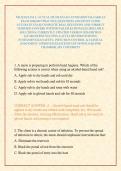
NR 224 EXAM 1 / ACTUAL NR 224 EXAM 1 FUNDAMENTALS SKILLS
EXAM 2026/2027 PRACTICE QUESTIONS AND STUDY GUIDE
ACCURATE EXAM COMPLETE REAL QUESTIONS AND CORRECT
VERIFIED ANSWERS WITH DETAILED RATIONALES (RELIABLE
SOLUTIONS) CURRENTLY UPDATED VERSION 2026 EDITION
|GUARANTEED SUCCESS A+ |FULL REVISED NURSING
FUNDAMENTALS SAFETY, INFECTION CONTROL & CLINICAL
JUDGEMENT APPROVED EXAM |INSTANT DOWNLOAD PDF|
CHAMBERLAIN UNIVERSITY
1. A nurse is preparing to perform hand hygiene. Which of the
following actions is correct when using an alcohol-based hand rub?
A. Apply rub to dry hands and rub until dry
B. Apply rub to wet hands and rub for 10 seconds
C. Apply rub to dry hands and rinse with water
D. Apply rub to gloved hands and rub for 30 seconds
CORRECT ANSWER: A – Alcohol-based hand rub should be
applied to dry hands and rubbed until completely dry. Wet hands
dilute the product, reducing effectiveness. Hand rub is not used on
gloved hands, and rinsing is not required.
2. The client is a chronic carrier of infection. To prevent the spread
of infection to others, the nurse should emphasize interventions that:
A. Eliminate the reservoir
B. Block the portal of exit from the reservoir
C. Block the portal of entry into the host
,D. Decrease the susceptibility of the host
CORRECT ANSWER: B – Since the carrier is the reservoir and the
condition is chronic, eliminating the reservoir is not possible.
Blocking the portal of exit prevents the organism from leaving the
carrier and infecting others, which is more effective than protecting
individual hosts.
3. Which is the most effective nursing action for controlling the
spread of infection?
A. Thorough hand hygiene
B. Wearing gloves and masks when providing direct client care
C. Implementing appropriate isolation precautions
D. Administering broad-spectrum prophylactic antibiotics
CORRECT ANSWER: A – Hands are frequently in contact with
clients and equipment, making them the most obvious source of
transmission. Regular hand hygiene is the single most effective way
to prevent movement of infective materials.
4. When caring for a single client during one shift, it is appropriate
for the nurse to reuse only which of the following personal protective
equipment?
A. Goggles
B. Gown
C. Surgical mask
,D. Clean gloves
CORRECT ANSWER: A – Goggles may be reused for the same
client if not visibly soiled. Gowns, masks, and gloves are single-use
items and must be discarded after each client encounter.
5. A nurse is caring for a client on contact precautions. Which action
is most appropriate when providing care?
A. Wear an N95 respirator
B. Wear a gown and gloves
C. Keep the client's door closed
D. Place the client in a negative-pressure room
CORRECT ANSWER: B – Contact precautions require gloves and a
gown to prevent transmission of organisms via direct contact. N95
respirators and negative-pressure rooms are for airborne precautions.
Door closure is for droplet or airborne precautions.
6. Which client is at highest risk for falling?
A. 68-year-old with controlled hypertension
B. 82-year-old post-operative day 1 receiving opioids
C. 45-year-old with a fractured tibia
D. 30-year-old with a urinary tract infection
, CORRECT ANSWER: B – The 82-year-old post-operative patient
receiving opioids has multiple risk factors: advanced age, recent
surgery, and opioid-induced sedation and orthostatic hypotension.
This combination significantly increases fall risk.
7. The nurse is preparing to administer a blood transfusion. Which
IV solution is compatible with blood products?
A. 0.9% normal saline
B. Lactated Ringer's solution
C. 5% dextrose in water
D. 0.45% normal saline
CORRECT ANSWER: A – Only 0.9% normal saline is compatible
with blood products. Lactated Ringer's contains calcium which can
cause clotting; dextrose solutions can cause hemolysis; and
hypotonic solutions can cause RBC lysis.
8. A patient reports pain as an 8 on a 0–10 numeric rating scale. The
nurse should:
A. Administer a PRN analgesic as ordered
B. Document the pain score and reassess in 4 hours
C. Encourage non-pharmacological interventions first
D. Notify the provider for a new order
EXAM 2026/2027 PRACTICE QUESTIONS AND STUDY GUIDE
ACCURATE EXAM COMPLETE REAL QUESTIONS AND CORRECT
VERIFIED ANSWERS WITH DETAILED RATIONALES (RELIABLE
SOLUTIONS) CURRENTLY UPDATED VERSION 2026 EDITION
|GUARANTEED SUCCESS A+ |FULL REVISED NURSING
FUNDAMENTALS SAFETY, INFECTION CONTROL & CLINICAL
JUDGEMENT APPROVED EXAM |INSTANT DOWNLOAD PDF|
CHAMBERLAIN UNIVERSITY
1. A nurse is preparing to perform hand hygiene. Which of the
following actions is correct when using an alcohol-based hand rub?
A. Apply rub to dry hands and rub until dry
B. Apply rub to wet hands and rub for 10 seconds
C. Apply rub to dry hands and rinse with water
D. Apply rub to gloved hands and rub for 30 seconds
CORRECT ANSWER: A – Alcohol-based hand rub should be
applied to dry hands and rubbed until completely dry. Wet hands
dilute the product, reducing effectiveness. Hand rub is not used on
gloved hands, and rinsing is not required.
2. The client is a chronic carrier of infection. To prevent the spread
of infection to others, the nurse should emphasize interventions that:
A. Eliminate the reservoir
B. Block the portal of exit from the reservoir
C. Block the portal of entry into the host
,D. Decrease the susceptibility of the host
CORRECT ANSWER: B – Since the carrier is the reservoir and the
condition is chronic, eliminating the reservoir is not possible.
Blocking the portal of exit prevents the organism from leaving the
carrier and infecting others, which is more effective than protecting
individual hosts.
3. Which is the most effective nursing action for controlling the
spread of infection?
A. Thorough hand hygiene
B. Wearing gloves and masks when providing direct client care
C. Implementing appropriate isolation precautions
D. Administering broad-spectrum prophylactic antibiotics
CORRECT ANSWER: A – Hands are frequently in contact with
clients and equipment, making them the most obvious source of
transmission. Regular hand hygiene is the single most effective way
to prevent movement of infective materials.
4. When caring for a single client during one shift, it is appropriate
for the nurse to reuse only which of the following personal protective
equipment?
A. Goggles
B. Gown
C. Surgical mask
,D. Clean gloves
CORRECT ANSWER: A – Goggles may be reused for the same
client if not visibly soiled. Gowns, masks, and gloves are single-use
items and must be discarded after each client encounter.
5. A nurse is caring for a client on contact precautions. Which action
is most appropriate when providing care?
A. Wear an N95 respirator
B. Wear a gown and gloves
C. Keep the client's door closed
D. Place the client in a negative-pressure room
CORRECT ANSWER: B – Contact precautions require gloves and a
gown to prevent transmission of organisms via direct contact. N95
respirators and negative-pressure rooms are for airborne precautions.
Door closure is for droplet or airborne precautions.
6. Which client is at highest risk for falling?
A. 68-year-old with controlled hypertension
B. 82-year-old post-operative day 1 receiving opioids
C. 45-year-old with a fractured tibia
D. 30-year-old with a urinary tract infection
, CORRECT ANSWER: B – The 82-year-old post-operative patient
receiving opioids has multiple risk factors: advanced age, recent
surgery, and opioid-induced sedation and orthostatic hypotension.
This combination significantly increases fall risk.
7. The nurse is preparing to administer a blood transfusion. Which
IV solution is compatible with blood products?
A. 0.9% normal saline
B. Lactated Ringer's solution
C. 5% dextrose in water
D. 0.45% normal saline
CORRECT ANSWER: A – Only 0.9% normal saline is compatible
with blood products. Lactated Ringer's contains calcium which can
cause clotting; dextrose solutions can cause hemolysis; and
hypotonic solutions can cause RBC lysis.
8. A patient reports pain as an 8 on a 0–10 numeric rating scale. The
nurse should:
A. Administer a PRN analgesic as ordered
B. Document the pain score and reassess in 4 hours
C. Encourage non-pharmacological interventions first
D. Notify the provider for a new order


