

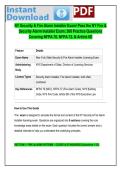
NY Security & Fire Alarm Installer Exam/ Pass the NY Fire &
Security Alarm Installer Exam: 200 Practice Questions
Covering NFPA 70, NFPA 72, & Article 6D
Feature Details
Exam Name New York State Security & Fire Alarm Installer Licensing Exam
Administering NYS Department of State, Division of Licensing Services
Body
License Types Security Alarm Installer, Fire Alarm Installer, both often
combined
Key References NFPA 70 (NEC), NFPA 72 (Fire Alarm Code), NYS Building
Code, NYS Fire Code, Article 6D of the NYS Executive Law
How to Use This Guide
This exam is designed to simulate the format and content of the NY Security & Fire Alarm
Installer licensing exam. Questions are organized into 8 sections covering the core
knowledge areas tested on the exam. Each question includes the correct answer and a
detailed rationale to help you understand the underlying principles.
SECTION 1: FIRE ALARM SYSTEMS – CODES & STANDARDS (Questions 1-35)
,1. Which NFPA standard governs the installation, testing, and maintenance of fire
alarm systems?
A) NFPA 70
B) NFPA 72
C) NFPA 101
D) NFPA 13
Answer: B. NFPA 72 is the National Fire Alarm and Signaling Code, which covers the
installation, testing, inspection, and maintenance of fire alarm systems. NFPA 70 is the
National Electrical Code; NFPA 101 is the Life Safety Code; NFPA 13 covers sprinkler
systems.
2. What is the primary purpose of a fire alarm control panel (FACP)?
A) To detect smoke and heat
B) To monitor initiating devices and activate notification appliances
C) To extinguish fires
D) To communicate with the fire department only
Answer: B. The FACP is the central processing unit of the fire alarm system that monitors
input devices (smoke detectors, pull stations) and activates output devices (horns, strobes)
based on system programming.
3. Which of the following is an example of a notification appliance?
A) Smoke detector
B) Heat detector
C) Horn/strobe
, D) Manual pull station
Answer: C. Notification appliances (horns, strobes, speakers) alert occupants of a fire
emergency. Smoke detectors, heat detectors, and pull stations are initiating devices.
4. A "Class A" fire alarm circuit provides what type of protection?
A) The circuit is supervised and has a redundant path back to the panel
B) The circuit is not supervised
C) The circuit uses Class 2 wiring
D) The circuit is for notification appliances only
Answer: A. Class A circuits are supervised with a redundant return path, allowing the
system to continue functioning even if a single wire break occurs. Class B circuits have a
single path.
5. Smoke detectors must be installed on ceilings or high on walls. What is the
maximum distance a smoke detector can be from a corner?
A) 6 inches
B) 12 inches
C) 18 inches
D) 24 inches
Answer: B. According to NFPA 72, smoke detectors must be installed no closer than 4
inches from a wall and no more than 12 inches from the ceiling for wall-mounted detectors,
and no closer than 4 inches from a corner for ceiling-mounted detectors.
6. In a fire alarm system, "addressable" devices refer to:
A) Devices that require a specific address for shipping
, B) Devices that have unique identification and can report their status individually
C) Devices that only work in residential settings
D) Devices that are not monitored
Answer: B. Addressable devices each have a unique identifier, allowing the FACP to
pinpoint the exact location and status of each device in the system.
7. The maximum permitted voltage drop for a fire alarm notification appliance circuit
is typically:
A) 2%
B) 5%
C) 10%
D) 15%
Answer: B. NFPA 72 requires that the voltage at the notification appliance be no less than
85% of the rated voltage, which translates to a maximum 15% drop. However, a 10% drop
is commonly used as a design standard.
8. A "trouble" signal on a fire alarm panel indicates:
A) A fire is present
B) A malfunction or abnormal condition in the system
C) The system is in normal operation
D) The system is being tested
Answer: B. A trouble signal indicates a fault or abnormal condition (e.g., broken wire, low
battery, device removed) that impairs system operation but does not indicate a fire.
Security Alarm Installer Exam: 200 Practice Questions
Covering NFPA 70, NFPA 72, & Article 6D
Feature Details
Exam Name New York State Security & Fire Alarm Installer Licensing Exam
Administering NYS Department of State, Division of Licensing Services
Body
License Types Security Alarm Installer, Fire Alarm Installer, both often
combined
Key References NFPA 70 (NEC), NFPA 72 (Fire Alarm Code), NYS Building
Code, NYS Fire Code, Article 6D of the NYS Executive Law
How to Use This Guide
This exam is designed to simulate the format and content of the NY Security & Fire Alarm
Installer licensing exam. Questions are organized into 8 sections covering the core
knowledge areas tested on the exam. Each question includes the correct answer and a
detailed rationale to help you understand the underlying principles.
SECTION 1: FIRE ALARM SYSTEMS – CODES & STANDARDS (Questions 1-35)
,1. Which NFPA standard governs the installation, testing, and maintenance of fire
alarm systems?
A) NFPA 70
B) NFPA 72
C) NFPA 101
D) NFPA 13
Answer: B. NFPA 72 is the National Fire Alarm and Signaling Code, which covers the
installation, testing, inspection, and maintenance of fire alarm systems. NFPA 70 is the
National Electrical Code; NFPA 101 is the Life Safety Code; NFPA 13 covers sprinkler
systems.
2. What is the primary purpose of a fire alarm control panel (FACP)?
A) To detect smoke and heat
B) To monitor initiating devices and activate notification appliances
C) To extinguish fires
D) To communicate with the fire department only
Answer: B. The FACP is the central processing unit of the fire alarm system that monitors
input devices (smoke detectors, pull stations) and activates output devices (horns, strobes)
based on system programming.
3. Which of the following is an example of a notification appliance?
A) Smoke detector
B) Heat detector
C) Horn/strobe
, D) Manual pull station
Answer: C. Notification appliances (horns, strobes, speakers) alert occupants of a fire
emergency. Smoke detectors, heat detectors, and pull stations are initiating devices.
4. A "Class A" fire alarm circuit provides what type of protection?
A) The circuit is supervised and has a redundant path back to the panel
B) The circuit is not supervised
C) The circuit uses Class 2 wiring
D) The circuit is for notification appliances only
Answer: A. Class A circuits are supervised with a redundant return path, allowing the
system to continue functioning even if a single wire break occurs. Class B circuits have a
single path.
5. Smoke detectors must be installed on ceilings or high on walls. What is the
maximum distance a smoke detector can be from a corner?
A) 6 inches
B) 12 inches
C) 18 inches
D) 24 inches
Answer: B. According to NFPA 72, smoke detectors must be installed no closer than 4
inches from a wall and no more than 12 inches from the ceiling for wall-mounted detectors,
and no closer than 4 inches from a corner for ceiling-mounted detectors.
6. In a fire alarm system, "addressable" devices refer to:
A) Devices that require a specific address for shipping
, B) Devices that have unique identification and can report their status individually
C) Devices that only work in residential settings
D) Devices that are not monitored
Answer: B. Addressable devices each have a unique identifier, allowing the FACP to
pinpoint the exact location and status of each device in the system.
7. The maximum permitted voltage drop for a fire alarm notification appliance circuit
is typically:
A) 2%
B) 5%
C) 10%
D) 15%
Answer: B. NFPA 72 requires that the voltage at the notification appliance be no less than
85% of the rated voltage, which translates to a maximum 15% drop. However, a 10% drop
is commonly used as a design standard.
8. A "trouble" signal on a fire alarm panel indicates:
A) A fire is present
B) A malfunction or abnormal condition in the system
C) The system is in normal operation
D) The system is being tested
Answer: B. A trouble signal indicates a fault or abnormal condition (e.g., broken wire, low
battery, device removed) that impairs system operation but does not indicate a fire.


